

 Travel Essentials
 Travel Essentials

A 500-km hiking trail across Slovenia and Italy links Alpine beauty with World War I memorials, ending at the Adriatic in Trieste.
 Travel Essentials
Nestled between the towering peaks of Central Europe and the sparkling waters of the Mediterranean lies one of the continent’s most remarkable long-distance hiking experiences. This extraordinary route spans more than 500 kilometers across the Alpine regions of Slovenia and Italy, creating a unique pathway that merges outdoor adventure with profound historical reflection. What makes this trail exceptional is not merely its length or stunning scenery, but its deliberate design as a journey through time, connecting visitors with preserved remnants of the First World War and the stories of those who experienced conflict in this region.
The trail follows the historic Isonzo Front, where twelve major military campaigns unfolded between 1915 and 1917 during the Great War. This mountainous frontier once divided the Kingdom of Italy from the Austro-Hungarian Empire, with Slovenia’s territory forming part of the contested zone. The establishment of this commemorative pathway represents a modern commitment to preserving and interpreting these sites for educational purposes and international reconciliation.
Organized preservation efforts began in 2000 when the Walks of Peace in the Soča Region Foundation was established specifically to document, maintain, and contextualize the numerous historical sites scattered across the conflict zone. Today, the formalized main route—launched in 2020—comprises the curated hiking spine of this larger preservation corridor. The route’s inclusion on UNESCO’s Tentative List underscores its international cultural importance.
The complete pathway extends across 30 distinct sections, allowing hikers flexibility in how they engage with the experience. The main curated route comprises approximately 137 miles (220 kilometers) of dedicated trekking paths, while the broader corridor encompasses the full 500-kilometer expanse including alternative loops and side excursions. This dual-structure design accommodates different experience levels and time constraints.
Elevation figures tell the story of the terrain’s demands: cumulative ascent totals 19,130 meters while descent reaches 20,170 meters. Most sections follow maintained dirt pathways closed to vehicular traffic, though some sections pass through villages where sidewalks run alongside roads.
The trail physically connects four distinct geographic provinces:
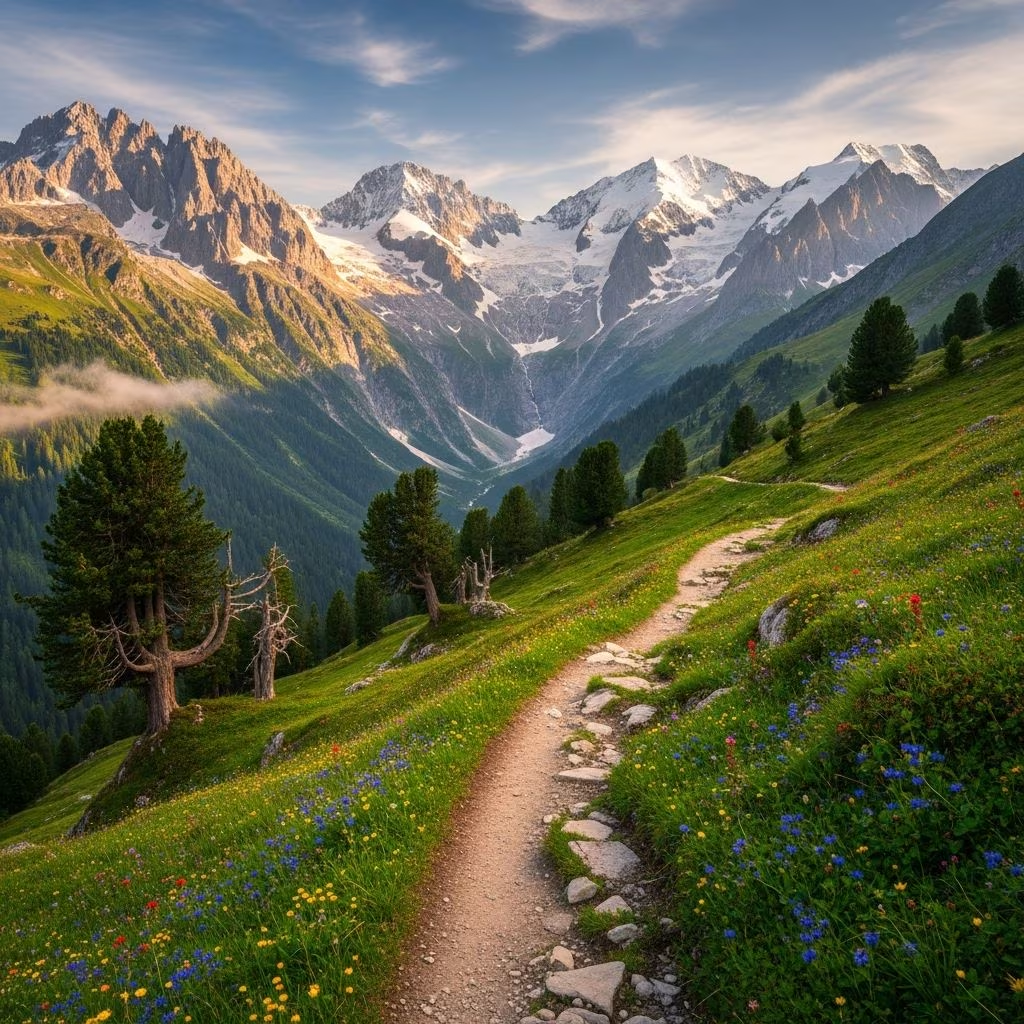
The journey begins in the shadow of Slovenia’s most iconic peak, Mount Triglav (2,864 meters), located within Triglav National Park. The starting point at Log pod Mangartom sits in this spectacular natural amphitheater, surrounded by dramatic vertical rock formations and pristine alpine meadows. Early sections present significant elevation gain and technical hiking challenges as the route traverses high mountain passes and ridges.
Hikers encounter diverse alpine ecosystems including glacial-carved valleys, mountain lakes, and subalpine forests. The upper elevations present demanding physical conditions, requiring solid fitness levels and appropriate mountaineering preparation. These stages reward effort with panoramic vistas extending across multiple countries and valleys carved by ancient glaciation.
As the route descends into the Karst Region (known locally as Kras), the landscape transforms dramatically. This distinctive geological zone features white limestone plateaus, sparse vegetation, and an ethereal quality shaped by millennia of water erosion. The terrain becomes progressively less technically demanding while the historical narrative intensifies.
This middle section incorporates numerous commemorative sites including military cemeteries containing soldiers from multiple nations and the Monument of Peace—a significant landmark featuring an observation structure providing sweeping vistas from Alpine peaks to Mediterranean waters. These memorial locations serve as physical anchors for reflection and understanding of the conflict’s human dimensions.
The Karst stages traverse wine-producing regions and historic villages that have existed for centuries despite the violence that swept through them. Traditional agricultural patterns persist, with vineyards and olive groves creating continuity between past and present.
The final stages execute a pronounced westward turn, descending toward Italy’s Adriatic coast. The path reaches the seaside town of Duino before continuing south along the shoreline toward Trieste, where the complete trail concludes. This final section offers gentler terrain after the mountain challenges, though it maintains significant historical interest with coastal defense structures and additional memorial sites.
The coastal terminus in Trieste provides symbolic closure—a multi-ethnic port city with its own complex history reflecting the region’s cultural intersections. This ending point emphasizes how the First World War fundamentally altered European geography and political boundaries.
The trail interconnects more than 300 World War I heritage locations, transforming the hiking experience into an extended open-air museum. These sites include:
Notable locations include the Austro-Hungarian military cemetery at Loče containing approximately 3,000 burials of soldiers from various ethnic backgrounds. This physical reminder of the conflict’s human cost provides powerful context for understanding the trail’s peace-focused mission.
Three specifically designed transborder outdoor museums—Kolovrat, Sabotin, and Ermada—offer immersive historical experiences integrating original landscape features with interpretive installations. These locations commemorate the site-specific nature of the conflict, anchoring historical understanding to precise geographic locations.
The trail deliberately offers varied experiences accommodating different physical capabilities and time availability. Easier sections suitable for family rambling wind through vineyards in the Brda Hills and across the Karst landscape. These lower-difficulty portions provide historical engagement without requiring extreme athleticism.
Conversely, advanced hikers seeking substantial challenges find demanding high-altitude sections with significant elevation changes and technical terrain. The design philosophy recognizes that historical significance matters regardless of athletic achievement level.
Cycling enthusiasts discover that numerous sections accommodate bicycles, particularly the Soča River macadam roads and lower-elevation passages through wine regions. This multi-use approach extends accessibility beyond foot traffic.
The 30-section organization provides natural stopping points where settlements offer accommodation, meals, and rest opportunities. This structure transforms the experience from backcountry wilderness trekking into a supported long-distance hike with regular access to services and human connection.
The maintained condition of most pathways means hikers require standard trail equipment rather than specialized mountaineering gear, though proper footwear and weather-appropriate clothing remain essential. The trail’s location at a Mediterranean-Alpine transitional zone creates variable weather patterns requiring preparation for multiple conditions.
Guided experiences complement independent hiking, with local operators offering themed excursions focusing on specific sections or historical themes. These guided options provide expert interpretation while maintaining the flexibility of choosing partial participation.
Beyond historical significance, the route traverses regions celebrated for distinctive cuisines reflecting their cultural heritage. The Soča Valley, Vipava Valley, and coastal zones each offer traditional foods and local wines integrated into the hiking experience. This gastronomic dimension acknowledges that cultural understanding extends beyond military history to encompass how communities lived and continue living within these landscapes.
Villages along the route maintain traditional agricultural practices, with some accommodations including working farms offering authentic cultural immersion. This living heritage complements the preserved historical monuments.
The trail’s designation as a “Walk of Peace” reflects contemporary values emphasizing dialogue, cultural respect, and reconciliation. Rather than glorifying conflict, the pathway encourages reflection on war’s devastating consequences and the imperative for peaceful coexistence. This philosophical orientation distinguishes it from mere historical tourism, positioning it as an active contribution to international understanding.
The presence of multinational soldier cemeteries—where Italians, Austro-Hungarians, and soldiers from other nations rest in proximity—physically embodies messages about shared humanity transcending national boundaries. This arrangement forces confrontation with the arbitrary nature of political conflict and the universal tragedy of young lives lost.
Completing the entire 500-kilometer route requires commitment spanning several weeks, though partial sections accommodate shorter timeframes. The cumulative elevation gain and descent suggest that “moderate to demanding” fitness represents a realistic requirement for most hikers. Acclimatization to altitude during the Alpine sections proves important for those unaccustomed to mountain terrain.
Seasonal considerations affect trail conditions and accessibility. Spring and autumn offer optimal weather, though each season presents distinct characteristics in terms of crowds, weather patterns, and landscape aesthetics. Winter mountaineering techniques become necessary for upper sections during snowy periods.
The trail’s positioning on UNESCO’s Tentative List acknowledges its cultural importance to humanity’s collective heritage. This recognition validates efforts to preserve these sites and encourage contemplative engagement with difficult historical chapters. As global peace-building initiatives expand, trails serving educational and reflective purposes gain importance in fostering international understanding.
The establishment of information offices and visitor services along the route demonstrates sustained commitment to making the experience accessible and meaningful for contemporary audiences. These infrastructure developments support the transformation of preserved relics into living educational resources.
