
 Stays
StaysStays
Walt Disney’s Lost Mineral King Ski Resort
Discover the untold story of Disney's 1960s vision for a massive Alpine ski resort in California's Sierra Nevada and the forces that shaped its fate.
 Stays
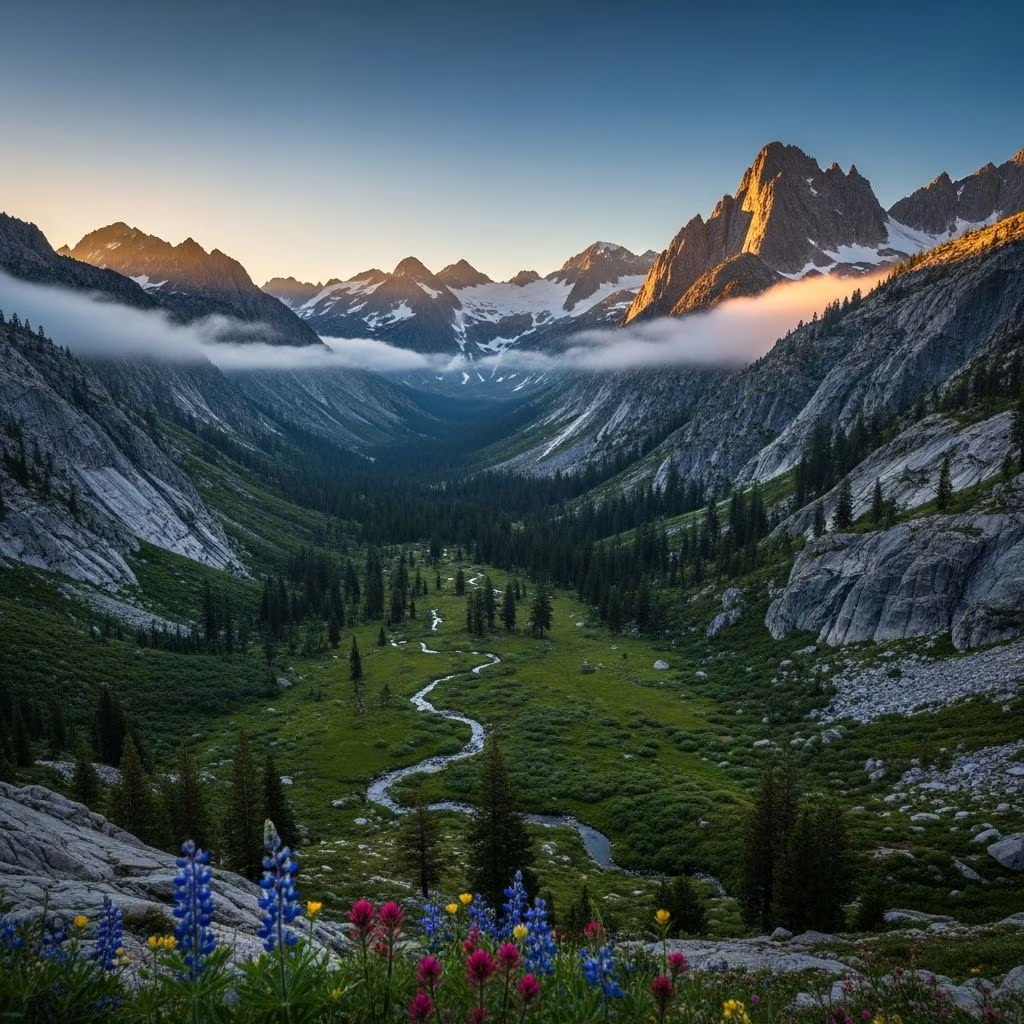
StaysDuring the height of the American leisure boom in the 1960s, Walt Disney envisioned transforming a remote alpine valley in California’s Sierra Nevada mountains into a world-class winter destination. The concept emerged from Disney’s growing fascination with skiing and his proven success in creating immersive recreational experiences through Disneyland. What followed was more than a decade of planning, legal battles, and environmental activism that would ultimately reshape how the nation viewed wilderness protection. Understanding this chapter reveals not just a corporate ambition, but a pivotal moment in American conservation history.
The Genesis of an Alpine Ambition
In the mid-1960s, the U.S. Forest Service opened bidding for development rights to Mineral King Valley, a pristine 16,000-acre expanse nestled in the Southern California mountains. Walt Disney Productions submitted an ambitious proposal that outcompeted numerous other developers. Disney’s entry into the ski resort market was strategically timed; his recent involvement with the 1960 Winter Olympics had sparked genuine enthusiasm for winter sports development, and skiing represented an underexploited market opportunity for the entertainment conglomerate.
Disney assembled an exceptional team to realize this vision. Working alongside Olympic ski coach Willy Schaeffler from the University of Denver, Disney’s Imagineers crafted detailed blueprints for what they termed an “American Alpine Wonderland.” The concept stretched beyond typical ski resort infrastructure. Disney envisioned a comprehensive mountain community that would operate year-round, generating revenue through diverse visitor services rather than relying solely on winter skiing operations.
Architectural Grandeur and Engineering Innovation
The proposed village at Mineral King would have featured a five-story hotel accommodating 1,030 guests, complemented by a movie theater, shopping facilities, swimming pools, ice skating rinks, tennis courts, and an eighteen-hole golf course. Ten restaurants and cafes would serve the anticipated crowds, including an ambitious 150-seat dining establishment perched atop Eagle’s Crest Ridge at 11,090 feet elevation—offering both culinary experiences and unparalleled mountain vistas.
The mountain infrastructure itself represented engineering ambition at an extraordinary scale. Twenty-two separate lifts and gondolas would provide access to eight glacial cirques, the distinctive bowl-shaped valleys characteristic of glaciated alpine terrain. These facilities would connect to ski runs extending four miles in length with vertical descents reaching 3,700 feet—dimensions that would have positioned Mineral King as California’s premier skiing destination.
Entertainment remained central to Disney’s conception. The company’s creative division designed attraction prototypes specifically for this venue, including an elaborate musical show with mechanical animals. These early concepts would eventually evolve into the Country Bear Jamboree attraction later installed at Disneyland, demonstrating how the unrealized project influenced Disney’s broader entertainment portfolio.
Financial Projections and Revenue Models
Disney projected first-decade revenues of $600 million, a substantial sum for the 1960s-1970s period. This projection reflected Disney’s sophisticated understanding that ski resorts rarely achieved profitability through lift ticket sales alone. Instead, ancillary services—lodging, dining, retail, and year-round attractions—would generate the primary income streams. The four-mile ski runs and 3,700-foot vertical drop would attract advanced skiers, while the resort’s comprehensive amenities would appeal to families seeking mountain recreation beyond skiing.
Environmental Opposition Emerges
The proposal’s trajectory changed dramatically when environmental advocacy organizations mobilized opposition. The Sierra Club, which had initially supported the project, reversed its position as environmental consciousness intensified during the early 1970s. This shift reflected broader philosophical changes within the conservation movement, as activists increasingly questioned whether any commercial development belonged in pristine wilderness areas.
The Sierra Club’s legal challenge initiated a protracted and complex litigation process that consumed resources and attention for both Disney and the company’s opponents. This conflict occurred during a transformative period in American environmental law, when the National Environmental Policy Act and expanding wilderness protection concepts gained legislative and judicial strength. Disney found itself navigating unfamiliar legal terrain where financial resources and corporate prestige could not simply override environmental concerns.
Critical Setbacks and Pivotal Moments
A significant turning point arrived with Walt Disney’s unexpected death in December 1966, just one year after the company obtained its initial development permit. While the corporation continued pursuing the project, Disney’s passing removed the visionary personality most capable of commanding political and public attention for the ambitious undertaking. The loss of the founder and his distinctive creative voice diminished the project’s cultural momentum precisely when environmental opposition was intensifying.
Access infrastructure proved another contentious issue. Disney proposed a monorail system to transport visitors from a lower road terminus to the alpine village, a solution that reflected the company’s commitment to innovative transportation but drew criticism from environmental advocates who questioned the environmental footprint of such extensive mountain infrastructure. This accessibility challenge represented a practical problem without easy resolution, especially given the valley’s remote location and dramatic topography.
The Pivot to Alternative Locations
Recognizing that Mineral King faced insurmountable opposition, Disney redirected its ski resort ambitions beginning in 1971. The company initiated discussions with the U.S. Forest Service regarding Independence Lake, located approximately one hour north of Lake Tahoe. Disney publicly announced this alternative project in 1974 and received initial Forest Service approval in 1975. However, this initiative encountered similar environmental resistance and ultimately suffered the same fate as the original Mineral King proposal.
Federal Action and Permanent Protection
Congressional action proved decisive. In 1978, lawmakers passed the National Parks and Recreation Act, which President Jimmy Carter signed into law on November 10, 1978. This legislation formally annexed Mineral King and surrounding territories into Sequoia National Park, converting the contested valley into federally protected wilderness. The congressional decision effectively terminated not only Disney’s aspirations but any commercial ski resort development within the 16,000-acre area, establishing permanent environmental protection.
Legacy and Contemporary Significance
Today, Mineral King remains accessible via the historic one-lane automobile road, originally constructed during the valley’s mining era. Most of the terrain once designated for Disney development now holds federal wilderness designation, restricting motorized access and commercial activities. The valley functions primarily as a destination for backpackers, hikers, and mountaineers seeking authentic alpine experiences rather than resort infrastructure.
The Mineral King episode represents a crucial juncture in American environmental history. It demonstrates how environmental advocacy organizations successfully challenged corporate development proposals and influenced federal policy to prioritize wilderness preservation over commercial expansion. The episode also illustrated limitations on corporate influence during an era when environmental values were reshaping American governance and public priorities.
Lessons from an Ambitious Dream
Disney’s unrealized Mineral King resort illuminates several enduring tensions in American society: the balance between economic development and environmental protection, the appropriate role of commercial recreation in wilderness settings, and the capacity of organized advocacy to counter corporate interests. The project also reveals Disney’s historical ambitions beyond theme parks, demonstrating that the company once pursued diverse hospitality and recreation ventures.
The architectural and engineering specifications Disney proposed—while never realized—influenced subsequent discussions about appropriate scale and design for alpine resort development. The project’s failure contributed to strengthened environmental protection frameworks and reinforced the concept that certain landscapes possessed intrinsic value transcending their economic development potential.
References
- Disney’s Lost Plans to Build a Ski Resort in Sequoia National Park — PBS SoCal. Accessed 2026. https://www.pbssocal.org/shows/lost-la/disneys-lost-plans-to-build-a-ski-resort-in-sequoia-national-park
- Disney Enthusiast Explains Why Walt Disney’s Proposed Ski Resort Fell Short — Unofficial Networks. October 16, 2025. https://unofficialnetworks.com/2025/10/16/walt-disney-proposed-ski-resort/
- Mineral King — Disney Wiki. Fandom. Accessed 2026. https://disney.fandom.com/wiki/Mineral_King
- Why Disney’s Attempt At A Ski Resort Failed—And How It Changed the Course of Conservation History — Peak Rankings. Accessed 2026. https://www.peakrankings.com/content/why-disneys-attempt-at-a-ski-resort-failed
- Walt Disney’s Never-Built Ski Resort — YouTube. Accessed 2026. https://www.youtube.com/watch?v=Ic8KrpvrqPE
- Why Disneyland on the Mountain Never Happened — University of Colorado Boulder Magazine. October 16, 2023. https://www.colorado.edu/asmagazine/2023/10/16/why-disneyland-mountain-never-happened
On This Page
The Genesis of an Alpine Ambition Architectural Grandeur and Engineering Innovation Financial Projections and Revenue Models Environmental Opposition Emerges Critical Setbacks and Pivotal Moments The Pivot to Alternative Locations Federal Action and Permanent Protection Legacy and Contemporary Significance Lessons from an Ambitious Dream← Previous
Emilia-Romagna Food Valley Guide: Parmigiano, Parma Ham & Pasta
Next →
Disney Cruise Line Summer 2026 Itineraries: Alaska, Europe, Caribbean & Singapore
Related Reading