

 Travel Essentials
 Travel Essentials

Explore Warsaw’s rebuilt Old Town, world-class museums, royal palaces, and green parks in a city that blends resilience with modern culture.
 Travel Essentials
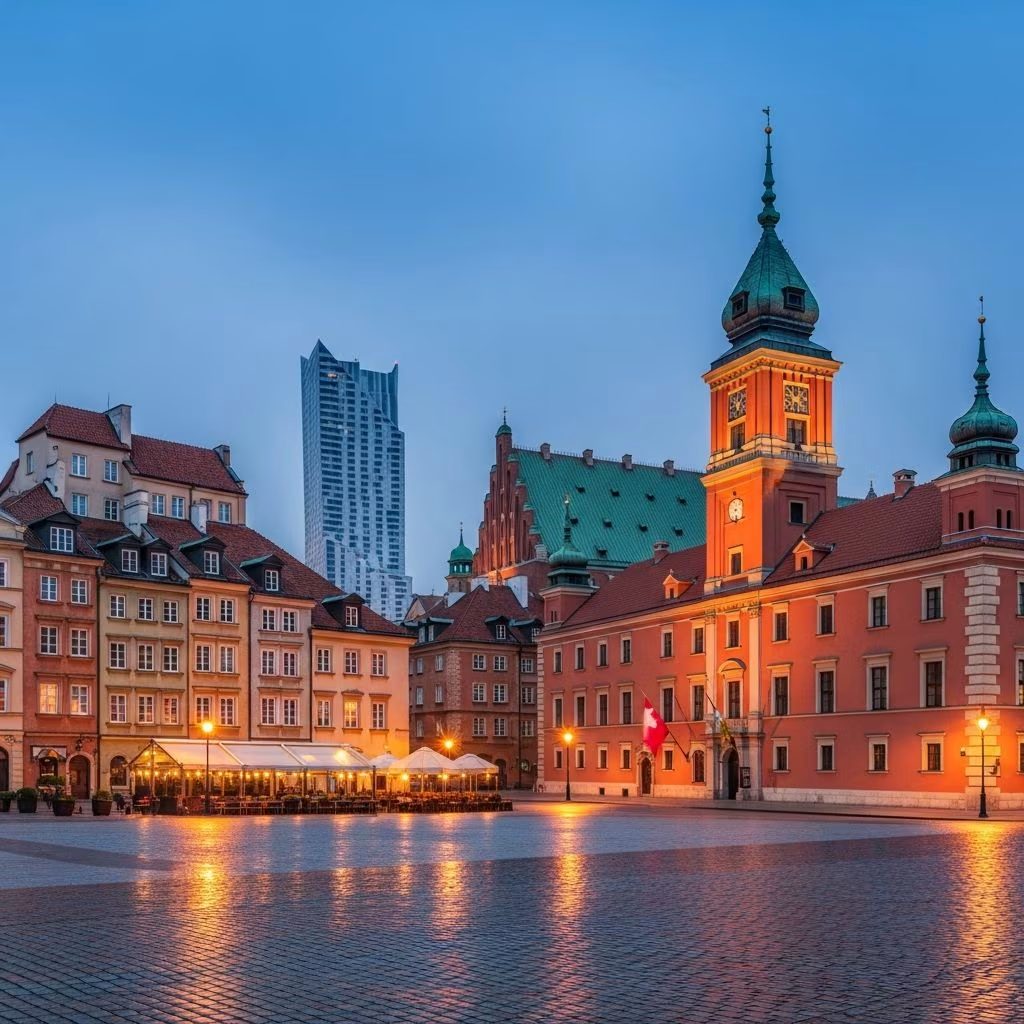
Warsaw stands as one of Europe’s most resilient and captivating destinations. After suffering massive destruction during World War II, the city underwent one of history’s most ambitious reconstruction projects, meticulously rebuilding its historic center using historical records, photographs, and paintings as guides. Today, this remarkable restoration effort earned the Old Town designation as a UNESCO World Heritage Site, transforming Warsaw into a living testament to human determination and architectural preservation.
Modern Warsaw refuses to be defined solely by its tragic past. Instead, the city presents itself as a vibrant European capital brimming with world-class museums, contemporary art spaces, lush parks, and innovative cultural institutions. Visitors should approach Warsaw expecting to encounter cutting-edge exhibitions, sophisticated dining establishments, and dynamic neighborhoods that reflect both historical consciousness and forward-thinking urban development. The city’s strength lies not in ancient structures that survived centuries untouched, but rather in meticulously reconstructed landmarks and entirely reimagined public spaces that demonstrate how tradition and modernity can coexist harmoniously.
The Old Town (Stare Miasto) represents Warsaw’s most iconic neighborhood, featuring a stunning assemblage of rebuilt Renaissance and medieval structures arranged around the picturesque Rynek Starego Miasta (Old Town Market Square). The Royal Castle (Pałac Królewski), serving as the primary royal residence for Polish monarchs, anchors the historic district and offers visitors insight into Poland’s royal heritage through its carefully curated interior spaces. Just behind the castle stands St. John’s Archcathedral (Archikatedra św. Św. Jana), a Gothic structure that serves as one of Warsaw’s oldest churches and a focal point for religious ceremonies.
The charming cobblestone streets connecting these landmarks invite leisurely exploration, with numerous cafés and restaurants offering respite along the journey. The Little Insurgent Monument, positioned along the remnants of the old city walls, commemorates young resistance fighters and provides a poignant reminder of Warsaw’s wartime experiences. The fortified Barbican and remaining defensive walls that once protected the medieval city have been carefully restored, allowing visitors to appreciate the engineering and strategic importance of these 16th-century structures.
Beyond the Old Town, Warsaw’s most recognizable landmark is Sigismund’s Column (Kolumna Zygmunta), a towering Corinthian column commemorating King Sigismund III Vasa and standing prominently in Castle Square. This monument, along with the iconic Warsaw Mermaid (Syrenka), a statue representing the city’s legendary protector, forms part of Warsaw’s visual identity and appears throughout the city’s branding and cultural imagery.
The Vistula River, flowing through the city’s eastern boundary, offers an alternative perspective on Warsaw’s urban landscape. A riverside promenade provides opportunities for walking, jogging, or simply observing the city from a different vantage point. Along this path, visitors encounter the modern National Stadium and the Copernicus Science Center, representing contemporary Warsaw’s commitment to innovative public spaces and educational infrastructure.
Warsaw’s museum landscape rivals major European capitals, offering institutions that combine rigorous scholarship with engaging presentation. The POLIN Museum of the History of Polish Jews (Muzeum Historii Polskich Żydów POLIN) stands as a particularly significant cultural institution, occupying the site of the former Warsaw Ghetto. This comprehensive museum traces a thousand years of Polish Jewish history through immersive exhibitions, interactive displays, and thoughtfully curated artifacts. The Museum of the Monument to the Ghetto Heroes stands immediately adjacent, providing additional context regarding this pivotal period in Warsaw’s and Poland’s history.
The Warsaw Uprising Museum documents the 1944 armed resistance against Nazi occupation through extensive photographic evidence, survivor testimonies, and historical artifacts. This powerful institution attracts visitors seeking to understand the personal dimensions of wartime resistance and civilian courage. For those interested in Poland’s more recent history, the Living Under Communism Museum (Muzeum Życia w PRL) offers a nostalgic and educational exploration of daily life during the communist era through vintage consumer goods, household items, and cultural memorabilia.
The Museum of Warsaw, conveniently located on the Old Town Market Square, collections items and artworks that tell the story of Warsaw’s development, the people who shaped the city, and its cultural evolution across centuries. The Fryderyk Chopin Museum celebrates Poland’s most internationally recognized composer, featuring manuscripts, period instruments, and multimedia presentations that illuminate Chopin’s life and musical legacy. The Museum of Geology, though smaller in scale, presents an impressive collection of minerals, fossils, and geological specimens that appeal to visitors with scientific interests.
Wilanów Palace and Gardens (Pałac i Ogrody Wilanowskie) represents one of Poland’s most significant royal residences, constructed as a summer retreat and serving as home to a remarkable art collection. The palace complex encompasses the Museum of King Jan III’s Palace at Wilanów, recognized as Poland’s oldest art museum. Visitors should allocate 3-4 hours to adequately experience both the palace interiors and the expansive gardens. Entrance fees vary depending on which sections visitors wish to access, ranging from modest park-only admissions to comprehensive palace tickets that provide access to all exhibition spaces.
Ujazdowski Palace, another aristocratic residence, now functions as the Center for Contemporary Art, housing rotating exhibitions of modern and contemporary artwork. This repurposed historical building demonstrates how Warsaw integrates its architectural heritage with contemporary cultural programming. The Baroque structure is surrounded by park grounds, creating an atmosphere conducive to leisurely visits combining art appreciation with outdoor relaxation.
Łazienki Park (Park Łazienkowskiego) claims the distinction of being Warsaw’s largest urban park, encompassing 76 hectares of carefully landscaped gardens, tree-lined pathways, and water features. The park contains numerous historically significant structures, including the Palace on the Isle (Pałac na Wyspie), which houses the Royal Picture Gallery and ranks among Poland’s most important historical buildings. The Old Orangery, the White Pavilion, and the Myślewicki Palace provide additional architectural interest throughout the park’s expansive grounds. During May through September, free Sunday concerts occur near the Chopin Monument, offering summer visitors the opportunity to enjoy live classical music in a spectacular outdoor setting. Early morning visits provide the most tranquil experience, allowing visitors to appreciate the park’s natural beauty before daily crowds accumulate.
The Palace of Culture and Science (Pałac Kultury i Nauki) stands as Warsaw’s most prominent 20th-century architectural landmark, dominating the city’s skyline with its distinctive Soviet-era design. The building houses an observation deck accessible to visitors seeking panoramic city views, along with various cultural venues including theaters and exhibition spaces. This monument to architectural history, though controversial among some residents, provides valuable context for understanding Warsaw’s complex political and cultural heritage.
The Copernicus Science Center (Centrum Nauki Kopernik) represents Warsaw’s commitment to interactive, educational entertainment. Featuring over 400 exhibits, the center engages both children and adults through hands-on experiments, construction challenges, mini-laboratories, and innovative demonstrations of scientific principles. The facility combines entertainment with educational rigor, making it an ideal destination for families or anyone seeking engaging experiences beyond traditional sightseeing.
For visitors interested in more specialized subjects, Warsaw offers numerous smaller institutions. The Pawiak Prison Museum, though modest in size, presents a powerful exhibition focused on wartime imprisonment and resistance activities. The Fort Legionowo and Warsaw Monument site provides additional military historical context. These institutions, while requiring less time commitment than major museums, offer concentrated doses of specific historical or cultural information.
Warsaw’s restaurant scene ranges from traditional Polish establishments serving hearty regional cuisine to innovative contemporary restaurants exploring fusion concepts and molecular gastronomy. The Old Town Market Square provides numerous café options ideal for casual meals with outdoor seating overlooking historic architecture. Organized food tours departing from central locations like the Charles de Gaulle roundabout offer guided culinary experiences introducing visitors to authentic Polish flavors and dining traditions.
Beyond cultural attractions, Warsaw offers modern shopping experiences, including the Złote Tarasy mall, notable for its distinctive glass-domed roof representing contemporary architectural ambition. This facility contrasts sharply with historical structures, demonstrating how Warsaw integrates commercial modernity within the urban fabric.
Day One Approach: Begin with early morning visits to major museums such as the Warsaw Uprising Museum to avoid peak crowds. Follow with a midday exploration of the Old Town, enjoying lunch in the Market Square before afternoon museum visits. Evening activities might include visits to smaller institutions or cultural performances.
Day Two Approach: Start with a riverside walk toward Łazienki Park, spending several hours exploring its gardens, palaces, and natural landscape. Afternoon activities might include visits to smaller specialized museums or optional contemporary art spaces. Evening could feature performances at the Grand Theatre or continued park exploration.
Day Three Approach (if available): Additional time allows deeper exploration of specific interests, whether further museum visits, more extensive park time, visits to the Presidential Palace (available through advance arranged tours), or exploration of neighborhoods beyond the immediate tourist core.
Warsaw requires comfortable walking shoes, as appreciating the city involves substantial pedestrian exploration. Museum hours vary by institution, with some closing on specific days; advance research prevents disappointment. Many attractions operate with seasonal variations in hours and programming. Transit connections via the Vistula River walk provide alternative routes between major attractions, combining sightseeing with physical activity.
A minimum of two days allows coverage of primary attractions including the Old Town, major museums, and at least one significant park. Three days permits more leisurely exploration, visits to secondary museums, and engagement with contemporary cultural programming. Longer stays enable deeper neighborhood exploration and more selective museum visits aligned with personal interests.
Late spring through early autumn offers optimal weather for park exploration and outdoor activities. Summer provides free concert programming in Łazienki Park and the most extensive cultural calendar. Winter visits offer fewer crowds but colder temperatures and reduced daylight hours.
Specialized guided tours enhance understanding of historical contexts, architectural significance, and cultural narratives. Food tours introduce authentic culinary traditions. Self-guided exploration appeals to independent travelers preferring flexible pacing and personalized route planning.
Most major museums charge modest admission fees, often including discounts for students and seniors. Some institutions offer free entry during specific hours or days. Park access is typically free or minimal cost; palace gardens may charge separate fees from palace interiors.
Warsaw distinguishes itself through its unique reconstruction narrative and emphasis on 20th-century history. While lacking ancient Roman or medieval structures predating World War II, Warsaw compensates with exceptional museums, compelling historical narratives, and remarkable urban resilience demonstrated through its restoration and contemporary development.
