

 Travel Essentials
 Travel Essentials

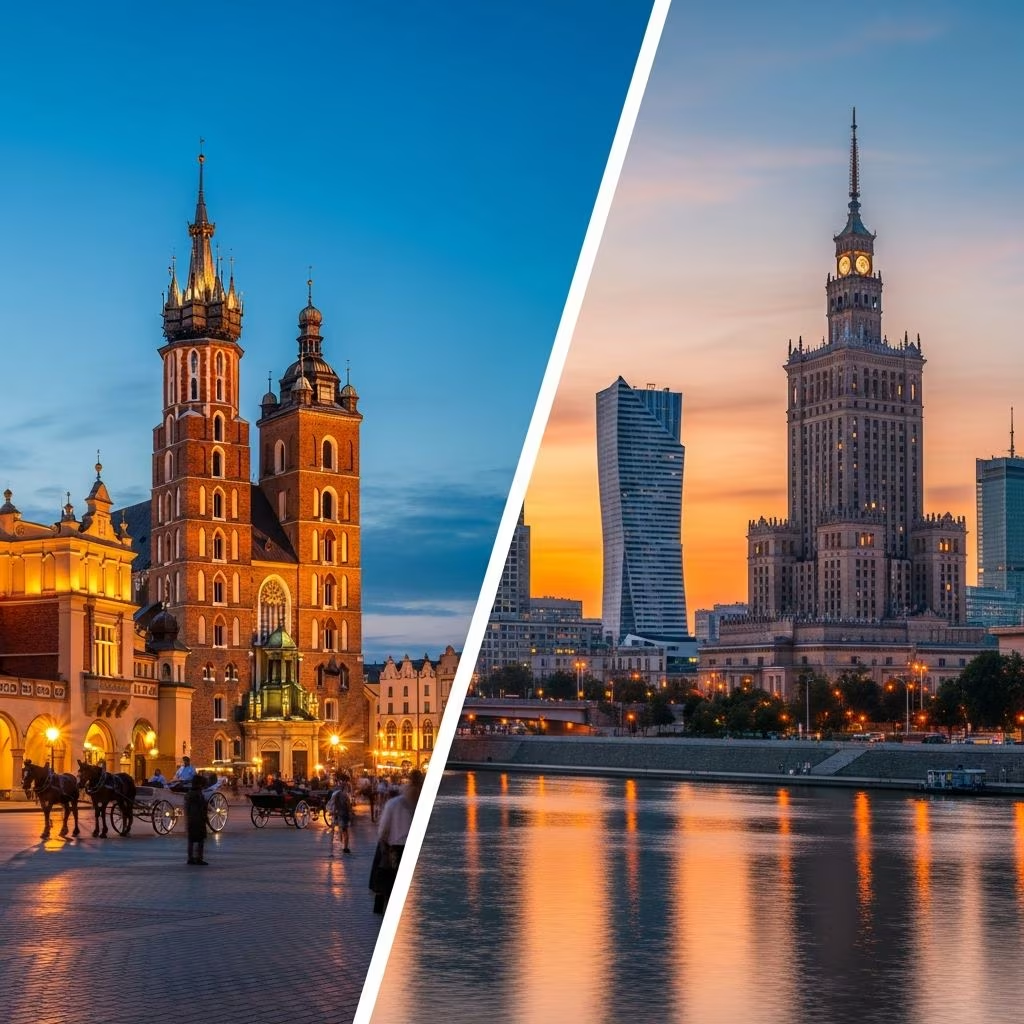
Compare Warsaw and Kraków to plan your perfect Polish adventure. Explore attractions, atmosphere, accessibility, and which city suits your travel style.
 Travel Essentials
Poland’s two largest cities offer strikingly different experiences for travelers seeking to explore Central Europe. While both destinations showcase remarkable historical narratives, distinctive architectural styles, and vibrant contemporary cultures, the character and atmosphere of each city diverge significantly. Understanding these differences can help you determine which destination aligns with your travel preferences, time constraints, and interests.
Warsaw and Kraków serve as Poland’s political and cultural bookends. Warsaw, positioned in the country’s central region, functions as the nation’s capital and largest metropolitan area. Kraków, situated approximately 300 kilometers to the south, represents Poland’s ancient cultural heart and former royal capital. This geographic separation, combined with their distinct historical trajectories, has created two cities that appeal to different types of travelers.
The historical significance of each city shapes visitor experiences profoundly. Kraków’s medieval foundations remain evident in its well-preserved Old Town, while Warsaw’s 20th-century reconstruction after devastating wartime destruction tells a different but equally compelling story of resilience and modernization.
Kraków attracts significantly higher volumes of international tourists, particularly during peak seasons. This popularity stems from the city’s picturesque medieval aesthetics and concentration of major historical attractions within walking distance of one another. The abundance of visitors creates a distinctly touristic atmosphere, with thriving hospitality infrastructure catering to travelers from around the world.
Walking through Kraków’s central districts, you’ll encounter vibrant street performances, outdoor café culture, and bustling pedestrian zones. The compact nature of the city means major attractions cluster in accessible areas, making it ideal for first-time visitors who want to maximize experiences within limited timeframes.
Warsaw presents a markedly different social landscape. As a larger metropolitan center, the capital extends across considerably more geographic space, creating distinct neighborhoods with varying atmospheres. Tourist attractions, while world-class, distribute throughout the city rather than concentrating in one area.
This dispersal results in fewer crowds at major sites compared to Kraków, particularly during shoulder seasons. Warsaw functions simultaneously as a living, working capital city and a tourist destination, maintaining an authentic urban character even in areas frequented by visitors. The pace feels less tailored to tourism and more integrated into local life.
Kraków’s architectural identity centers on preserved medieval structures spanning several centuries. The city’s Main Market Square, known locally as Rynek Główny, represents one of Europe’s largest medieval market squares and serves as the city’s gravitational center. The 14th-century Cloth Hall at the square’s heart exemplifies Kraków’s commitment to preserving historical commerce traditions.
The St. Mary’s Basilica, constructed during the early 13th century, dominates the market square with its distinctive twin towers of differing heights and proportions. The basilica’s interior features a celebrated altar carved by the renowned artist Wit Stwosz, representing outstanding examples of late medieval craftsmanship.
Beyond the market square, Kraków’s Jewish Quarter, historically known as Kazimierz, occupies a significant position in both cultural heritage and contemporary tourism. The district’s narrow streets, synagogues, and memorial sites reflect complex historical narratives spanning centuries.
Warsaw’s architectural narrative differs fundamentally from Kraków’s medieval preservation. The capital’s cityscape reflects 20th-century reconstruction following World War II devastation, combined with contemporary development. The Palace of Culture and Science, a towering Stalinist-era structure completed in 1955, dominates Warsaw’s skyline and represents a distinctive architectural era.
The Royal Castle, meticulously reconstructed following wartime destruction, demonstrates Warsaw’s commitment to restoring historical landmarks within a modernized urban framework. Contemporary Warsaw features innovative museums, cutting-edge architecture, and dynamic public spaces designed for 21st-century urban living.
| Attraction | Description | Estimated Time |
|---|---|---|
| Rynek Główny | Europe’s largest medieval market square with shops and restaurants | 2-3 hours |
| Wawel Castle and Cathedral | Historic royal residence and burial site of Polish monarchs | 2-3 hours |
| St. Mary’s Basilica | 13th-century church with Wit Stwosz’s altar carving | 45 minutes |
| Kazimierz Quarter | Historic Jewish district with cultural and memorial sites | 2-4 hours |
| Cloth Hall | Medieval trading hall now housing shops and restaurants | 1-2 hours |
| Barbican | 15th-century defensive structure and city gate | 30-45 minutes |
| Attraction | Description | Estimated Time |
|---|---|---|
| Royal Castle | Reconstructed royal residence with museum exhibits | 2-3 hours |
| Copernicus Science Center | Interactive museum exploring scientific principles | 2-4 hours |
| Museum of Warsaw | Comprehensive history of the capital’s development | 1.5-2 hours |
| Łazienki Park | Large green space with Palace on the Water | 2-3 hours |
| Krakowskie Przedmieście | Historic street with significant cultural landmarks | 1-2 hours |
| Prski Park | Riverside park popular with locals | 1-2 hours |
Kraków’s location enables convenient access to several significant historical and natural sites. The Auschwitz-Birkenau Memorial and Museum, located approximately 65 kilometers from the city, represents one of Europe’s most important historical sites documenting Holocaust history. Day trips to this location typically require 4-5 hours total travel and visit time.
The Wieliczka Salt Mine, situated about 15 kilometers southeast of Kraków, offers a unique underground experience through chambers, corridors, and chapels carved from salt deposits over centuries. Underground cathedral chambers and sculptured salt formations create an otherworldly atmosphere below the surface.
Zakopane, a mountain resort town approximately 100 kilometers south, provides escape to natural alpine landscapes and traditional highland culture. Shorter excursions to smaller towns like Katowice and Łódź also remain feasible from Kraków’s excellent transportation connections.
Warsaw’s role as Poland’s capital provides superior regional transportation infrastructure. While fewer immediately proximate attractions rival Kraków’s concentration of historical sites, Warsaw functions as an excellent base for exploring broader Poland. The city’s airport, accommodation infrastructure, and rail connections facilitate onward travel to other destinations.
Warsaw itself offers sufficient museums, galleries, and cultural institutions to sustain multi-day visits without requiring day trips. The city’s park system, including Łazienki and Prski Parks, provides recreational opportunities within the urban environment.
Kraków’s compact size makes pedestrian exploration feasible for most visitors. Major attractions cluster within walking distance, with the Main Market Square serving as a convenient reference point. The pedestrian-friendly layout particularly benefits travelers with limited mobility or those preferring to avoid public transportation.
Warsaw’s larger expanse necessitates more sophisticated transportation strategies. The city features an excellent public transport system including metro, trams, and buses operated with modern infrastructure and reasonable pricing. Visitors unfamiliar with the city may require more planning to navigate between dispersed attractions effectively.
Traveling between Warsaw and Kraków presents multiple convenient options. The Intercity Train service operates the route in approximately 2.5 hours, with frequent daily departures offering comfortable seating and modern amenities. This represents the most popular option for independent travelers seeking economical, efficient transportation.
Private transfer services provide alternative transportation between cities, requiring approximately 3-4.5 hours depending on traffic and time of day. Coaching services and rental cars also enable flexible travel schedules, though train travel typically offers superior value for standard point-to-point journeys.
Both cities showcase Poland’s culinary heritage alongside contemporary gastronomic innovation. Kraków’s compact dining district, concentrated around the Main Market Square and surrounding neighborhoods, offers everything from traditional pierogi establishments to contemporary fine dining.
Warsaw’s larger size supports more diverse dining options, with distinct neighborhoods developing distinctive culinary identities. The capital’s restaurant scene reflects international influences more prominently, while maintaining strong connections to traditional Polish cuisine.
Warsaw emphasizes museum-based cultural experiences, with world-class institutions covering art, history, science, and contemporary topics. The Copernicus Science Center and Museum of Warsaw exemplify the capital’s investment in educating visitors about scientific and historical narratives.
Kraków’s cultural scene centers on historical preservation and heritage interpretation. While museums exist, the city’s appeal derives significantly from experiencing architectural heritage and historical spaces directly rather than viewing exhibits in institutional settings.
First-time Poland visitors seeking concentrated historical experiences and picturesque aesthetics typically find Kraków more immediately appealing. The compact layout, walkable attractions, and romantic atmosphere align with traditional tourism expectations.
Travelers preferring cultural depth, contemporary experiences, and authentic urban environments without excessive touristy atmospheres gravitate toward Warsaw. The capital’s world-class museums, parks, and modern amenities support longer stays and repeated visits.
With 3 full days available, focusing on a single city provides optimal experiences. Kraków benefits from concentrated exploration time, allowing thorough Main Market Square discovery and one meaningful day trip.
Seven to ten days enable comfortable exploration of both cities. Approximately 3-4 days in each destination allows balanced experience of major attractions without excessive rushing. This timeframe accommodates day trips from Kraków to Auschwitz or Wieliczka while maintaining unhurried Warsaw exploration.
Combining Warsaw and Kraków within one journey provides complementary perspectives on Polish culture, history, and contemporary life. The efficient train connection between cities facilitates flexible itinerary construction.
A suggested itinerary approach involves starting in Warsaw to establish understanding of Poland’s political and modern narrative, followed by Kraków to experience historical preservation and heritage tourism. Alternatively, beginning with Kraków suits travelers wanting to save the capital’s contemporary culture and museums for the final portion of their trip.
Three full days provides adequate time to experience each city’s major attractions. Kraków benefits from concentrated daily exploration, while Warsaw’s dispersed attractions suit varied daily itineraries. Longer stays enable deeper cultural engagement and neighborhood exploration beyond primary tourist sites.
Both cities accommodate families effectively. Kraków’s compact layout and walkable streets appeal to families with younger children, while Warsaw’s Copernicus Science Center and extensive parks suit families with school-aged children seeking educational and recreational experiences.
May through September offers optimal weather and fully operational attractions. Kraków experiences particularly heavy tourism during these months. April, October, and early November provide pleasant weather with reduced crowds. Winter visits (December-February) present colder conditions but festive atmospheres, particularly in Kraków.
Yes, a week provides sufficient time to experience both cities comfortably without excessive rushing. This timeframe allows balanced exploration of major attractions plus one meaningful day trip from Kraków.
Poland’s transportation infrastructure ranks among Central Europe’s most efficient. Both cities feature reliable, affordable public transport systems with frequent service. Warsaw’s metro, tram, and bus network proves particularly comprehensive.
The choice between Warsaw and Kraków ultimately depends on personal travel preferences, available time, and desired experiences. Kraków appeals to visitors seeking picture-perfect medieval aesthetics, concentrated historical tourism, and charming small-city character. Warsaw attracts travelers valuing modern urban experiences, world-class museums, authentic local culture, and diverse cultural institutions.
The most comprehensive approach involves visiting both cities, allowing appreciation for Poland’s multifaceted identity—bridging medieval heritage preservation with contemporary urban dynamism. Whether prioritizing one destination or combining both, Poland’s two major cities guarantee memorable experiences reflecting centuries of European history, culture, and human resilience.
