

 Travel Essentials
 Travel Essentials

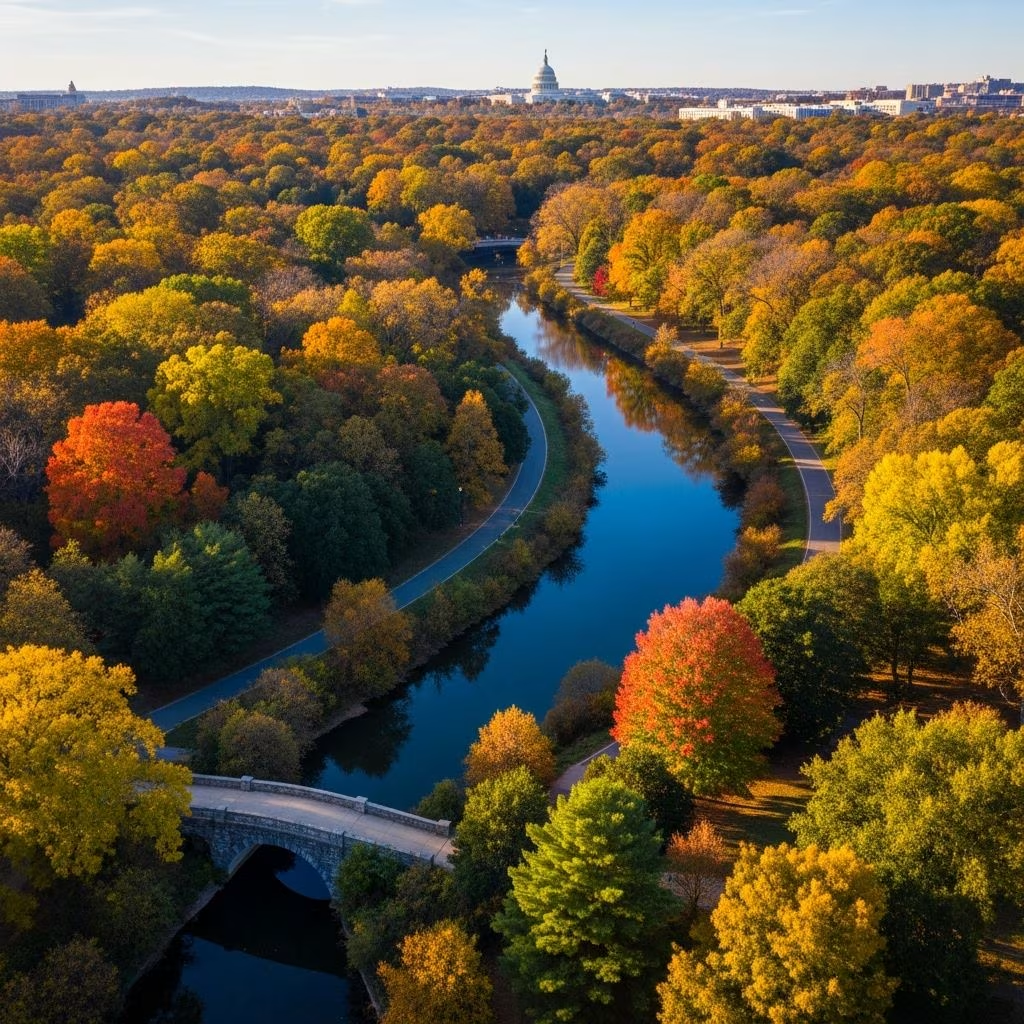
Washington, DC, secures the #1 spot for park systems among U.S. cities for five straight years, excelling in accessibility, funding, and equitable distribution of green spaces.
 Travel Essentials
Washington, DC, consistently earns accolades as home to the finest urban park network in the United States. According to the Trust for Public Land’s ParkScore index, the District has held the top position for five years running as of 2025, achieving an impressive score of 85.5 out of 100. This ranking evaluates cities on key metrics like park access, acreage, investment, amenities, and equity, where DC outperforms competitors nationwide.
The ParkScore index, produced annually by the Trust for Public Land, analyzes the park systems of the 100 largest U.S. cities. DC’s dominance stems from strong performance across all categories. In 2019, it first claimed the #1 spot with 83.8 points, edging out Saint Paul, MN (83.2), and maintaining leadership through 2025. Recent data shows Irvine, CA, in second and Minneapolis, MN, in third, while nearby Arlington, VA, sits at seventh.
| Rank | City | ParkScore |
|---|---|---|
| 1 | Washington, DC | 85.5 |
| 2 | Irvine, CA | ~84 |
| 3 | Minneapolis, MN | ~82 |
| 7 | Arlington, VA | High |
DC’s edge lies in its **90% resident access** to parks within a 10-minute walk, far surpassing national averages, and per capita spending of $393—triple the U.S. average of $133.
Nearly 90% of DC’s parkland falls under the National Park Service (NPS), providing substantial federal resources uncommon in other cities. This partnership amplifies investment but introduces complexities. The District supplements NPS efforts with local funds for projects like stream restorations and park renovations, exemplified by the $21 million Franklin Park upgrade.
Rock Creek Park, a 1,700-acre NPS-managed gem established in 1890, exemplifies this blend. As the third national park created, it offers trails, wildlife habitats, and historic sites like Fort Stevens from the Civil War era. The U.S. National Arboretum, spanning 446 acres, adds botanical splendor with Capitol Columns and hiking paths, open daily from 8 a.m. to 5 p.m.
DC’s parks transcend rankings, weaving history, nature, and recreation into the urban fabric. Planned by Pierre L’Enfant, the city’s founder envisioned greenspaces enhancing the Federal City, a vision realized today.
Stretching from the Capitol to the Lincoln Memorial, this iconic lawn hosts protests, festivals, and reflections amid monumental surroundings. Managed by NPS, it symbolizes democracy while offering open space for millions annually.
This expansive preserve features dense forests, creeks, and biodiversity, including native species like snapping turtles. Visitors hike miles of trails, explore Pierce Mill, or visit the Francis Scott Key Memorial in Georgetown.
With secluded vistas and research collections, the Arboretum invites leisurely exploration. Its trails and historic columns provide serene escapes.
Local favorites like Franklin Park, recently revitalized, anchor communities. Smaller pockets—Meridian Hill, Logan Circle—offer plazas, fountains, and events, ensuring walkable greenery everywhere.
Despite top scores, issues persist. Jurisdictional splits between NPS, DC agencies, federal bodies, and private groups create confusion over maintenance and vision. Without unified leadership, cohesive planning lags, prompting calls from Advisory Neighborhood Commissions for DC to assume more control over local parks. Equity gaps remain, as NPS dominance can sideline neighborhood-specific needs.
Proximity to parks correlates with better physical health, mental well-being, and social ties. DC’s system fosters active lifestyles, from yoga in Dupont Circle to biking along the Potomac. Families picnic in equipped playgrounds, while seniors enjoy shaded benches—amenities boosting quality of life.
DC invests in climate-resilient designs: permeable surfaces combat flooding, native plantings support pollinators. Collaborative efforts between DPR (Department of Parks and Recreation) and NPS aim to streamline operations. Community input shapes expansions, ensuring parks evolve with residents’ needs.
| Park | Best For | Accessibility |
|---|---|---|
| National Mall | Monuments, events | Metro, free |
| Rock Creek | Hiking, nature | Trails, parking |
| Arboretum | Botany, peace | Free shuttle |
Pack water, sunscreen, and respect ‘leave no trace’ principles. Seasonal blooms peak spring; fall foliage dazzles.
High access (90% within 10-min walk), $393/resident investment, 21% parkland coverage, and NPS support propel DC ahead.
About 90% by NPS, with DC funding enhancements.
Yes, most are free; special events may charge.
Hiking, sports, picnics, tours—catering to all ages.
Leads with equity and access; Arlington close but lower-ranked.
DC’s park supremacy blends federal grandeur with local vitality, inviting exploration year-round. Whether jogging trails or monument-gazing, these spaces define the capital’s allure.
