

 Travel Essentials
 Travel Essentials

Comprehensive guide to Washington DC's public transport options including Metro rail, buses, circulators, biking, walking, and more for seamless city navigation.
 Travel Essentials
Washington DC offers a robust network of transportation choices that make it easy for visitors and residents to traverse the city and its surroundings. Managed primarily by the Washington Metropolitan Area Transit Authority (WMATA), the system includes rapid rail, buses, and complementary services designed for efficiency and accessibility.
The cornerstone of DC’s public transit is the Washington Metro, a rapid transit network that began operations in 1976. Spanning six lines and 98 stations across 130 miles of track, it connects all quadrants of DC with suburban areas in Virginia and Maryland. This second-largest rapid rail system in the US by ridership serves millions daily, linking key sites like the National Mall, airports, and Union Station.
Travelers can board Metrorail using contactless payments via credit, debit, or mobile wallets at faregates. The system operates from early morning to late night, with peak hours seeing the highest frequency. It provides direct access to Ronald Reagan Washington National Airport and connections to Dulles International.
For navigation, download the official Metro map app or use station displays. Recent updates emphasize safety with enhanced cleaning and real-time tracking.
Complementing the rail, Metrobus operates over 176 lines with 12,301 stops, including nearly every Metro station. These eco-friendly vehicles, many using compressed natural gas or hybrid tech, emit 45% fewer hydrocarbons than diesel buses. A network redesign in June 2025 improved frequency and route clarity.
A standard fare is $2.25, payable via SmarTrip card, contactless payment, or exact cash. Buses extend into Maryland and Virginia, serving nine major transit centers. Real-time apps help track arrivals, making it reliable for neighborhood hops.
| Bus Type | Key Features | Routes Served |
|---|---|---|
| Local Metrobus | $2.25 fare, frequent stops | DC core and suburbs |
| Express/Regional | Higher speed, fewer stops | Airport and commuter links |
| Hybrid/CNG | Eco-friendly, low emissions | All major corridors |
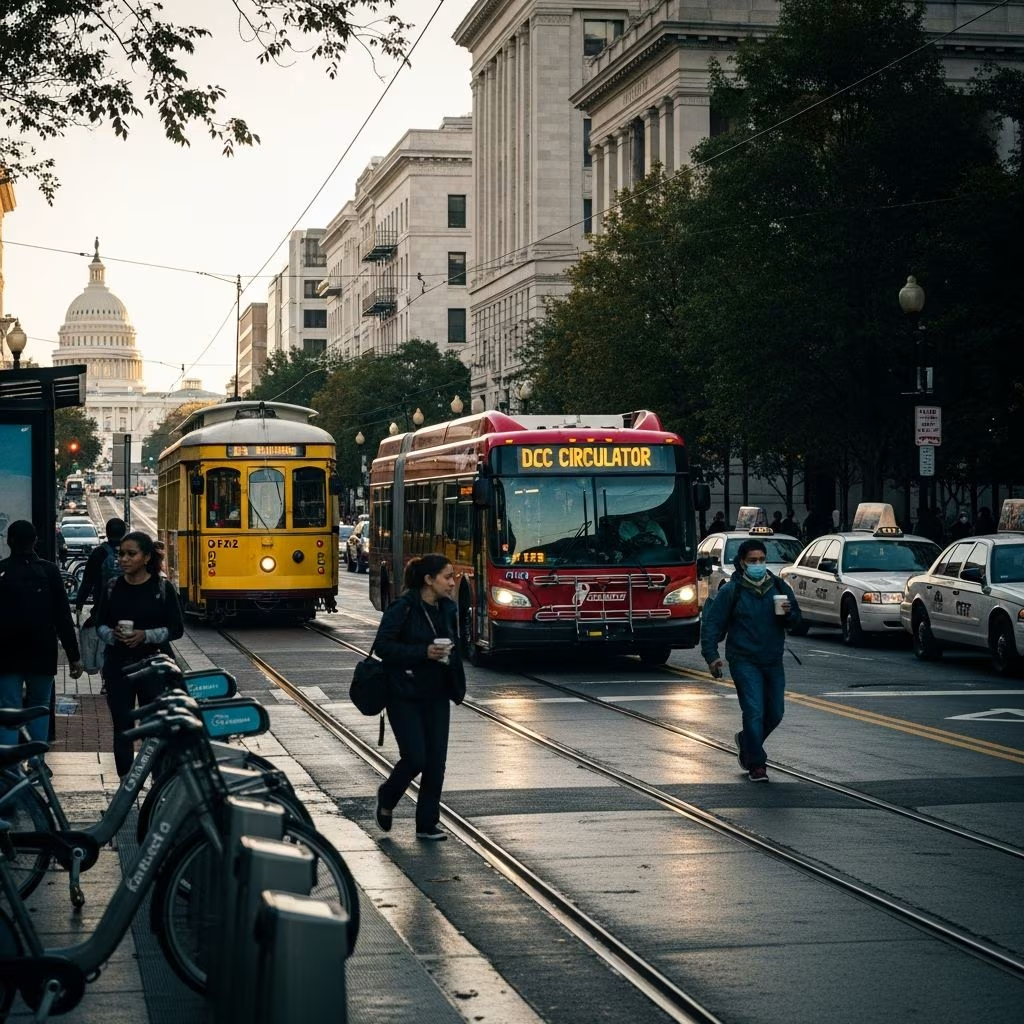
For short, scenic trips, the DC Circulator stands out at just $1 per ride or $2 for unlimited two-hour transfers. These bright red buses run every 10 minutes, looping through popular areas like the National Mall, Capitol Hill, and Nationals Park. Routes within Capitol Hill connect Eastern Market, Potomac Avenue, and Union Station.
Ideal for tourists, Circulators prioritize high-traffic tourist zones, offering hop-on-hop-off flexibility without breaking the bank. Look for red signs at stops.
With 58% of commuter trips by bike, walk, or transit, DC promotes active transport. Capital Bikeshare boasts over 350 stations and 3,000 bikes across DC, Virginia, and Maryland. Unlock with a Day Key or membership; first 30 minutes free, then fees per half-hour.
Unlimited Biking provides rentals with helmets, locks, and maps from central spots. Use dedicated bike lanes—sidewalks are for pedestrians. Scooters and mopeds offer quick alternatives; adhere to age and safety rules.
DC’s design favors pedestrians, with wide sidewalks along the National Mall linking monuments, museums, and gardens. Neighborhoods feature intimate walks past theaters and historic sites. It’s the simplest, free way to absorb the capital’s grandeur.
Beyond local transit, MARC commuter rail and Amtrak’s Acela Express/Northeast Regional link Union Station to Baltimore, Philly, NYC, and Boston. DC Streetcar revives in key areas via DDOT efforts.
Airports integrate seamlessly: Metro to Reagan National, Silver Line to Dulles. DDOT’s Kids Ride Free aids families.
Get a SmarTrip card for seamless fares across rail, bus, and Circulator. Apps like WMATA’s provide schedules, alerts, and trip planners. Check for service changes, especially weekends.
Fares range from $2-$6 based on distance and time; use SmarTrip for discounts.
No, typically 5 AM-12 AM weekdays, varying weekends.
Yes, exact change $2.25; no change given.
Capital Bikeshare stations or Unlimited Biking shops.
Highly, especially the Mall; wear comfortable shoes.
For speed across the city, choose Metro. Local jaunts suit Circulator or buses. Active explorers pick bikes or feet. Combine for optimal routes—e.g., Metro to Mall, then walk.
WMATA and DDOT continually enhance services, like bus redesigns and streetcar revivals, ensuring DC remains commuter- and visitor-friendly.
