

 Travel Essentials
 Travel Essentials

Discover why Washington State features over 1,000 waterfalls, making it a premier waterfall destination with diverse ecosystems across Olympic and Mount Rainier regions.
 Travel Essentials
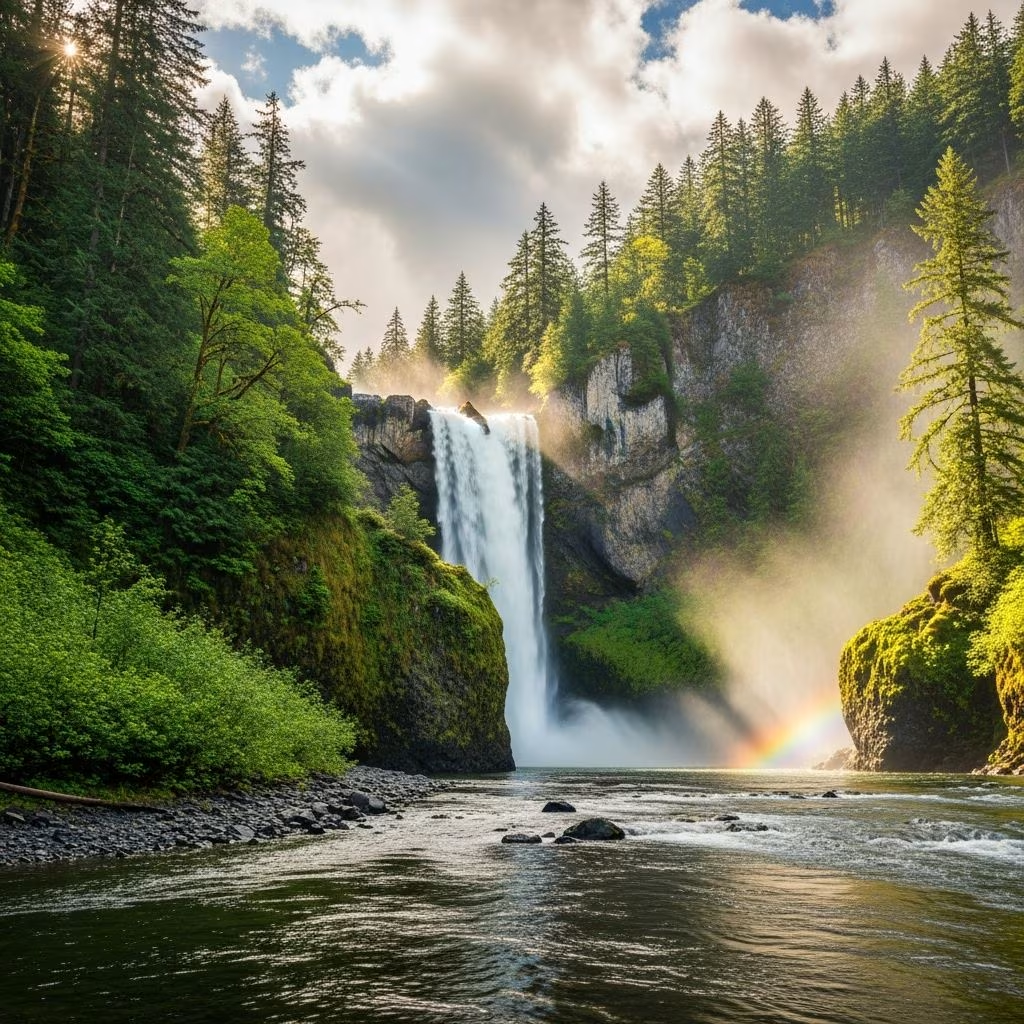
Washington State stands as one of North America’s premier destinations for waterfall enthusiasts, characterized by an extraordinary concentration of cascading waters that exceed 1,000 individual falls throughout the region. This remarkable abundance stems from the state’s unique geography, climate patterns, and geological formations that create ideal conditions for waterfalls to thrive. The combination of significant precipitation, mountainous terrain, and river systems carves pathways for water to plunge dramatically across the landscape, attracting visitors from around the globe seeking to witness nature’s most powerful displays.
The prevalence of waterfalls in Washington reflects the state’s position in a temperate climate zone where moisture-laden air masses collide with elevated terrain, producing substantial rainfall throughout much of the year. This precipitation feeds countless streams and rivers that cascade down mountainsides, creating the diverse collection of falls found across the state. From the snow-capped peaks of the Cascade Range to the ancient forests of the Olympic Peninsula, waterfalls punctuate nearly every corner of Washington’s natural landscape.
Washington’s waterfalls are distributed across several distinct geographic regions, each offering unique ecological characteristics and visitor experiences. The Olympic Peninsula contains numerous cascades flowing through temperate rainforests, including falls accessible along the Sol Duc River, Wynoochee River, and areas surrounding Lake Crescent and Lake Quinault. These locations showcase the verdant ecosystem of the Pacific Northwest, where dense vegetation frames plunging waters in primordial settings.
Mount Rainier National Park represents another major concentration point for waterfall activity, where glacial melt and abundant precipitation create powerful cascades. The North Bend area near Seattle provides convenient access to several notable falls for visitors seeking waterfall experiences without extensive travel. Each region maintains distinct characteristics based on elevation, vegetation, and water source, contributing to the overall diversity that makes Washington a waterfall destination of unparalleled richness.
Washington’s most renowned waterfalls each possess distinctive features that contribute to their fame and visitor appeal. Snoqualmie Falls, one of the state’s most celebrated cascades, draws approximately 1.5 million visitors annually to its 268-foot drop. Located near North Bend, this iconic waterfall has become emblematic of Washington’s natural heritage and serves as a symbol of the state’s commitment to preserving its aquatic wonders.
Palouse Falls, designated as Washington’s official state waterfall, plunges 200 feet over a dramatic cliff into a striking circular pool formed by the Palouse River. This distinctive cascade represents the variety of waterfall types found throughout the state, from gentle cascades to powerful plunging falls. The circular pool at its base has become a defining feature that distinguishes Palouse Falls from other regional waterfalls.
Colonial Creek Falls holds the distinction of being considered the largest waterfall in Washington, though it is classified technically as a cascade waterfall rather than a traditional plunge fall. This categorization illustrates how waterfall classification systems recognize different morphologies and formation processes, with cascades representing a specific type of flow pattern over rocky terrain.
The majority of Washington’s waterfalls are accessible through established hiking trails that range from short walks to full-day expeditions. Popular options include Panther Creek Falls, Strawberry Falls, Falls View Canyon, Walupt Creek Falls, Marymere Falls, Keekwulee Falls, Lewis River Falls, Sol Duc Falls, and Comet Falls. Each trail offers distinct difficulty levels, elevation gains, and scenic characteristics that appeal to different visitor preferences and experience levels.
Snoqualmie Falls provides a particularly accessible option for visitors seeking minimal hiking commitment, while trails like Franklin Falls require approximately 2.6 miles of hiking with 500 feet of elevation gain. Rocky Brook Falls and Falls Creek Falls offer additional alternatives for those exploring the region. The diversity of trail options ensures that waterfall enthusiasts of varying fitness levels and time availability can find suitable destinations within Washington’s extensive waterfall network.
Washington’s waterfalls exhibit significant seasonal variation in water volume and visual impact, creating optimal viewing windows throughout the year. Spring and early summer, when snowmelt from high-elevation peaks combines with seasonal rainfall, typically produce the most dramatic cascades and impressive water volumes. Autumn provides clear skies and comfortable temperatures alongside substantial water flow, making it an ideal season for photography and extended exploration.
Winter conditions in Washington’s higher elevations can create additional challenges for waterfall access, as snow and ice may render some trails hazardous. However, winter viewing offers unique perspectives, with ice formations adorning cliff faces and creating crystalline sculptures around certain falls. Summer months bring reliable weather but occasionally reduced water volumes at lower elevations, necessitating visitor consideration of seasonal timing when planning waterfall expeditions.
The remarkable concentration of waterfalls in Washington has generated increased interest in preserving these natural features while managing the visitor impacts associated with their popularity. Managing the 1.5 million annual visitors to Snoqualmie Falls alone requires thoughtful infrastructure development and visitor education initiatives. Park services and conservation organizations work collaboratively to maintain trail conditions, protect surrounding ecosystems, and ensure that waterfalls remain accessible for future generations.
Sustainable tourism practices, including trail maintenance, erosion control, and visitor education regarding Leave No Trace principles, have become increasingly important as waterfall destinations experience growing interest. The challenge of balancing preservation with accessibility requires ongoing effort from land management agencies, local communities, and visitors themselves. Educational initiatives that encourage responsible behavior and appreciation for the delicate ecosystems surrounding waterfalls contribute to long-term conservation success.
Visitors planning to explore Washington’s waterfall destinations should consider several practical factors. Researching specific falls, trail conditions, and seasonal accessibility ensures successful outings. The availability of detailed guides and online resources documenting trail characteristics, difficulty ratings, and estimated hiking times helps visitors select appropriate destinations matching their experience and fitness levels.
Photography enthusiasts should plan visits during periods offering optimal lighting, typically early morning or late afternoon hours when angle and intensity of sunlight create dramatic effects. Those seeking solitude away from crowded popular falls can discover lesser-known cascades by venturing into more remote areas accessible through backcountry trails. Regardless of specific destination choices, Washington’s waterfall landscape offers discoveries suited to every visitor preference and experience level.
The exceptional waterfall abundance in Washington State results from a convergence of geographic, climatic, and geological factors. The state’s position along moisture-laden Pacific air corridors ensures substantial precipitation, while its topographically diverse landscape provides the elevation changes necessary for dramatic cascades. The complex geology underlying the region creates multiple rock formations conducive to waterfall formation and maintenance.
Beyond statistics and geography, Washington’s waterfalls represent a cultural and recreational treasure that has shaped the region’s identity. These cascading waters have inspired artists, adventurers, and nature enthusiasts for generations, fostering a deep appreciation for the Pacific Northwest’s natural heritage. The commitment to preserving waterfall ecosystems and maintaining public access reflects regional values prioritizing environmental stewardship and outdoor recreation as central to quality of life in Washington State.
