

 Travel Essentials
 Travel Essentials

Plan an unforgettable weekend exploring Bonn's cultural heritage and Cologne's architectural splendor along the Rhine River in western Germany.
 Travel Essentials
Western Germany offers an exceptional blend of historical significance, artistic treasures, and natural beauty that make it an ideal destination for weekend travelers. Two cities—Bonn and Cologne—stand out as particularly compelling choices, each offering distinct experiences while remaining conveniently connected by efficient rail service. This guide provides comprehensive information for visitors planning to explore these two remarkable destinations within a compressed timeframe.
Bonn and Cologne represent contrasting yet complementary aspects of German culture and history. Bonn, located along the Rhine River in western Germany, served as the capital of West Germany until 1991, lending it historical gravitas and political significance. Today, the city maintains a peaceful, walkable atmosphere with verdant parks and revitalized urban areas that appeal to travelers seeking cultural depth without overwhelming crowds.
Cologne, by contrast, stands as one of Germany’s largest metropolitan centers, boasting a 2,000-year history and cosmopolitan character. The city seamlessly integrates ancient traditions with contemporary urban vitality, making it accessible to visitors with varying interests. Both cities function as cultural hubs within North Rhine-Westphalia, the western state that borders the Netherlands and Belgium.
A weekend itinerary requires strategic planning to maximize experience. Travel experts recommend allocating approximately two and a half to three days for meaningful exploration of both cities. The convenience of regional rail connections eliminates the necessity for rental vehicles—trains depart between Bonn and Cologne at least twice hourly, with journey times of approximately thirty minutes.
Consider these transportation logistics when structuring your visit:
Bonn’s appeal lies in its combination of historical significance and contemplative atmosphere. The city’s most celebrated landmark is the Beethoven House, birthplace of Ludwig van Beethoven and now home to an extensive museum documenting the composer’s life and compositions. The museum provides complimentary audio guides that enhance visitor understanding, while an adjacent concert hall occasionally hosts classical performances. For music enthusiasts, this venue alone justifies an extended Bonn visit.
Beyond musical heritage, Bonn features architectural landmarks reflecting multiple historical periods. The Bonner Münster exemplifies ecclesiastical architecture, combining Romanesque cloisters with Gothic elements within a unified structure. The historic city hall maintains its original character as a gathering point within the old town district. The Poppelsdorf Palace, originally constructed as a baroque residence, now serves as a university building and architectural centerpiece.
The Museum Mile represents another significant draw for culturally oriented travelers. This concentrated corridor of institutions includes the House of German History, an authoritative exhibition documenting the nation’s complex twentieth-century narrative. Additional museums along this corridor address art history, natural sciences, and specialized collections. While comprehensive museum exploration requires multiple days, even abbreviated visits provide meaningful cultural engagement.
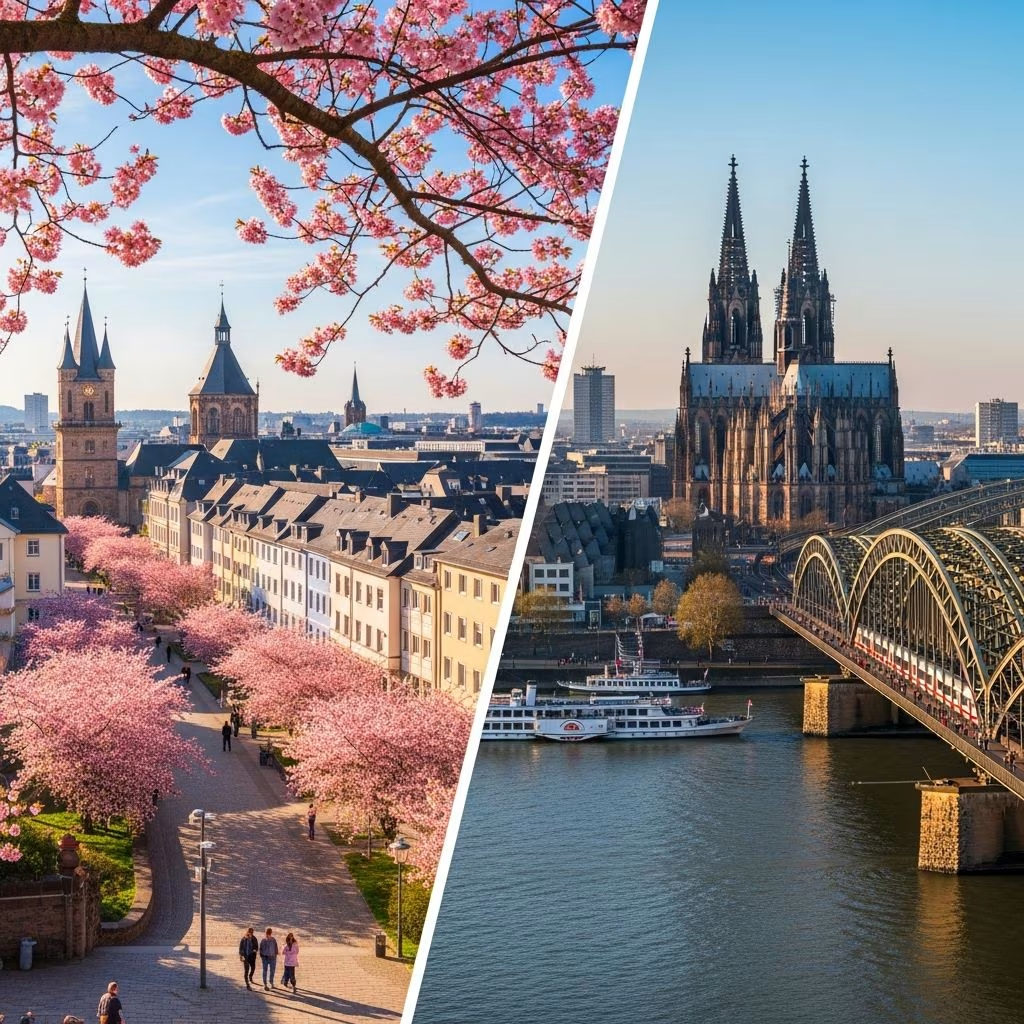
Bonn’s riverfront deserves dedicated exploration time. The entirety of the Rhine-facing waterfront functions as an integrated bicycle and pedestrian pathway with adjacent parkland. Riverside cafes and beer gardens offer respite points for beverage or meal service while observing river traffic and architectural vistas. The river promenade’s accessibility makes it suitable for visitors of varying mobility levels.
Cologne’s landscape is dominated by the Cathedral, a UNESCO World Heritage structure exemplifying High Gothic architectural principles. This twin-spired edifice rises prominently from the riverbank and remains visible from multiple city locations, serving as a natural navigational reference. The Cathedral warrants multiple visits to fully appreciate its aesthetic and historical dimensions.
Entrance to the Cathedral permits exploration of interior spaces where visitors encounter gilded medieval reliquaries and ecclesiastical artworks spanning centuries. For physically able visitors, climbing the 533 steps to the south tower viewing platform rewards effort with panoramic perspectives across the city and, under favorable atmospheric conditions, extending toward the Siebengebirge hills. The treasury collection deserves specific attention, displaying precious metalwork, sculptures, and sacred objects from the medieval period.
Beyond the Cathedral, Cologne’s old town features reconstructed medieval streets and squares that maintain historical character while accommodating modern commerce and dining establishments. The district’s winding pathways encourage exploratory wandering, revealing neighborhood variations and district-specific characteristics. Different quarters emphasize different aspects of urban culture—some focus on artisanal retail, others on gastronomy, and still others on nightlife venues.
The Hohenzollern Bridge functions as both practical pedestrian crossing and symbolic meeting point. This iron structure displays numerous love locks affixed by visitors, creating a contemporary folkloric tradition. The bridge’s midpoint offers photographic opportunities and perspectives on the Cathedral’s architectural details.
Both cities maintain extensive museum networks serving specialized scholarly and recreational interests. In Cologne, visitors encounter options ranging from established fine art collections to themed museums addressing specific historical periods or cultural subjects. Ethnological museums and medieval art institutions require brief public transportation connections from the city center but reward the effort with distinguished collections. Conversely, certain thematic museums focused on commercial products have received mixed visitor evaluations, and selective prioritization prevents museum fatigue.
Bonn’s curatorial offerings emphasize historical documentation and artistic achievement. The House of German History provides context for understanding postwar division, reunification processes, and contemporary political development. Art museums throughout the Museum Mile address various periods from medieval manuscripts through contemporary installations. The Museum Koenig, distinguished by its architecturally significant exterior, houses natural history collections.
Regional gastronomy reflects both cities’ positions along significant trade and transportation corridors. Cologne maintains particular pride in its traditional Kölsch beer, typically served in diminutive 0.2-liter glasses drawn from wooden barrels in dedicated beerhalls. This local beverage custom represents social tradition as much as beverage consumption, with establishments serving as gathering points for community interaction.
Restaurant establishments throughout both cities range from casual cafes serving light meals to sophisticated venues offering contemporary cuisine informed by traditional regional recipes. Walking the pedestrian commercial zones reveals dining options addressing multiple budget levels and culinary preferences. Riverfront establishments particularly appeal to visitors seeking meal service with architectural and landscape views.
Accommodation Considerations: Both cities offer lodging options from budget hostels through luxury hotels. Bonn’s smaller scale may appeal to travelers seeking quieter environments, while Cologne’s variety accommodates diverse preferences and budgets.
Seasonal Factors: Cologne hosts an internationally recognized carnival celebration typically occurring in early spring, drawing large crowds and requiring advance accommodation booking. Other seasons offer more relaxed visitor experiences with reduced crowding.
Language Preparation: English proficiency varies among service providers. Learning basic German phrases enhances interactions and demonstrates cultural respect. Tourist information centers in both cities provide multilingual assistance and supplementary materials.
Financial Management: European Union currency (euros) functions throughout both cities. ATMs provide convenient cash access, while many establishments accept credit cards. Certain smaller vendors may exclusively accept cash payment.
Strategic positioning makes Bonn and Cologne excellent bases for expanding weekend itineraries. Aachen, accessible via train within ninety minutes, features the Aachen Cathedral and historical associations with Charlemagne. Rhine Valley communities like Cochem and Bacharach, similarly positioned approximately ninety minutes from either city, showcase riverine landscapes and wine-producing traditions. Düsseldorf, accessible from Cologne, provides exposure to a major metropolitan center with distinct cultural characteristics.
A comprehensive Cathedral visit, including tower ascent and treasury exploration, typically requires two to three hours. Budget decisions regarding treasury access may extend the duration. The interior architecture alone justifies significant time investment, while external observation from bridge and riverfront perspectives adds value without requiring paid admission.
Bonn emphasizes historical and classical cultural traditions more heavily than contemporary artistic expression. While modern galleries and contemporary installations exist, travelers seeking cutting-edge artistic developments may find Cologne’s larger scale and diverse venue ecosystem more satisfying.
Technically possible but not recommended. While transit time occupies merely thirty minutes, meaningful exploration requires substantially longer. Attempting both cities within a single day necessitates excessive rushing and superficial engagement that diminishes satisfaction.
Both cities have undertaken significant modernization efforts supporting wheelchair access and reduced-mobility accommodation. Riverfront paths remain relatively level, while architectural monuments present variable accessibility challenges. Advance consultation with specific venues ensures appropriate planning.
