

 Travel Essentials
 Travel Essentials

A comprehensive guide to West Denmark's premier attractions, from Michelin-starred dining to Viking heritage sites and natural phenomena.
 Travel Essentials
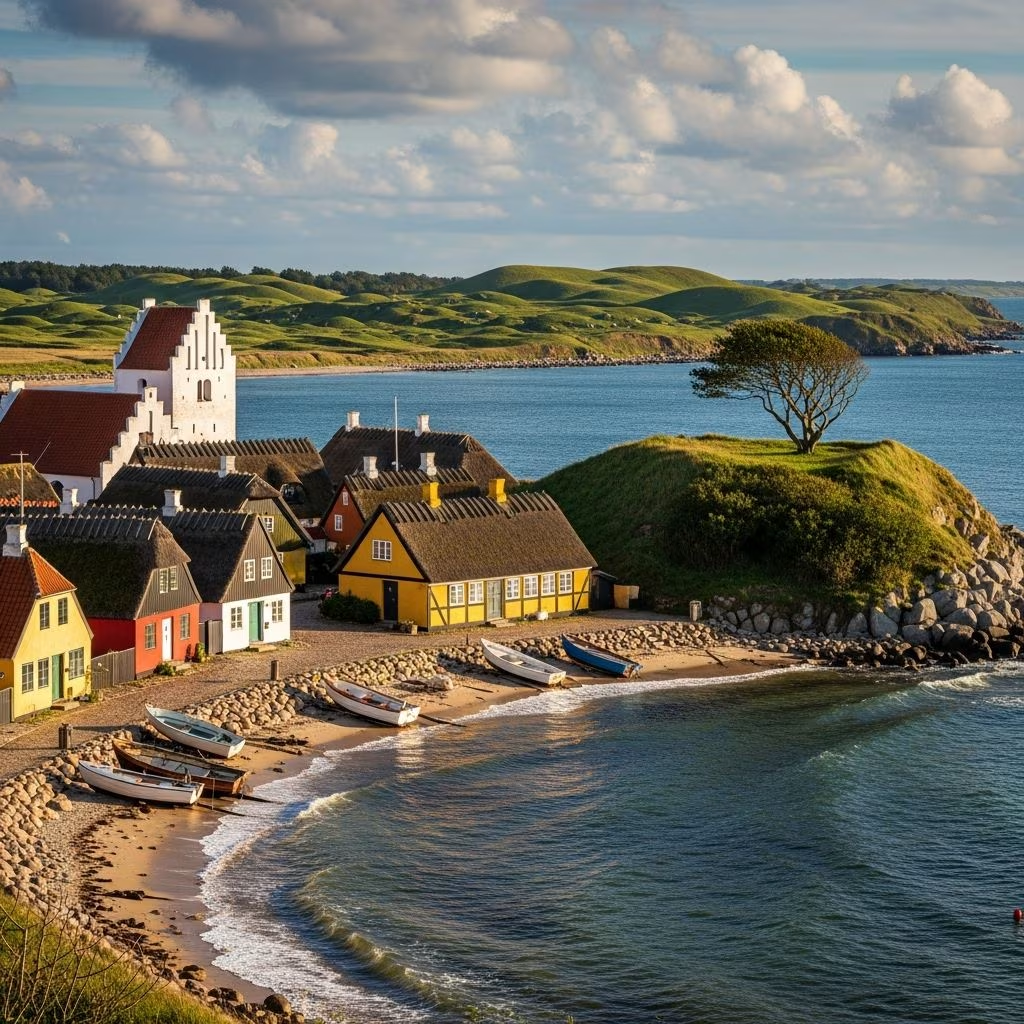
West Denmark represents one of Northern Europe’s most underrated travel destinations, offering a compelling blend of contemporary sophistication and historical depth that appeals to diverse visitor interests. This region, often overshadowed by Copenhagen’s prominence, delivers world-class dining experiences, internationally recognized cultural institutions, and natural phenomena that rival destinations far better known to international travelers. The area’s combination of artistic heritage, culinary excellence, and outdoor adventure creates a destination where cultural exploration seamlessly integrates with leisurely coastal exploration.
The Danish concept of ‘hygge’—often translated as coziness but more accurately representing a state of contentment and warmth—permeates West Denmark’s character. This philosophy manifests in everything from intimate restaurant dining experiences to quiet moments along windswept beaches. Whether planning a rapid four-day expedition or a leisurely seven-day immersion, West Denmark accommodates various travel styles while maintaining the authentic experiences that define the region.
Aalborg serves as West Denmark’s primary urban center, functioning as both a historical repository and a contemporary creative powerhouse. This ancient city, strategically positioned along major trading routes for centuries, preserves its medieval heritage while embracing modern artistic expression.
Beneath Aalborg’s bustling street level lies the Franciscan Monastery, a remarkable medieval structure dating to 1250 that remained hidden for generations. Walking through its well-preserved ruins provides tangible connection to medieval religious life, while displayed artifacts chronicle the city’s transformation across centuries. This subterranean sanctuary offers visitors a quieter counterpoint to urban exploration, inviting contemplation within centuries-old stone walls.
For contemporary cultural engagement, Kunsten represents a paradigm-shifting museum experience. Housed within an architecturally significant building designed by renowned Finnish architect Alvar Aalto, this institution transcends traditional museum functions through immersive, interactive exhibitions. Rather than passive observation, visitors engage directly with artistic concepts and design principles, experiencing how form, color, and spatial arrangement influence perception and emotion. The museum’s rotating exhibitions ensure that returning visitors encounter entirely new perspectives on artistic practice.
West Denmark’s coastline presents dramatic geological features shaped by millennia of environmental forces. These natural attractions combine educational value with spectacular visual experiences.
Approximately one hour northwest of Aalborg, Råbjerg Mile showcases Denmark’s largest migrating sand dune, a geological feature that continuously reshapes itself through wind and coastal processes. This dynamic landscape demonstrates how natural forces persistently reshape geography across decades and centuries. Visitors observe how marine erosion and aeolian transport create constant transformation, with the dune advancing approximately 15 meters annually.
Adjacent to this natural phenomenon stands Rubjerg Knude Lighthouse, a navigational structure that guided maritime traffic for nearly seven decades before relocation in 2019. This lighthouse’s repositioning reflects human adaptation to environmental change, as coastal erosion threatened the structure’s stability. The lighthouse’s journey inland symbolizes the ongoing negotiation between human infrastructure and natural processes, making it an archetypal symbol of environmental awareness.
During spring and autumn months, West Denmark’s wetlands host one of Europe’s most extraordinary natural spectacles. Thousands of starlings engage in synchronized flight patterns, creating aerial formations so dense they temporarily darken daylight—a phenomenon locals term the ‘Black Sun.’ This mesmerizing display results from predator avoidance behaviors, with birds moving in perfect coordination to confuse potential threats. The experience combines ornithological fascination with aesthetic wonder, leaving observers profoundly affected by nature’s organizational complexity.
West Denmark’s historical narrative extends back millennia, with archaeological discoveries and preserved structures offering windows into previous civilizations.
The Grauballe Man represents one of archaeology’s most remarkable specimens—a naturally preserved human body from the Iron Age, discovered in Danish peatlands. This individual, dating approximately 2,300 years, survived in bog environments that prevented normal decomposition through acidic, anaerobic conditions. Close examination reveals intricate details of this ancient person’s final moments, physical condition, and the period’s cultural practices. For visitors, encountering this preserved individual creates visceral connection to deep historical periods, challenging abstractions about ancient life through tangible human presence.
Scandinavia’s oldest continuously inhabited town, dating to the 1300s, contains robust Viking heritage. Ribe VikingeCenter reconstructs authentic Viking-era settlements, with costumed interpreters demonstrating historical craftsmanship, agriculture, and trade practices from the 710-980 AD period. Visitors engage in hands-on activities including archery and warrior training, transforming passive observation into embodied historical experience. This interpretive approach allows contemporary visitors to physically understand how Viking-era inhabitants operated within their technological and social frameworks.
West Denmark’s gastronomic reputation extends beyond restaurant settings into participatory food experiences that connect visitors with local ecosystems and culinary traditions.
The Wadden Sea, a UNESCO World Heritage site spanning over 50 kilometers along West Denmark’s coast, supports specialized ecosystems and distinctive harvesting practices. Visitors don waders and join local guides for oyster safaris across mudflats, hand-selecting shellfish from muscle reefs and consuming them immediately in their natural environment. This direct engagement with food sourcing creates awareness of ecological relationships and seasonal availability that characterizes traditional coastal economies. The experience transforms conventional dining into an ecological education, demonstrating how human food systems interconnect with marine environments.
West Denmark’s culinary landscape includes multiple Michelin-starred establishments representing Denmark’s renowned gastronomic tradition. These restaurants emphasize seasonal ingredients, innovative preparation techniques, and artistic food presentation. The region’s commitment to culinary excellence reflects broader Danish cultural values prioritizing quality, craftsmanship, and the elevation of ordinary ingredients through skilled preparation.
The islands scattered throughout West Denmark’s coastal regions each possess distinctive characters shaped by geographical isolation and maritime traditions.
Mandø, a small island within the Wadden Sea, remains accessible only during specific tidal windows through a road literally positioned on the seafloor. This unique accessibility pattern creates natural visitor flow limitations while preserving the island’s character. The tidal access requirement connects modern visitors to pre-industrial transportation realities, when water level variations governed human movement and commerce. Spending time on Mandø during optimal tidal windows provides experiential understanding of how geography and natural cycles determined historical settlement patterns and economic possibilities.
Beyond historical preservation, West Denmark demonstrates robust contemporary creative communities. Artist colonies, particularly in northern towns, maintain traditions of collective creative work while remaining economically viable through tourism engagement. These communities preserve handcrafted traditions while incorporating contemporary artistic perspectives, creating hybrid spaces where historical techniques meet modern conceptual frameworks.
West Denmark’s attractions distribute across geography in patterns accommodating various travel durations and interests:
West Denmark’s geography and climate present specific visitor planning considerations. Coastal regions experience significant seasonal variation, with spring and autumn offering optimal conditions for observing natural phenomena while maintaining comfortable outdoor exploration temperatures. Winter visits provide atmospheric landscapes and cultural institution focus, while summer enables beach activities and extended daylight hours.
Transportation within West Denmark typically involves automobile rental for inter-regional travel, supplemented by local cycling networks that characterize Danish transportation culture. Many attractions cluster near primary towns, allowing strategic base positioning for day excursions.
| Season | Primary Attractions | Climate Characteristics |
|---|---|---|
| Spring | Black Sun phenomenon, wildflower blooms, oyster harvesting begins | Cool temperatures, increasing daylight, variable precipitation |
| Summer | Beach activities, extended museum hours, outdoor festivals | Warm temperatures, maximum daylight, peak tourist season |
| Autumn | Black Sun phenomenon, harvest celebrations, comfortable exploration weather | Cool temperatures, decreasing daylight, reduced visitor crowds |
| Winter | Holiday markets, cultural institution focus, atmospheric coastal walks | Cold temperatures, minimal daylight, atmospheric landscapes |
West Denmark’s appeal ultimately reflects broader Danish cultural characteristics that permeate the region. The concept of ‘everyday wonder’—finding delight and meaning in ordinary moments and landscapes—distinguishes Danish approaches to tourism. Rather than extracting experiences from destinations, visitors are invited to participate in local rhythms, appreciate design quality in commonplace objects, and recognize beauty in understated landscapes.
This philosophy extends to environmental stewardship, with West Denmark demonstrating sustainable tourism practices and ecological preservation priorities. Visitors frequently encounter evidence of Danish commitment to renewable energy, bicycle infrastructure, and conservation of natural areas alongside cultural development.
