


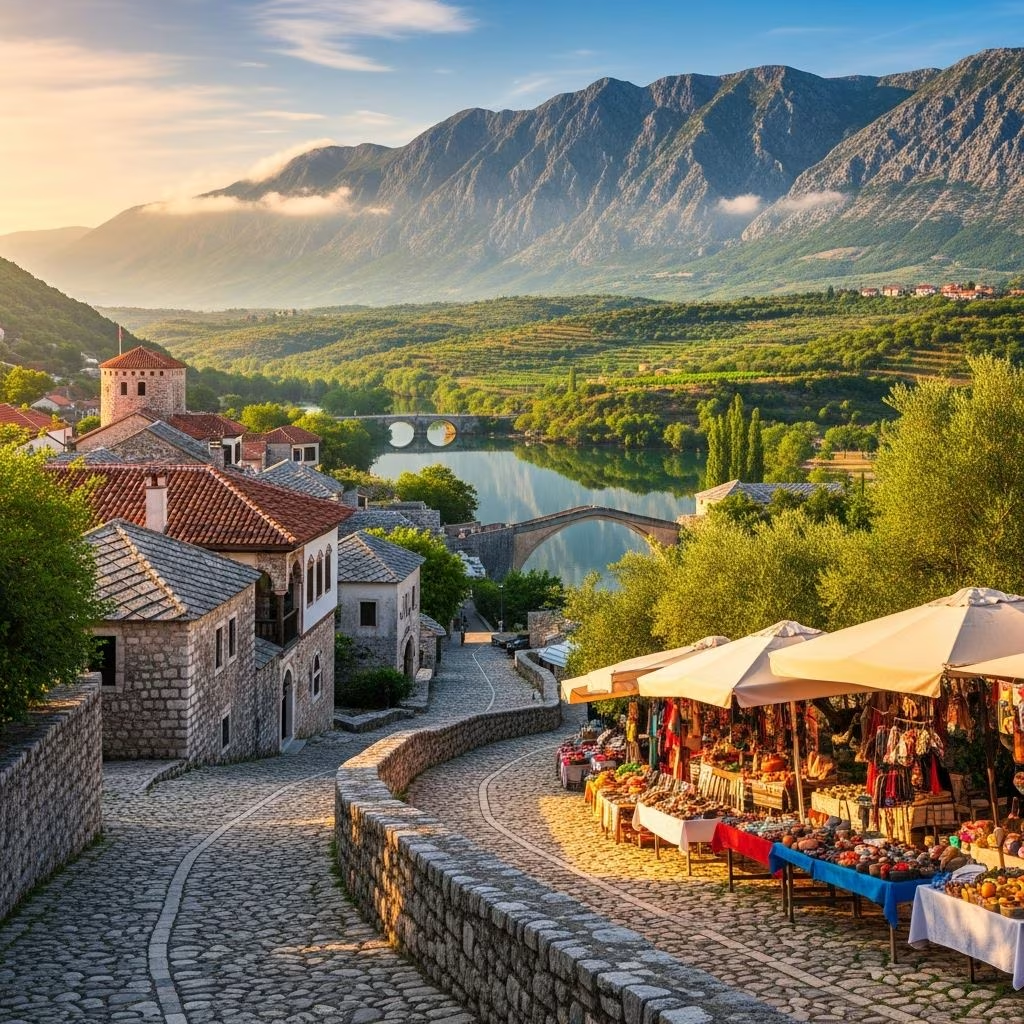
The Western Balkans stand as one of Europe’s most geographically and culturally complex regions, where centuries of interconnected histories have woven themselves into the landscape, architecture, and traditions of its communities. Rather than viewing this area as a collection of individual destinations, a revolutionary approach to tourism has emerged that reframes the region as a unified cultural narrative. Through carefully curated themed pathways, visitors and locals alike can traverse the Western Balkans not merely as sightseers, but as participants in understanding one of the world’s most layered civilizations. These cultural routes represent a sophisticated framework for engaging with the region’s multifaceted heritage, transforming travel into an educational and deeply rewarding experience.
Understanding the Framework of Regional Cultural Routes
The concept of regional cultural routes offers a distinctive methodology for experiencing the Western Balkans. Rather than fragmented travel experiences that isolate attractions, these integrated pathways connect multiple countries, communities, and historical periods into coherent narratives. Each route follows thematic threads that bind together archaeological sites, architectural landmarks, artistic traditions, and living cultural practices. This approach recognizes that the region’s identity cannot be understood through isolated monuments but requires examining how different civilizations, empires, and peoples have influenced one another across time.
These routes serve both as educational instruments and as tools for sustainable tourism development. By directing visitors along predetermined paths, local communities benefit from increased tourism revenue while maintaining cultural authenticity. The pathways encourage deeper engagement than typical sightseeing, fostering genuine connections between travelers and the destinations they explore. Furthermore, these routes celebrate the interconnectedness of the region, emphasizing how different cultural influences have blended to create something uniquely Balkan.
The Bronze Age and Ancient Civilizations Route
One of the most compelling pathways takes travelers back to antiquity, exploring the emergence of civilization in the Western Balkans during the Bronze Age and earlier periods. This route reveals how ancient societies in this region developed sophisticated settlements, trade networks, and artistic traditions long before Classical Greece and Rome dominated European consciousness. Archaeological sites throughout the region contain evidence of communities that thrived thousands of years ago, leaving behind pottery, metalwork, and architectural remnants that testify to their achievements.
Visitors following this historical trajectory encounter some of Europe’s lesser-known yet profoundly important archaeological sites. These locations preserve evidence of how early Balkan civilizations adapted to their mountainous terrain, developed agricultural practices suited to local conditions, and created artistic expressions that reflected their worldview. By exploring these ancient foundations, modern travelers gain perspective on how the region’s strategic location between continents made it a crossroads for cultural exchange even in prehistoric times. The route serves as a reminder that the Western Balkans were not peripheral to European development but rather central players in the continent’s earliest chapters.
Medieval Kingdoms and Byzantine Heritage
The medieval period represents another crucial phase in the Western Balkans’ development, marked by the rise of powerful kingdoms and the profound influence of Byzantine civilization. This themed pathway explores the era when Serbian, Bulgarian, and other South Slavic kingdoms wielded significant power, their rulers commissioning magnificent monasteries, developing sophisticated legal systems, and expanding their territories through military and diplomatic means. The Byzantine Empire’s cultural and religious influence permeated the region, manifesting in Orthodox Christian architecture, iconography, and theological traditions that persist to the present day.
Medieval sites along this route showcase architectural styles that blend Byzantine and local traditions, creating distinctive cultural expressions. Monastic complexes contain frescoes of remarkable artistic sophistication, depicting religious narratives and historical figures in styles that influenced broader European art. These medieval kingdoms maintained complex relationships with Western European powers and the Byzantine Empire, positioning themselves at the intersection of Eastern and Western Christianity. Understanding this period illuminates how modern divisions within the region have deep historical roots, as medieval kingdoms established territorial claims and cultural identities that would resonate through subsequent centuries.
Ottoman Splendor and Its Lasting Imprint
Perhaps no period shaped the contemporary Western Balkans more profoundly than the centuries of Ottoman rule. This route celebrates the architectural, culinary, musical, and social influences that Ottoman governance introduced to the region. Ottoman cities like Mostar and Berat preserve remarkable examples of Ottoman urban design, featuring graceful bridges, minarets, bazaars, and domestic architecture that reflect the empire’s sophisticated cultural traditions. Rather than viewing Ottoman rule purely through a lens of foreign domination, this pathway explores the genuine cultural synthesis that emerged as local populations adopted, adapted, and blended Ottoman influences with their existing traditions.
The Ottoman period introduced Islamic art and architecture to predominantly Christian areas, creating religious and cultural pluralism that characterizes many Balkan communities today. Ottoman administrative systems shaped local governance structures, legal traditions, and social hierarchies that evolved even after Ottoman power declined. The culinary traditions of the region bear unmistakable Ottoman influences, with dishes, preparation methods, and flavor profiles reflecting centuries of cultural contact. Music and poetry traditions similarly absorbed Ottoman elements, creating hybrid forms that expressed both continuity and change. This route demonstrates how empires leave indelible marks not through military conquest alone but through the gradual interweaving of cultural practices across generations.
Austro-Hungarian Influence and Central European Connections
In the northwestern reaches of the Western Balkans, particularly in Bosnia and Herzegovina and parts of Serbia, the Austro-Hungarian Empire left distinctive cultural imprints that merit separate exploration. This pathway reveals how Central European architectural styles, administrative practices, and cultural traditions shaped urban development and social structures. Sarajevo, Banjaluka, and other cities in these regions display architectural eclecticism that reflects Austro-Hungarian urban planning principles, with grand public buildings, organized street networks, and parks designed according to late 19th-century European standards.
The Austro-Hungarian period introduced new technologies, educational systems, and cultural institutions to the region. Museums, theaters, and libraries established during this era remain cultural anchors in contemporary cities. Culinary traditions in these areas incorporate Central European influences, particularly visible in bread-making, pastry preparation, and certain meat preparations. The period also crystallized certain national identities, as Austro-Hungarian administrative divisions often coincided with ethnic and religious groupings, contributing to the formation of distinct national consciousnesses that would become politically significant in subsequent centuries. This route acknowledges that European identity in the Western Balkans extends beyond Orthodox Christianity and Islam to encompass Central European cultural traditions.
Contemporary Urban Culture and Modern Capital Cities
While historical routes dominate cultural tourism narratives, the Western Balkans’ six dynamic capital cities deserve recognition as living laboratories of contemporary culture. This pathway celebrates present-day artistic production, urban renewal initiatives, and the dynamic cultural scenes emerging in cities like Belgrade, Sarajevo, Skopje, Tirana, Prishtina, and Podgorica. These capitals host music festivals, contemporary art exhibitions, theater productions, and literary events that demonstrate the region’s vibrant creative energy. Street art murals, independent galleries, and alternative venues reflect how younger generations are reimagining their cities and cultural identities.
Contemporary cultural offerings reveal how the Western Balkans are engaging with global artistic movements while maintaining distinct local voices. Musicians blend traditional instruments with modern production techniques, playwrights explore postwar trauma and social transformation, and visual artists create works that engage with both local and international contexts. These capitals have undergone significant transformation in recent decades, recovering from conflicts and economic challenges while establishing themselves as emerging cultural destinations. By including contemporary culture alongside historical heritage, these routes acknowledge that culture is a living, evolving phenomenon rather than a museum piece frozen in time.
Practical Considerations for Cultural Route Travel
Successfully navigating these cultural routes requires thoughtful planning and realistic expectations. The region’s infrastructure continues developing, with transportation between sites varying in convenience and comfort. Visitors should anticipate mixing modern accommodations with more modest lodgings in smaller towns, where authentic cultural experiences often occur. Language barriers may present challenges, though major tourist destinations typically offer English-speaking guides and informational materials. Seasonal considerations matter significantly, as spring and fall weather generally proves ideal, while summer attracts crowds to popular sites and winter may limit accessibility to mountain areas.
Traveling the routes becomes more rewarding when visitors adopt a measured pace, allowing time for genuine interaction with local communities rather than racing through attractions. Engaging with local artisans, sharing meals with residents, and participating in cultural activities provides far richer understanding than viewing sites from a distance. Hiring local guides who possess deep knowledge of their communities enhances experiences immeasurably. Many routes incorporate opportunities for hands-on engagement, such as cooking classes, artisan workshops, or participation in traditional music sessions, transforming passive observation into active learning.
The Intersection of Tourism and Cultural Preservation
Cultural routes represent more than tourism infrastructure; they constitute commitment to preserving endangered traditions and supporting communities economically through cultural commerce. When tourism revenue flows to local artisans, guides, restaurateurs, and hospitality workers, these economic benefits incentivize cultural preservation. Communities recognize that their traditions possess value and marketability, motivating younger generations to maintain skills and knowledge that might otherwise disappear. However, tourism development carries risks, as popular sites may experience overcrowding and commercialization that dilutes authentic cultural expression.
Sustainable cultural tourism requires intentional management strategies that balance economic benefits with cultural protection. Limiting visitor numbers at sensitive sites, establishing codes of conduct for travelers, supporting community-led tourism initiatives, and ensuring economic benefits reach local populations rather than external operators all contribute to responsible tourism development. The Western Balkans’ cultural route initiatives increasingly incorporate these principles, recognizing that long-term tourism sustainability depends on maintaining the authentic cultural integrity that attracted visitors initially.
Frequently Asked Questions About Western Balkan Cultural Routes
What time of year offers the best experience for cultural route travel?
Spring (April through May) and autumn (September through October) provide ideal conditions, combining pleasant weather with fewer crowds than summer. Winter visits are possible but require flexibility regarding accessibility to mountain sites and reduced hours at some attractions.
How long should visitors dedicate to thoroughly exploring cultural routes?
A meaningful engagement typically requires 10 to 14 days, allowing time for travel between sites, in-depth exploration of major attractions, and authentic community interactions. Shorter visits can cover highlights but sacrifice depth of understanding.
Are these routes accessible for travelers with mobility limitations?
Accessibility varies considerably among sites. Major urban attractions generally accommodate mobility devices, while some archaeological sites and mountain locations present challenges. Researching specific sites and contacting local tourism offices before traveling ensures appropriate preparation.
What language skills are necessary for independent route travel?
While English speakers find major destinations manageable, learning basic phrases in regional languages enhances interactions. Hiring local guides resolves language barriers while supporting employment for community members.
How do cultural routes contribute to the communities they traverse?
Economic benefits reach local artisans, guides, restaurants, and accommodations. Perhaps more significantly, cultural routes affirm the value of local traditions, motivating preservation efforts and community pride in heritage that external valorization might otherwise dismiss.
Beyond Tourism: Cultural Routes as Educational Tools
Cultural routes function increasingly as educational resources not merely for international tourists but for regional school groups and locals seeking deeper understanding of their own heritage. Educational programs incorporating route-based learning allow students to engage with history and culture through direct experience rather than textbook abstraction. This pedagogical approach recognizes that understanding one’s own cultural identity benefits from embodied learning experiences. Young people from the Western Balkans, particularly in post-conflict communities where historical narratives remain contested, benefit from accessing multiple perspectives on shared regional history through organized cultural pathways.
Looking Forward: Evolution of Western Balkan Cultural Tourism
The framework of cultural routes continues evolving as tourism demand increases and technological innovations enable new forms of engagement. Digital platforms now offer virtual experiences of cultural sites, augmented reality applications provide layered information at physical locations, and online communities connect travelers interested in specific themes. These technological enhancements complement rather than replace physical travel, offering preparation tools that enhance on-site experiences. As the Western Balkans develop its tourism infrastructure and international profile, cultural routes will likely become increasingly sophisticated and professionally managed.
The long-term success of these initiatives depends on maintaining balance between tourism development and cultural authenticity. Communities must retain agency in determining how their heritage is presented and commodified, ensuring that tourism development serves local interests rather than external commercial interests. When managed thoughtfully, cultural routes offer transformative experiences for travelers while providing sustainable economic and cultural benefits for the communities that generously share their heritage.
References
- Crossroads of Civilizations in the Western Balkans – Heritage Walk — Heritage Walk Organization. Accessed April 2026. https://www.heritagewalk.net/crossroads-of-civilizations-in-the-western-balkans/
- The Western Balkans: The Crossroads of Civilizations — Euronews. 2021-07-08. https://www.euronews.com/2021/07/08/the-western-balkans-the-crossroads-of-civilizations
- Western Balkans Cultural Routes: Awakening Art and Heritage — Regional Cooperation Council. Accessed April 2026. https://www.rcc.int/docs/447/western-balkans-cultural-routes-awakening-art-and-heritage-flyer
- Uncover the Balkans’ Cultural Riches on a Small Group Trip — Geographic Expeditions. Accessed April 2026. https://www.geoex.com/trips/balkans-revealed
- Culture Connects: EU Projects in the Western Balkans — WeBalkans EU Projects. Accessed April 2026. https://webalkans.eu/en/culture-connects/
- 10 European Discoveries for 2025 — Balkans Edition — Rick Steves Blog. 2025-01. https://blog.ricksteves.com/cameron/2025/01/european-discoveries-2025-balkans

