

 Travel Essentials
 Travel Essentials

Journey through the Western Ghats' emerald hills, UNESCO-protected forests, tea estates, and tiger reserves. Explore top destinations, biodiversity, and sustainable travel tips for an unforgettable escape.
 Travel Essentials
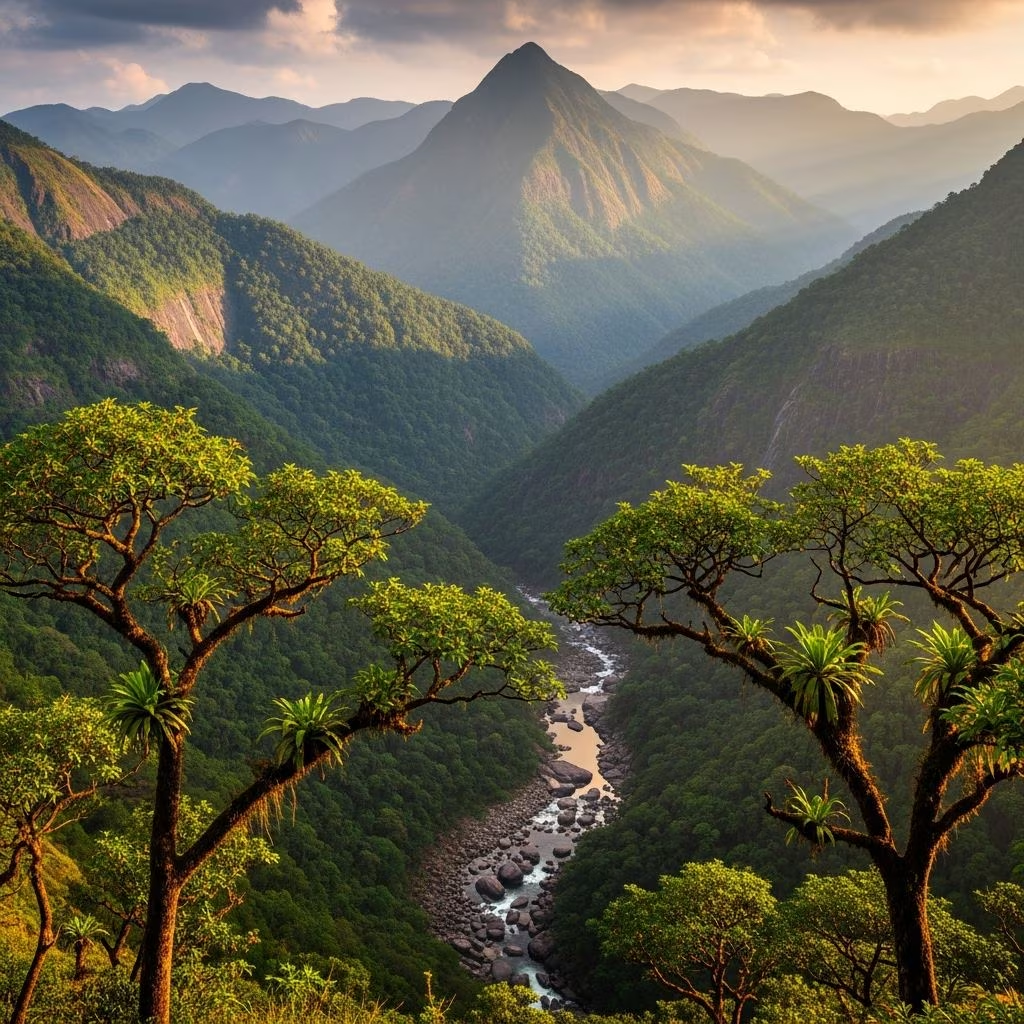
The Western Ghats stand as one of India’s most captivating natural wonders, a sprawling mountain chain that has shaped the subcontinent’s landscape, climate, and culture for millions of years. Stretching parallel to the Arabian Sea coast for approximately 1,600 kilometers from Gujarat in the north to Tamil Nadu in the south, this range forms a vital barrier influencing the region’s monsoon patterns and river systems. Older than the Himalayas by about 100 million years, the Ghats reach elevations up to 2,700 meters, cradling ecosystems of extraordinary diversity that earned them UNESCO World Heritage status in 2012.
Formed around 150 million years ago during the breakup of the supercontinent Gondwana, the Western Ghats predate many modern mountain systems, showcasing unique geomorphic features like escarpments and plateaus. These ancient peaks intercept heavy southwest monsoon winds, receiving rainfall that exceeds 7,000 mm annually in some areas, which nourishes vital rivers such as the Godavari, Krishna, Kaveri, and Bhima. This orographic precipitation not only sustains the lush forests but also supports agriculture and water security for millions across peninsular India.
The range’s topography varies dramatically: gentle slopes on the western coastal side give way to steep eastern escarpments, creating microclimates from tropical wet forests to high-altitude shola grasslands. Covering about 140,000 square kilometers across six states—Gujarat, Maharashtra, Goa, Karnataka, Kerala, and Tamil Nadu—the Ghats interrupt only briefly at the 30-km Palghat Gap.
Recognized as one of the world’s eight hottest biodiversity hotspots, the Western Ghats harbor over 7,000 flowering plant species, 508 birds, 139 mammals, and thousands of insects, amphibians, reptiles, and fish—many endemic. The Nilgiri Biosphere Reserve, spanning 5,520 square kilometers across Tamil Nadu, Kerala, and Karnataka, exemplifies this richness, protecting habitats from lowland rainforests to montane evergreen forests.
According to India’s 2022 tiger census, more than 800 tigers roam these forests, alongside elephants, gaurs, and leopards, making the Ghats a critical conservation corridor.
British colonials in the 19th century transformed the cooler Ghats elevations into hill stations, escaping the plains’ heat. Today, these charming retreats draw visitors for their colonial architecture, scenic vistas, and serene ambiance.
| Hill Station | State | Key Attractions | Altitude (m) |
|---|---|---|---|
| Ooty (Udhagamandalam) | Tamil Nadu | Botanical Gardens, Lake, Nilgiri Mountain Railway | 2,240 |
| Munnar | Kerala | Tea museums, Eravikulam National Park, Echo Point | 1,600 |
| Coonoor | Tamil Nadu | Sim’s Park, Lamb’s Rock, Dolphin Nose viewpoint | 1,850 |
| Wayanad | Kerala | Edakkal Caves, Pookode Lake, Wildlife Sanctuary | 900-2,100 |
| Kotagiri | Tamil Nadu | Catherine Falls, Kodanad Viewpoint, Tea estates | 1,800 |
Ooty, often called the ‘Queen of Hill Stations,’ offers toy-train rides through eucalyptus groves via the UNESCO-listed Nilgiri Mountain Railway. Munnar captivates with its rolling tea carpets, some of the world’s highest plantations at over 2,000 meters.
The Ghats’ protected areas form a contiguous network ideal for wildlife enthusiasts. Access is regulated via guided 4WD safaris, treks, or boat rides, ensuring minimal human impact.
Visitors often spot chital deer, wild boars, and vivid birdlife, though tigers demand patience and luck.
Vast tea estates blanket the southern Ghats, particularly around Munnar and Nilgiris, where emerald plantations cascade down hillsides. Learn about harvesting at tea museums or pluck leaves on guided tours. Local tribal communities like the Toda in Nilgiris maintain ancient pastoral traditions, with buffalo-rearing and embroidery offering cultural insights.
Most explore the Ghats as part of a South India itinerary. Fly into Coimbatore (for Nilgiris), Kochi (for Munnar/Periyar), or Bengaluru (for Bandipur/Nagarhole). Road travel dominates: hire a driver with an AC car for winding routes, or use buses/KSRTC services. The Nilgiri Mountain Railway links Ooty-Coonoor-Mettupalayam uniquely.
Best Time to Visit: October-March for pleasant weather; monsoons (June-September) bring lushness but landslides.
Accommodations: From luxury wilderness lodges to homestays like Green View in Periyar or Varnam in Wayanad.
Treks range from gentle estate walks to challenging rainforest paths. Popular routes include Silent Valley, Agasthyamala, and Chembra Peak. Opt for responsible operators emphasizing no-trace principles. Eco-lodges promote conservation, supporting anti-poaching and reforestation.
Despite protections, threats like mining, dams, and climate change loom. UNESCO stresses balanced development, while local efforts bolster tiger populations and habitat restoration.
Book official jeep safaris or guided treks in reserves like Periyar or Bandipur early morning or dusk for peak activity.
Yes, with standard precautions; stick to popular routes and guided tours in wildlife areas.
10-14 days for Nilgiris, Munnar, Periyar, and Wayanad circuit.
Abundant; South Indian thalis and local cuisine dominate.
Possible for greenery lovers, but roads may close; avoid treks.
