

 Travel Essentials
 Travel Essentials

Uncover the real purpose of black dots or frits on windshields: UV protection, heat management, secure bonding, and aesthetic appeal. Learn maintenance tips and myths.
 Travel Essentials
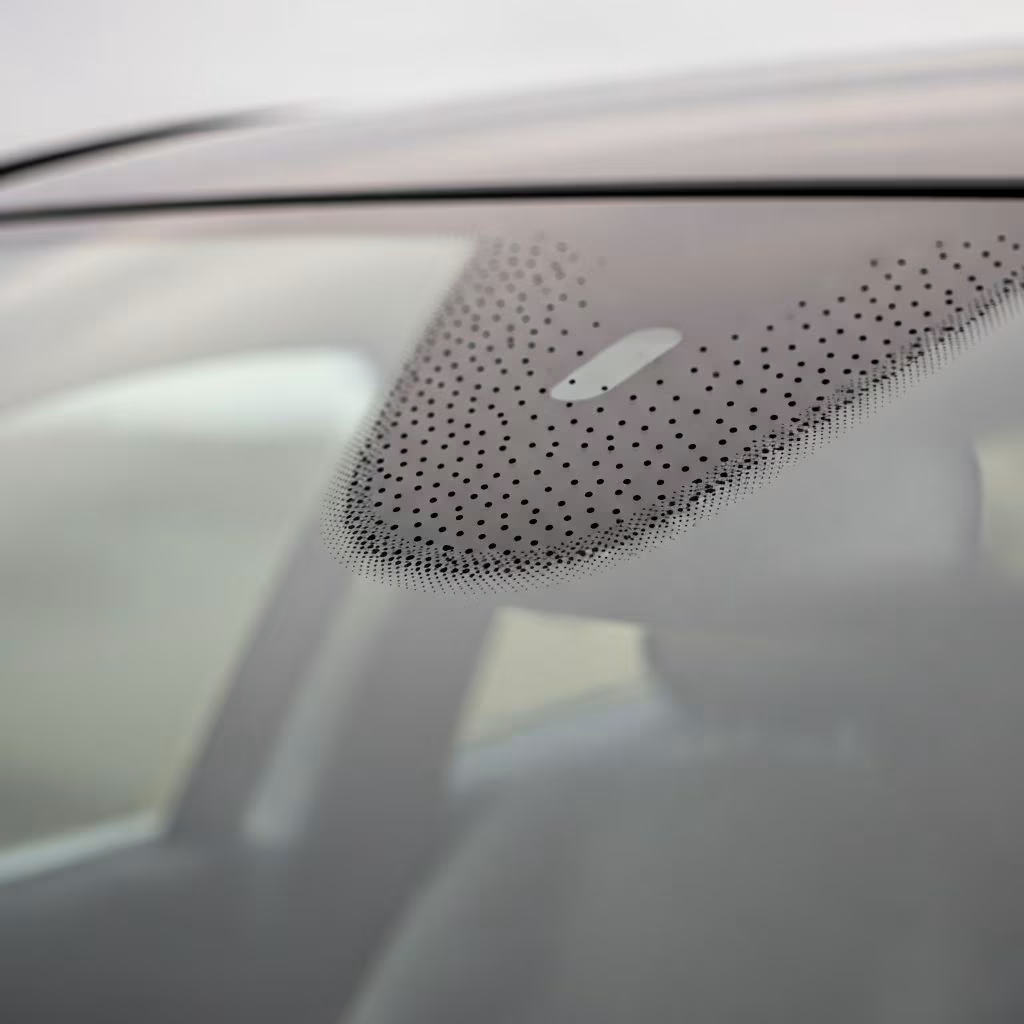
Those small black dots lining the edges of your car’s windshield serve critical functions in vehicle safety and performance. Known as frits, these ceramic enamel spots are baked onto the glass during manufacturing to protect adhesives, manage heat, and improve structural integrity.
Windshield frits emerged as a necessity when automakers shifted from mechanical window frames to direct adhesive bonding in the late 20th century. This polyurethane-based glue requires a reliable surface for attachment, and frits provide that foundation while addressing environmental challenges.
The frit consists of a solid black band transitioning into a halftone pattern of dots. Larger, denser dots near the edges reinforce high-stress areas prone to impacts, while smaller, spaced-out dots create a seamless gradient to clear glass.
This multi-layered design ensures the windshield remains secure and visually appealing under daily stresses like sunlight exposure and temperature fluctuations.
When sunlight hits the solid black frit band, it absorbs heat faster than the surrounding glass, potentially creating a “lensing” effect where straight lines appear warped. The dot matrix acts as a thermal bridge, gradually fading the dark area to distribute warmth evenly and maintain clear vision.
In hot climates, this prevents glass stressing to the point of cracking. Studies on automotive glass behavior confirm that uneven heating exacerbates micro-fractures, making frits essential for longevity.
Polyurethane adhesives break down under prolonged UV exposure, losing elasticity and bond strength. Black frits, baked into both glass surfaces, block these rays effectively. Hybrid polymer alternatives offer better resistance, but frits remain standard for compatibility.
Without this barrier, adhesives could fail prematurely, leading to leaks, noise, or detachment during collisions. Frits extend windshield life by years, reducing replacement needs.
| Frit Location | Dot Size/Density | Primary Role |
|---|---|---|
| Outer Edges | Large, Concentrated | Impact Protection & Bonding |
| Mid-Transition | Medium Halftone | Heat Dissipation |
| Inner/Central | Small, Spaced | Smooth Visual Gradient |
This table illustrates frit variation by position, optimizing each zone for specific demands.
Many modern vehicles feature a “third visor frit” behind the rearview mirror. This solid or dotted band blocks glare through the gap between driver-side sun visors, reducing eye strain without obstructing the mirror.
Positioned strategically, it targets direct overhead sunlight, complementing traditional visors for safer highway driving.
Frits are durable, resisting fading for a decade or more under normal use. However, monitor for:
Avoid DIY removal or painting over frits, as this exposes adhesives and voids warranties. Professional assessment is crucial if damage appears.
During repairs, technicians must match OEM frit patterns for proper bonding. Aftermarket glass with inferior frits risks weaker seals. Always choose certified installers using UV-stable adhesives.
Post-replacement, park in shade initially to cure the bond fully.
Besides windshields, frits appear on side and rear windows. Rear glass often integrates them with defroster lines—thin wires that heat without visible hotspots thanks to the black enamel.
Side windows use frits for edge strength, vital in roll-over scenarios.
Early cars used rubber gaskets; modern bonded glass turns windshields into structural elements, supporting A-pillars in crashes per FMVSS standards. Frits enable this advancement.
Future trends include smart glass with embedded frit-like conductors for heating or tinting.
They are frits, a ceramic enamel baked onto the glass.
No, their gradient design prevents distortion and enhances clarity.
Do not; removal compromises UV protection and bonding.
Black enamel optimally blocks UV and hides adhesives.
Most modern vehicles with bonded glass feature them.
European cars often have denser frits for stricter crash norms, while U.S. models prioritize heat management in sunny regions. Asian manufacturers experiment with iridescent frits for style without sacrificing function.
Regardless of origin, core purposes remain universal.
