

 Travel Essentials
 Travel Essentials

Explore the defining characteristics of luxury accommodations, from personalized service to architectural excellence, and learn what travelers should expect from premium hospitality.
 Travel Essentials
The landscape of upscale hospitality has transformed dramatically over the past two decades. What once defined luxury—ornate decorations, grandiose lobbies, and formal service protocols—has evolved into a more nuanced understanding of comfort, personalization, and authentic experience. Today’s luxury travelers seek establishments that combine timeless elegance with contemporary conveniences, cultural authenticity with global standards, and exclusivity with genuine human connection.
Premium accommodations today represent far more than simply expensive rooms. They embody a philosophy of hospitality that anticipates needs before they are expressed, celebrates local culture while maintaining international standards, and prioritizes the individual traveler’s preferences above rigid protocols. This evolution reflects changing consumer values and the hospitality industry’s response to increasingly sophisticated clientele.
Modern luxury hospitality extends beyond thread counts and marble bathrooms. True premium establishments distinguish themselves through multiple interconnected elements that work in concert to create memorable experiences.
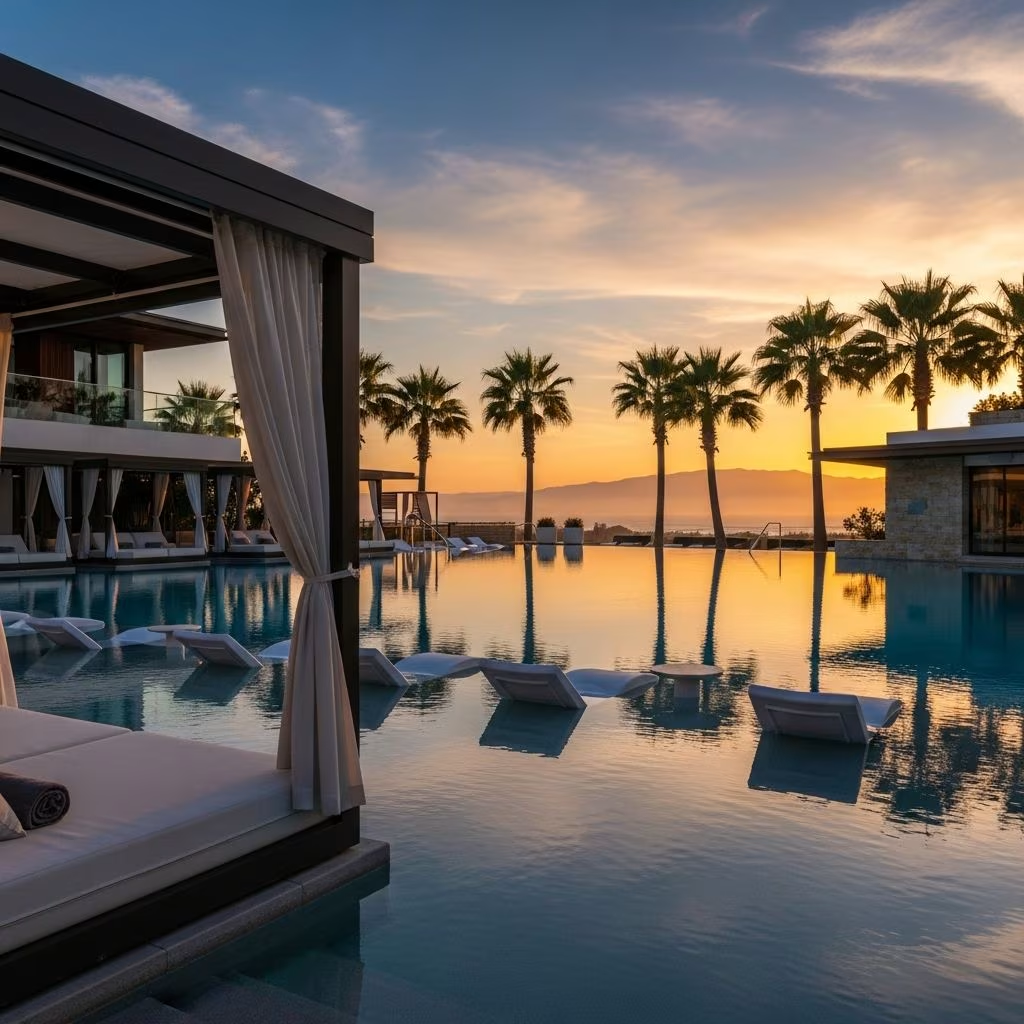
The architectural and interior design of luxury properties plays a foundational role in establishing atmosphere. Unlike standard hotels that prioritize functional efficiency, high-end establishments employ design as a storytelling medium. Properties feature distinctive architectural elements that reflect their location’s cultural heritage, employ renowned designers to create cohesive aesthetics, and invest in materials and finishes that age gracefully rather than diminish over time.
Luxury hotels often showcase:
The most distinguishing characteristic of luxury hospitality is the staff’s ability to recognize individual preferences and accommodate requests before they are formally made. This requires extensive staff training, reasonable guest-to-staff ratios, and a corporate culture that empowers employees to make decisions that prioritize guest satisfaction.
Premium hotels invest significantly in guest preference databases, staff training programs, and communication systems that ensure continuity across multiple stays and properties within a brand. Staff members are encouraged to develop genuine relationships with guests, remembering details about family members, preferred amenities, and travel habits to create personalized experiences that feel authentic rather than scripted.
While basic amenities—comfortable bedding, efficient climate control, and modern bathrooms—are baseline expectations, luxury establishments distinguish themselves through considered additions that enhance daily life during a stay.
Fine dining represents a cornerstone of luxury hospitality. Premium properties typically feature multiple restaurants and bars, each with distinct concepts and culinary philosophies. These establishments often employ Michelin-starred chefs, source ingredients from specialized suppliers, and maintain wine collections that appeal to connoisseurs.
Beyond fine dining, luxury hotels provide:
Modern luxury travelers increasingly prioritize health and wellness, prompting premium hotels to develop comprehensive facilities beyond basic gyms. High-end properties now feature:
Contrary to assumptions that luxury means rejecting modernity, premium establishments strategically integrate technology to enhance comfort while maintaining aesthetic integrity. The key distinction lies in technology serving the guest rather than dominating the environment.
Sophisticated hotels employ:
Premium hotels recognize that location profoundly influences the guest experience. Luxury properties are strategically positioned to offer either exclusive access to extraordinary natural settings or proximity to cultural and urban attractions. The relationship between the property and its surroundings becomes integral to the overall experience.
Properties distinguish themselves by:
The consistency and quality of service determines guest satisfaction more than any physical amenity. Luxury hospitality requires substantial investment in staff recruitment, training, and retention to maintain service excellence.
Premium properties employ comprehensive training programs that extend beyond procedural instruction. Staff members are educated about the property’s brand philosophy, cultural sensitivity, conflict resolution, and the psychology of hospitality. Many luxury brands invest in ongoing professional development, language training, and career advancement opportunities to retain experienced team members.
Unlike standardized hotel operations where employees must follow rigid protocols, luxury establishments empower staff members to exercise judgment and make decisions that enhance guest experiences. This autonomy, combined with clear brand standards, enables staff to handle unexpected situations creatively and professionally.
Premium hotels create exclusive experiences through limited capacity, membership programs, and partnerships that provide guests with uncommon access. Rather than maximizing room occupancy, luxury properties often maintain occupancy rates that allow for personalized attention.
Exclusivity mechanisms include:
Contemporary luxury increasingly incorporates environmental responsibility and social consciousness. Sophisticated travelers expect premium properties to maintain high standards without compromising ecological integrity or exploiting local communities.
Leading luxury properties demonstrate commitment through:
While pricing varies significantly by location and season, luxury hotels generally command nightly rates exceeding $300-400 in most markets. However, price alone does not determine luxury status; a property’s service standards, amenities, and guest experience are more definitive indicators than cost.
While both cater to upscale guests, luxury hotels prioritize experiential elements and personalization, whereas business hotels emphasize efficiency and work amenities. Luxury properties focus on creating memorable experiences, while business hotels optimize for productivity.
Many premium properties now recognize families as valuable guests and offer family-friendly amenities including spacious suites, children’s programming, and recreational facilities. However, some ultra-luxury properties maintain adult-focused atmospheres.
Luxury hotels often streamline check-in processes, sometimes conducting them in suites rather than lobbies, and may offer early check-in or late checkout accommodations. Many eliminate traditional front desks entirely in favor of personal guest services.
Premium brands offer tiered loyalty programs recognizing repeat guests with benefits including room upgrades, complimentary services, personalized amenities, and exclusive experiences. Elite members often receive dedicated concierge services and invitations to exclusive events.
The luxury hospitality sector continues evolving in response to changing traveler expectations. Emerging trends include increased focus on wellness and mental health, incorporation of cultural authenticity and local perspectives, development of alternative luxury accommodations beyond traditional hotels, and greater emphasis on sustainability and social responsibility.
Forward-thinking premium properties balance preservation of timeless hospitality principles with innovation in service delivery, amenity offerings, and operational practices. The most successful luxury brands demonstrate adaptability while maintaining the core values that distinguish premium hospitality: exceptional service, thoughtful design, and genuine attention to individual guest needs.
