

 Travel Essentials
 Travel Essentials

Explore official guidelines for handling passenger death on airplanes, including CPR limits, body management, diversion decisions, and legal aspects for travelers.
 Travel Essentials
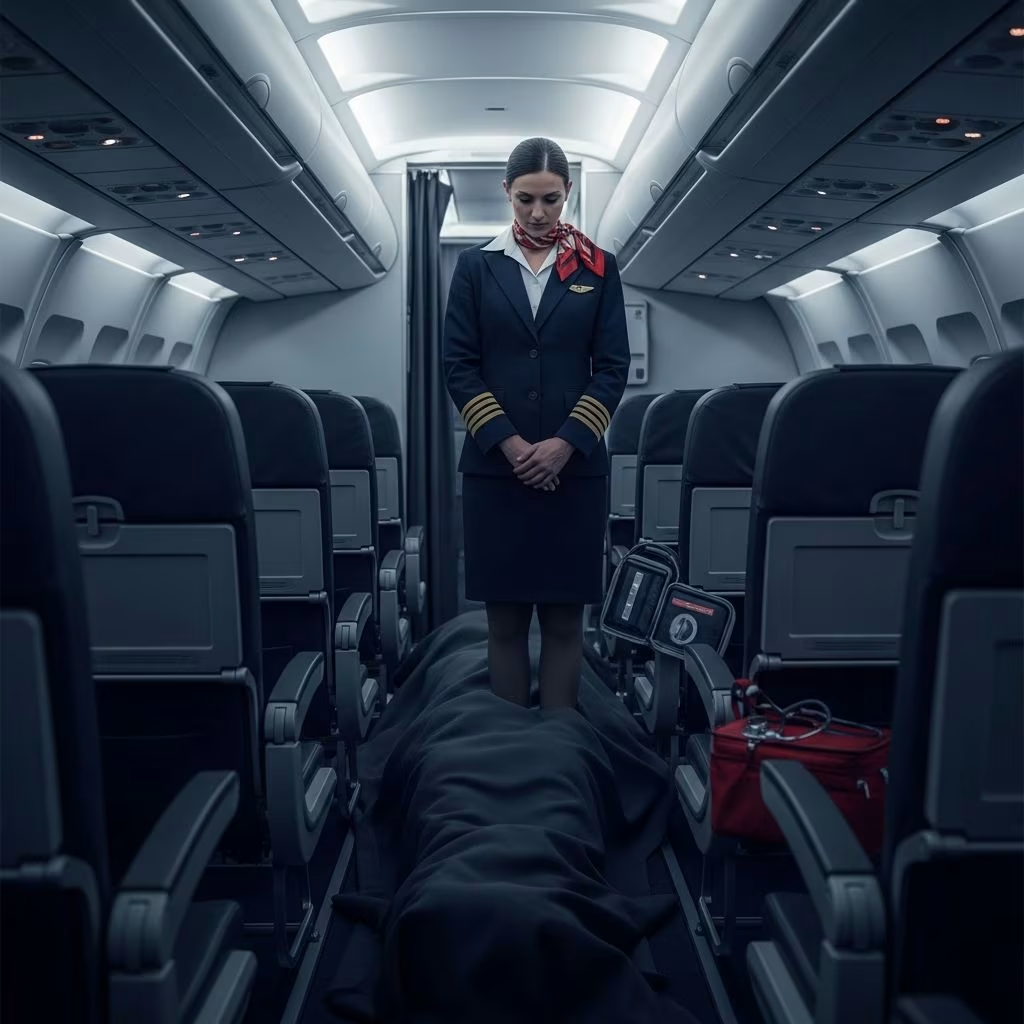
Passenger deaths during flights, though uncommon, trigger precise procedures designed to prioritize safety, respect dignity, and adhere to legal standards. Airlines follow guidelines from bodies like the International Air Transport Association (IATA) to manage these situations effectively.
Flight attendants are the first line of defense in spotting medical distress. They conduct regular checks and respond immediately to calls for help from passengers or companions. Upon finding someone unresponsive, crew members assess vital signs by checking for breathing, pulse, and responsiveness, which may involve verbal commands, gentle shaking, or light taps.
Crew training includes basic life support (BLS) and advanced cardiac life support (ACLS) principles. They initiate cardiopulmonary resuscitation (CPR) promptly, using onboard equipment like automated external defibrillators (AEDs) and enhanced medical kits. These tools allow for defibrillation attempts and administration of basic medications under guidance.
If a qualified physician is present, they take lead after self-identifying to the crew. Only doctors can legally pronounce death, providing critical expertise in diagnosis and decisions on further interventions. Without such help, the passenger remains classified as unresponsive, and resuscitation persists until landing.
Ground doctors consult via radio, advising on stabilization or diversion based on the situation’s severity and flight progress. This collaboration ensures decisions balance passenger welfare with operational feasibility.
IATA guidelines specify clear criteria for stopping CPR to avoid futile prolonging:
| Condition | Description |
|---|---|
| Signs of Life Return | Spontaneous breathing or circulation resumes. |
| Unsafe Conditions | Turbulence or difficult landing forecast prevents safe continuation. |
| Exhaustion | All rescuers are physically unable to proceed. |
| Aircraft Lands | Care transfers to ground emergency services. |
| Presumed Dead | CPR exceeds 30 minutes with no signs of life and no AED shocks advised. |
Airlines may add criteria, such as input from ground support or onboard physicians. This structured approach prevents overexertion and respects medical ethics.
Once death is presumed or confirmed, the focus shifts to dignified handling. Crew notifies the captain immediately, who alerts the destination for authority preparation.
Companions provide contact details, and crew offers emotional support. Suspected infections trigger universal precaution kits.
Diversions are not automatic and depend on multiple factors. Post-death, landing elsewhere rarely benefits the deceased but could disrupt others unnecessarily. Captains weigh:
Examples include continuing flights despite clear death signs when no doctor confirms, as in a 2022 UK-Cyprus case where paramedics verified upon arrival. Qatar Airways incidents have seen bodies seated normally for hours due to full cabins.
Death certificates cannot be issued mid-flight except by qualified professionals. Jurisdiction falls under the destination country, complicating international flights. Crew documents all actions meticulously for investigations, including witness statements from doctors.
FAA mandates reporting but leaves protocols to airlines, aligned with IATA. Post-landing, authorities handle autopsy, identification, and family notifications.
Crew training emphasizes compassion amid stress. Families stay with the body during deplaning, after others exit, ensuring privacy. Curtains, low lights, and minimal announcements maintain calm.
Handling remains upright avoids lavatory myths, respecting the deceased and avoiding panic. This protocol upholds humanity in confined spaces.
In-flight deaths occur roughly once per 600,000–700,000 passengers, often from cardiac events in older travelers. High altitude reduces oxygen, exacerbating conditions like deep vein thrombosis (DVT) or heart disease.
Modern aircraft carry AEDs, oxygen, and pharmaceuticals. Attendants undergo recurrent drills, including mock scenarios. IATA’s 2018 guidelines remain foundational, updated for new tech.
Some carriers stock body bags per European Air Transport Association (EATA) mandates, though not universal.
No, only qualified doctors can; otherwise, presume unresponsive.
Not typically; flights continue if safe.
Secured upright, covered, head visible if bagged.
Treat as alive until landing; CPR per guidelines.
On some airlines, zipped to neck.
Consult doctors before long flights if high-risk. Carry medications, stay hydrated, and move periodically to mitigate DVT. Know volunteer medical help aids crew.
