


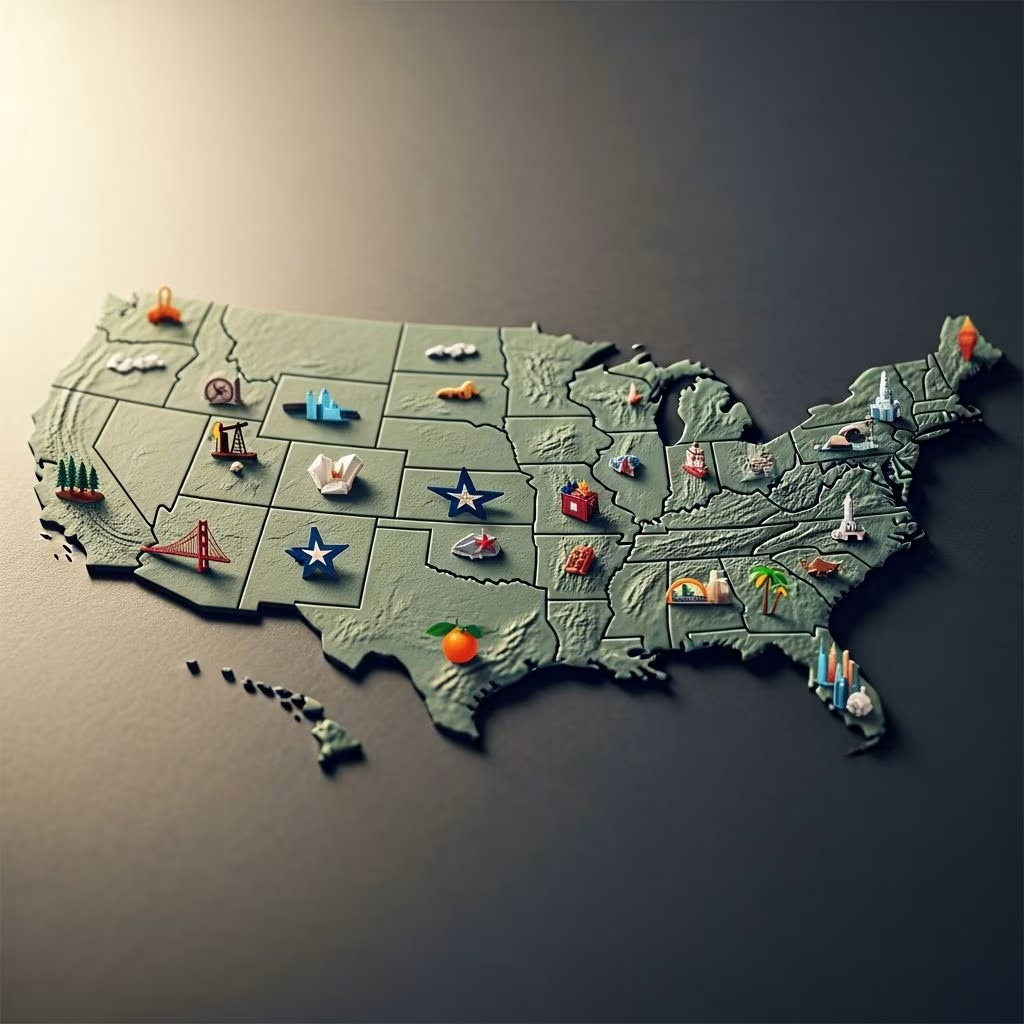
The United States comprises 50 states, each possessing its own distinctive identity shaped by geography, history, culture, and natural resources. Understanding what makes each state unique provides insight into the rich diversity that characterizes the American landscape. From the Arctic tundra of Alaska to the tropical islands of Hawaii, the continental states offer an extraordinary range of environments and cultural experiences.
Geographical Superlatives and Natural Landmarks
The sheer scale and diversity of American geography creates numerous records and distinctions among the states. Alaska dominates in terms of physical size, encompassing more than twice the land area of Texas. This immense state contains vast wilderness areas, including Wrangell–St Elias National Park & Preserve, which alone spans a larger territory than nine individual US states combined. The scale of Alaska’s geography fundamentally shapes its character, influencing everything from transportation patterns to population distribution.
At the opposite end of the spectrum, Rhode Island represents the smallest state by area, yet remains densely populated and economically significant. The contrast between Alaska and Rhode Island illustrates the remarkable diversity within the American federal system.
Beyond simple size measurements, states distinguish themselves through remarkable natural features. Arizona encompasses the Grand Canyon, one of the seven natural wonders of the world, showcasing geological formations that have captivated visitors for generations. Utah contains the Great Salt Lake, the nation’s saltiest body of water, creating a unique ecosystem and recreational destination. Hawaii stands as the only state composed entirely of islands, with its archipelago formation creating distinct cultural and geographical characteristics unavailable elsewhere in the continental United States.
Florida claims the distinction of being the flattest state, with minimal elevation variation across its terrain. This geographical characteristic influences the state’s susceptibility to flooding, water management practices, and ecosystem dynamics. Meanwhile, South Dakota holds the geographic center of the entire nation—the theoretical balance point of all 50 states on a map.
Population Distribution and Urban Dynamics
Population patterns reveal significant variations in how Americans distribute themselves across the landscape. California stands as the most populous state, containing more residents than the entire nation of Canada. This concentration of people in a single state reflects California’s economic opportunities, favorable climate, and historical development patterns.
Conversely, Wyoming ranks as the least densely populated state, where cattle outnumber people in many regions. This low population density reflects Wyoming’s challenging climate, limited urban centers, and economy historically dependent on ranching and natural resource extraction. The contrast between California and Wyoming demonstrates the extreme variation in population concentration across American geography.
Economic Specializations and Industrial Heritage
Many states have developed distinct economic specializations that define their character and contribution to national commerce. Vermont has established itself as America’s premier maple syrup producer, with the state’s natural landscape and climate creating ideal conditions for maple production. The state has even designated maple as its official state flavor—a unique recognition reflecting the product’s cultural significance.
Wisconsin has earned the designation of “Cheese State,” building a reputation for dairy production and cheese manufacturing that extends far beyond state borders. The state’s agricultural heritage and dairy farming traditions continue to shape its economy and cultural identity.
Washington State dominates national apple production, leveraging its climate and soil conditions to produce the majority of the nation’s apple crop. This agricultural specialization has created a distinct economic sector and regional identity.
Indiana distinguishes itself through its transportation infrastructure. The state maintains more miles of interstate highway per square mile than any other state in the nation, earning it the nickname “Crossroads of America.” This dense network of highways reflects Indiana’s central location and its historical role as a transportation hub connecting eastern and western portions of the country.
Natural Resources and Unique Deposits
Certain states possess rare natural resources that distinguish them within the national context. Arkansas remains the only state with an actively operating diamond mine, making it the sole domestic source of diamonds in the United States. This geological distinction provides economic value and tourist appeal.
Idaho claims to have the longest main street of any American city, a distinction that reflects the state’s particular urban geography. Montana holds the recorded instance of the largest snowflake ever documented, demonstrating the state’s extreme weather conditions and contributing to its reputation for dramatic meteorological events.
Cultural and Legal Distinctions
Beyond geography and economics, states maintain distinct cultural and legal characteristics. Louisiana maintains unique legal traditions stemming from its French colonial heritage. The state operates under a civil law system, the only state in the nation to do so, while the remaining 49 states follow the common law tradition. This legal distinction reflects Louisiana’s distinctive history and cultural heritage.
Vermont’s unique status extends beyond maple syrup production. The state maintains distinctive constitutional provisions and cultural practices that differentiate it from other northeastern states, reflecting its particular historical development and community values.
Historical Significance and Pioneering Achievements
Several states hold important positions in American historical development. Virginia earned distinction as the birthplace of eight United States presidents, reflecting the state’s early prominence in American political development and its role in establishing the nation’s governmental traditions.
West Virginia claims a unique historical distinction as the location where Mother’s Day was first observed as an organized celebration, providing the state with a cultural legacy distinct from its regional neighbors.
Utah witnessed the establishment of the first Kentucky Fried Chicken restaurant, marking the birthplace of one of the world’s most recognizable fast-food chains, though the brand has become globally distributed.
Hydrological and Environmental Features
Kentucky contains Mammoth Cave, recognized as the world’s largest underground cave system. This natural wonder attracts researchers and tourists interested in speleology and provides insight into subterranean geological processes operating beneath the state’s surface.
Montana includes the Triple Divide, a unique hydrological feature that allows water to flow toward three distinct ocean basins: Hudson Bay (and the Arctic Ocean), the Atlantic Ocean, and the Pacific Ocean. This geographical anomaly creates a distinctive watershed characteristic found nowhere else in the continental United States.
Comparative State Characteristics Table
| State | Distinctive Characteristic | Category |
|---|---|---|
| Alaska | Largest state by area; contains Wrangell–St Elias National Park | Geography |
| California | Most populous state; exceeds Canada’s population | Demographics |
| Wyoming | Least populated state; more cattle than people | Demographics |
| Rhode Island | Smallest state; traversable in under one hour | Geography |
| Vermont | Official state flavor: maple syrup | Culture |
| Wisconsin | Renowned cheese production state | Economy |
| Washington | Leads nation in apple production | Economy |
| Arkansas | Only active diamond mine in United States | Natural Resources |
| Louisiana | Only state with civil law system | Legal |
| Kentucky | Contains world’s largest cave system | Natural Wonders |
Understanding State Identity Through Distinctive Features
The characteristics that distinguish individual states extend beyond simple geographical measurements or economic output. They reflect the accumulated history, cultural heritage, natural endowments, and human development patterns unique to each region. These distinctions create the mosaic of American identity, with each state contributing particular strengths and characteristics to the broader national fabric.
Recognizing these distinctions enhances appreciation for regional diversity and provides context for understanding how geography, history, and culture interact to shape distinct communities. Whether through natural wonders, economic specializations, cultural practices, or historical significance, each state maintains a particular identity that contributes to the larger American experience.
Frequently Asked Questions
Which US state is the largest?
Alaska stands as the largest state by land area, measuring more than twice the size of Texas. Its vast territory includes numerous national parks and wilderness areas that rival the size of entire states.
What makes Vermont unique among US states?
Vermont is the only state with an official state flavor—maple. The state’s maple syrup production and cultural association with maple products distinguish it within American geography.
Where is the geographic center of the United States?
South Dakota contains the geographic center of all 50 states, representing the theoretical balance point of the entire nation on a map.
Which state has the world’s largest cave?
Kentucky is home to Mammoth Cave, recognized internationally as the world’s largest underground cave system, attracting scientific researchers and tourists interested in subterranean geology.
What is unique about Louisiana’s legal system?
Louisiana represents the only US state operating under a civil law system, a distinction resulting from French colonial heritage and legal traditions distinct from the common law system used in other states.
References
- 50 fun facts about US states to impress your friends — Lonely Planet. 2024. https://www.lonelyplanet.com/articles/fun-facts-about-us-states
- Fun Facts About the United States for Kids — Twinkl USA. 2024. https://www.youtube.com/watch?v=FWCmxZdgG70
- ASL Fun Facts for 50 States — YouTube. 2024. https://www.youtube.com/watch?v=DVCYvFn77Zc
- U.S. Census Bureau: State Population Data — United States Census Bureau. 2023. https://www.census.gov/topics/population/data.html
- USGS: Geographic Names Information System — United States Geological Survey. 2023. https://www.usgs.gov/

