

 Travel Essentials
 Travel Essentials

Learn strategic wardrobe planning for European trips. Discover what to pack, what to avoid, and how to create versatile outfits with minimal luggage.
 Travel Essentials
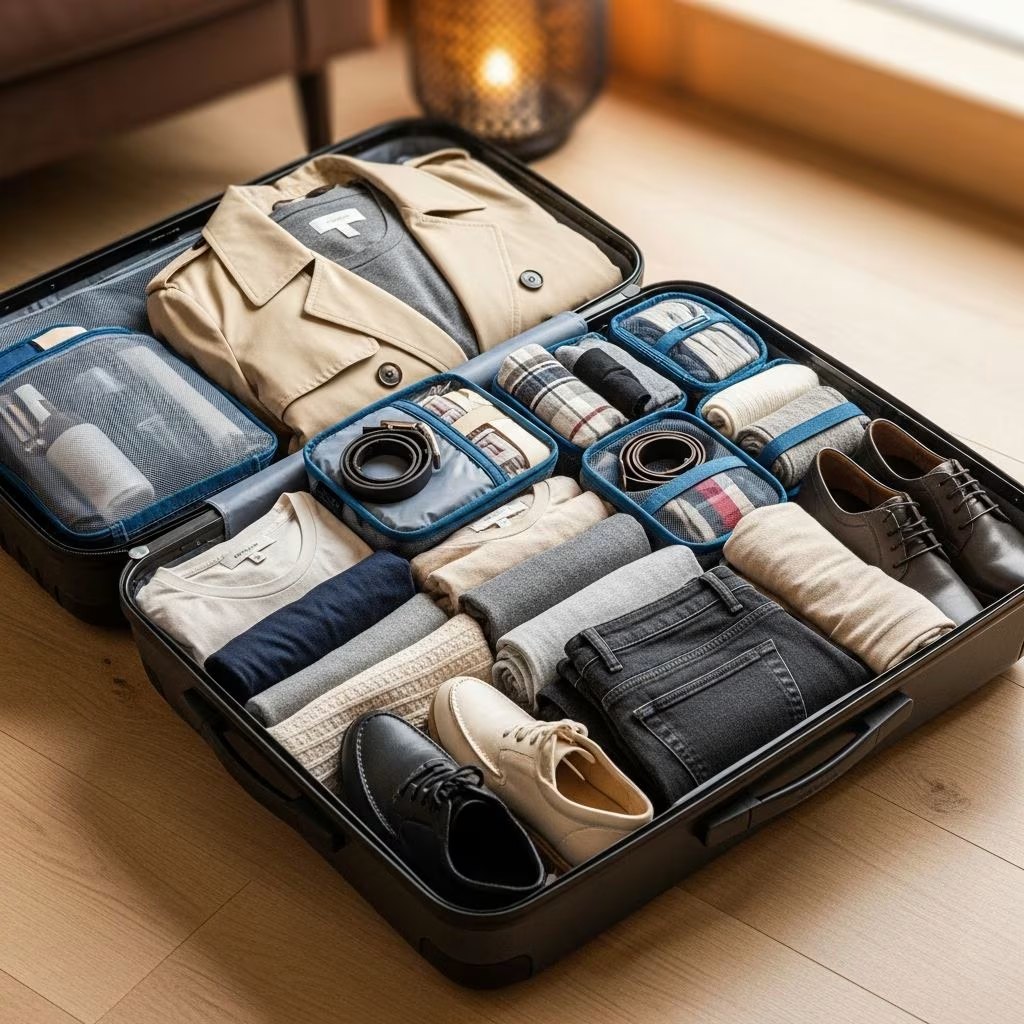
Preparing for an extended European journey requires more than throwing clothes into a suitcase. The key to successful travel lies in understanding that European destinations demand both practical consideration and cultural awareness. Many travelers return home with suitcases they barely unpacked, having misjudged their actual clothing needs. The goal is not to pack less arbitrarily, but to pack intentionally—selecting pieces that work together seamlessly and serve multiple purposes throughout your journey.
When preparing for a European adventure, the fundamental principle that experienced travelers follow is straightforward: bring only items you genuinely plan to wear repeatedly. This philosophy contradicts the instinct to overpack, which stems from uncertainty about what you might need. Extended European travel typically involves walking considerable distances through varied urban and natural landscapes, which means your clothing choices directly impact your comfort and enjoyment.
The practical reality is that hotels across Europe rarely provide laundry facilities, and relying on paid laundry services becomes expensive for longer trips. This constraint actually becomes liberating—it forces you to think strategically about fabrics and versatility rather than quantity. The mathematics are clear: for a two-week European journey, you need approximately five to seven mixable outfits, not fourteen separate looks.
Building a European wardrobe begins with selecting a cohesive color palette. Neutral tones—including navy, black, white, gray, and beige—form the foundation because they accomplish several objectives simultaneously. They blend in naturally with European street style, they mix and match effortlessly, and they don’t show travel wear as noticeably as lighter colors.
The reasoning behind neutral-focused packing extends beyond aesthetics. Europeans tend toward understatement in their everyday appearance, and dressing in coordinated neutral tones helps you blend in while simultaneously making mornings stress-free. You’re not searching through a chaotic pile of clothes; instead, you’re selecting from a limited palette where nearly everything coordinates with everything else.
If you remember nothing else about packing for Europe, remember this: comfortable, broken-in footwear is non-negotiable. This single decision influences your entire travel experience more than any other clothing choice. European cities feature extensive cobblestone streets, uneven sidewalks, and require substantial daily walking—often covering ten or more miles per day.
The mistake travelers commonly make is bringing new shoes they plan to break in during their trip. This approach inevitably leads to blisters, pain, and compromised enjoyment of destinations. Instead, pack two pairs of shoes you’ve already worn for entire days at home. Your first pair should be low-profile sneakers that have proven comfortable through real-world use. Your second option might be supportive ankle boots, loafers, or other structured shoes that provide arch support for extended walking.
High heels, fashionable wedges, and trendy footwear belong in your home closet, not your European luggage. European cities simply don’t accommodate these styles practically, and even upscale restaurants welcome polished flats and loafers instead. The exception exists only for truly formal occasions like destination weddings, which represent a tiny fraction of your trip.
| Type of Shoe | Best For | Packing Status |
|---|---|---|
| Broken-in sneakers | Daily city walking | Essential—bring one pair |
| Ankle boots or loafers | Varied terrain and evening wear | Essential—bring one pair |
| High heels | Formal events | Skip unless attending specific formal occasion |
| Sandals or flip-flops | Hotel room | Optional if space allows |
European fashion philosophy differs subtly from American casual wear. While Europeans certainly embrace comfort, their interpretation of casual dressing tends toward more polished presentation. A European woman wearing “casual” clothing typically includes finishing touches that transform an outfit from basic to intentional—elements like scarves, structured jackets, or simple jewelry.
Building your European wardrobe means selecting base pieces that anchor outfits, then incorporating lightweight layers and accessories that create variety without requiring excessive packing. The concept of a travel capsule wardrobe accomplishes exactly this. With fifteen strategic pieces selected thoughtfully, you can construct approximately forty different outfit combinations.
Your packing strategy should include these foundational categories:
Understanding what to leave behind proves as valuable as knowing what to bring. Common packing mistakes stem from either overpacking for hypothetical situations or failing to consider actual travel conditions and cultural context.
The instinct to pack “just in case” outfits creates luggage that becomes burdensome. If you cannot envision wearing an item at least twice during your trip, it doesn’t belong in your suitcase. This guideline applies especially to specialized clothing like hiking gear, formal dresses, or themed outfits. Extended European travel requires mobility—whether navigating train stations, hiking through neighborhoods, or managing stairs in older European hotels.
Heavy sweaters and thick scarves consume disproportionate suitcase space while lighter alternatives accomplish the same purpose. Breathable cardigans and lightweight scarves that roll compactly provide temperature adjustment without volume. The difference in practicality becomes immediately apparent when moving between hotels or climbing staircases while managing luggage.
Many destinations throughout Europe maintain specific cultural expectations regarding modest dress, particularly in religious sites. A seemingly practical sleeveless top for Mediterranean summer becomes problematic at cathedral entrances or religious buildings. However, this challenge solves easily with lightweight scarves or wraps that occupy minimal suitcase space while respecting cultural norms.
European fashion emphasizes intentionality through accessories and attention to fit rather than trend-following or brand names. This approach aligns perfectly with minimalist packing because it prioritizes quality of execution over quantity of possessions.
Clothing that fits beautifully transforms your entire appearance and confidence. Rather than purchasing new pieces specifically for travel, select your best-fitting staples from your existing wardrobe. An expensive item that doesn’t fit properly looks worse than a modest piece tailored to your body. Europeans notice fit because their own clothing choices prioritize this element.
Strategic accessorizing creates outfit variation without packing additional clothing. A scarf worn multiple ways, jewelry that coordinates with your neutral palette, and structured jackets transform the same basic pieces into distinctly different looks. This approach explains how fifteen pieces create forty outfit combinations—the accessories and layering pieces function as multipliers.
| Trip Duration | Outfit Count | Shoe Pairs | Key Consideration |
|---|---|---|---|
| 5-7 days | 3-4 outfits | 2 pairs | Minimal underwear; plan laundry service |
| 10-14 days | 5-7 outfits | 2 pairs | Reware clothing every other day |
| 14-21 days | 7-10 outfits | 2 pairs | Plan one laundry stop midway |
| 21+ days | 10-12 outfits | 2-3 pairs | Multiple laundry opportunities or lightweight fabrics |
Extended travel demands fabrics that withstand repeated wearing and varied climate conditions. Durable materials like denim, wool, and structured cotton maintain their appearance through multiple wearings and survive varied washing conditions. These fabrics also resist wrinkling better than delicate materials, which matters when hotel irons and pressing services aren’t readily available.
Plan for five to seven mixable outfits, not fourteen separate looks. With strategic coordination, these combinations create sufficient daily variety while remaining manageable for travel.
Absolutely. Reweari clothing is practical and completely normal, especially during multi-city trips. No one except your travel companion tracks your outfit rotation, and they’re doing the same thing.
Two primary errors dominate: failing to adjust your style to align with European fashion sensibilities, and packing for hypothetical scenarios instead of your actual daily activities. Both mistakes lead to oversized luggage containing unnecessary items.
No. Select pieces you’ve already worn and know fit properly. New clothes that haven’t been tested for comfort and fit create risk during travel when you cannot return items or visit different stores.
Typically no. Some hotels offer paid laundry services, and laundromats exist in most cities, but planning laundry requires time and expense. Focusing on versatile, reweabl pieces proves more practical than assuming laundry availability.
Lightweight, compressible layers accomplish this effectively. Cardigans, light sweaters, and structured jackets provide temperature flexibility without requiring significant luggage space or the bulk of heavy coats.
Successfully packing for extended European travel requires a mindset shift. Rather than viewing packing constraints as limitations, experienced travelers recognize them as liberating. Fewer choices paradoxically reduce morning decision fatigue, improve outfit coordination, and prevent the physical strain of oversized luggage across European train stations and cobblestone streets.
The confidence that comes from wearing well-fitting, coordinated pieces you’ve selected intentionally enhances your travel experience. You’re not self-conscious about outfit repetition or worried about clothes that don’t work together. Instead, you’re focused on experiencing destinations, connecting with people, and creating memories.
