

 Travel Essentials
 Travel Essentials

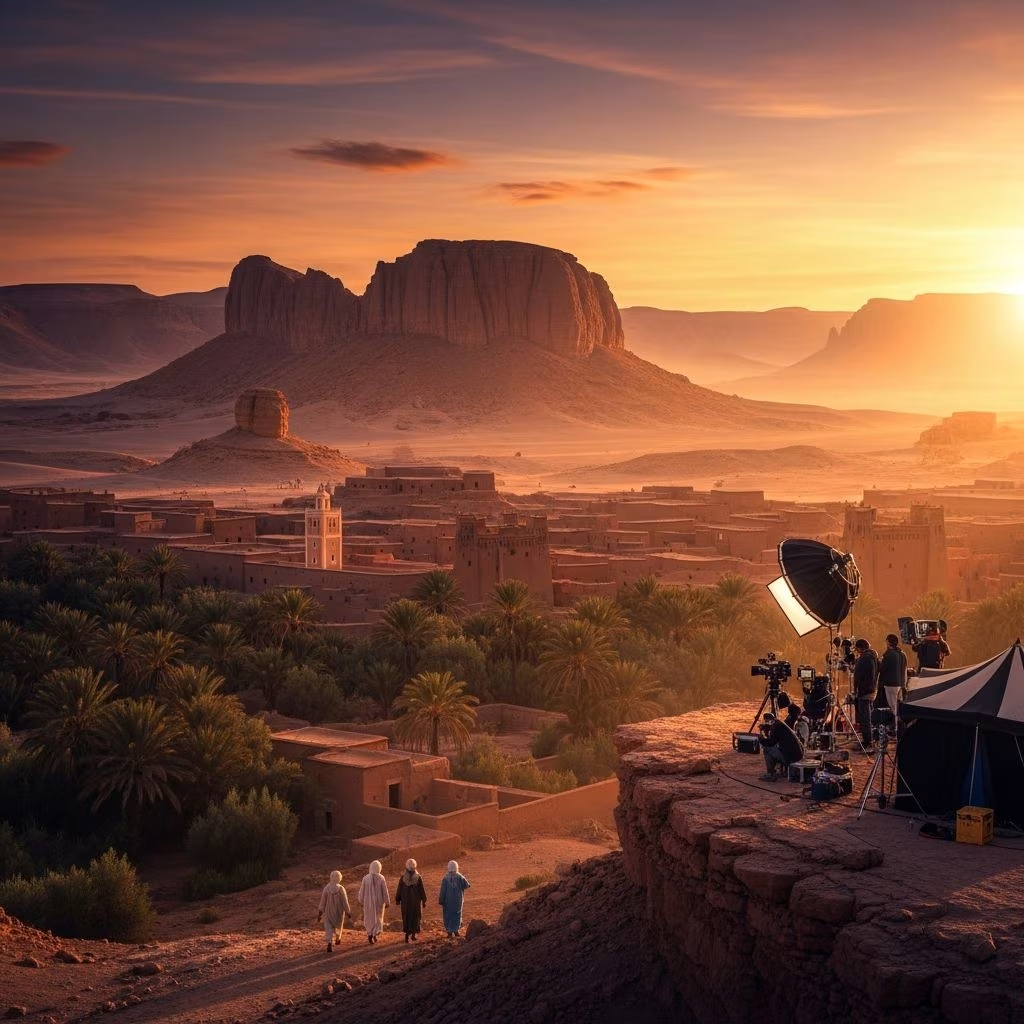
Explore the real-world filming spots of Oscar-nominated Sirat, showcasing Morocco's Sahara Desert raves, high-altitude roads, and remote oases that defined this gripping survival story.
 Travel Essentials
The Oscar-nominated film Sirat, directed by Oliver Laxe, transforms Morocco’s unforgiving landscapes into a canvas of survival, ecstasy, and human endurance. This gripping tale of a father and son navigating a chaotic desert rave amid global catastrophe draws heavily from the North African country’s diverse terrain. From the rippling sands of the Sahara to serpentine mountain highways, the production captured authentic, raw beauty that elevates the story’s intensity.
Morocco’s Sahara Desert serves as the pulsating core of Sirat, where nomadic European ravers converge for a hypnotic, punishing party. The film’s opening sequences depict crews meticulously assembling massive speaker arrays amid endless dunes, mirroring real desert festivals that inspired Laxe during his residency in the region. These vast, arid expanses in southern Morocco provide the perfect backdrop for scenes of frenzied dancing under starlit skies, contrasted with the encroaching apocalypse.
The Erg Chebbi dunes near Merzouga stand out as primary filming grounds. Towering golden sand waves stretch for miles, offering isolation and immensity that amplify the rave’s otherworldly vibe. Crews filmed at dawn and dusk to capture shifting light patterns, turning the desert into a living character—beautiful yet merciless. Nomadic Berber communities nearby assisted, lending cultural authenticity to peripheral scenes.
Travelers can replicate these experiences via guided quad bike tours or overnight glamping in luxury desert camps, immersing in the same hypnotic silence by day and rhythmic nights.
Beyond the sands, Sirat ventures into Morocco’s Atlas Mountains, where narrow, winding roads test the protagonists’ resolve. These high passes, often above 2,000 meters, feature sheer drops and hairpin turns, embodying the film’s themes of precarious survival. Filming occurred along the Tizi n’Test route, a historic path linking Marrakech to Taroudant, known for its dramatic cliffs and Berber villages clinging to slopes.
The rugged High Atlas terrain provides vertigo-inducing vistas, with clouds often hugging peaks. Production teams navigated these roads during off-season months to avoid tourist crowds, capturing authentic peril without CGI. Scenes of vehicles straining against gravity highlight the mountains’ role as both barrier and gateway in the narrative.
| Location | Altitude | Key Film Use | Visitor Tips |
|---|---|---|---|
| Tizi n’Test Pass | 2,092m | Chase sequences, tense drives | Rent 4×4; check weather |
| High Atlas Trails | 1,500-3,000m | Refuge stops, vistas | Hike with local guides |
| Ouirgane Valley | 900m | Transition scenes | Stay in riads |
These roads aren’t just scenic; they’re engineering marvels built in the 1930s, offering panoramic views of argan forests and snow-capped summits in winter.
Scattered throughout Sirat are intimate shots of traditional Berber kasbahs and palm-fringed oases, grounding the chaos in cultural depth. The Dadès Valley, with its rose-hued gorges and fortified mud-brick villages, hosted quieter moments of reflection. These adobe structures, some centuries old, provided stark contrast to the rave’s modernity.
Fournine Gorges nearby doubled for treacherous escapes, their narrow canyons echoing with the film’s sound design. Production respected local customs, filming during non-harvest periods and incorporating Amazigh extras for realism. Oases like those in the Draa Valley offered lush reprieve, with date palms swaying against barren rock.
Visitors today explore these via road trips from Ouarzazate, the ‘Gateway to the Desert,’ home to Atlas Studios where Hollywood often films.
Director Oliver Laxe’s three-year immersion in the Moroccan desert profoundly shaped Sirat. Living among locals, he witnessed an impromptu rave that sparked the concept—a pulsating escape amid desolation. His prior works like Mimosas also celebrated Morocco, blending Spanish and Amazigh influences. Casting Sergi López as the determined father and Bruno Núñez Arjona as his son added emotional layers, filmed on-location for immersion.
Laxe’s approach emphasized minimal crew, natural light, and practical effects, making Morocco’s elements the true stars. The vague World War III backdrop heightens the desert’s isolation, drawing from real geopolitical tensions.
To chase Sirat‘s shadows, fly into Marrakech or Ouarzazate. A 10-day itinerary might include:
Best time: October-April for milder weather. Essentials: 4×4 rental, offline maps, water purifiers. Respect customs—women cover shoulders in villages; tip guides generously.
Morocco’s filming boom boosts tourism but strains fragile ecosystems. Desert raves risk litter; opt for eco-camps. Support Berber cooperatives for authentic experiences. Climate change shrinks oases, underscoring Sirat‘s survival motifs.
The rave scenes were shot in the Erg Chebbi dunes near Merzouga in Morocco’s Sahara, capturing real vastness and isolation.
Yes, Tizi n’Test and High Atlas passes are drivable year-round; hire local drivers for safety.
Inspired by Laxe’s desert residency and actual raves, but the apocalyptic plot is fictional.
Locations like Ouarzazate hosted Gladiator and Kingdom of Heaven, making it a cinematic hub.
Events like those in the Sahara occur sporadically; follow local listings for safe, permitted gatherings.
Morocco’s versatility—from Sahara’s infinity to Atlas’ drama—makes it a top choice. Tax incentives and skilled crews at Atlas Studios enhance appeal. Sirat exemplifies how these landscapes infuse stories with authenticity, urging viewers to explore beyond the screen.
(Word count: 1678)
