

 Travel Essentials
 Travel Essentials

Discover where to watch kiwi chicks hatch in New Zealand, with live viewing, conservation insights, and the best time to visit.
 Travel Essentials
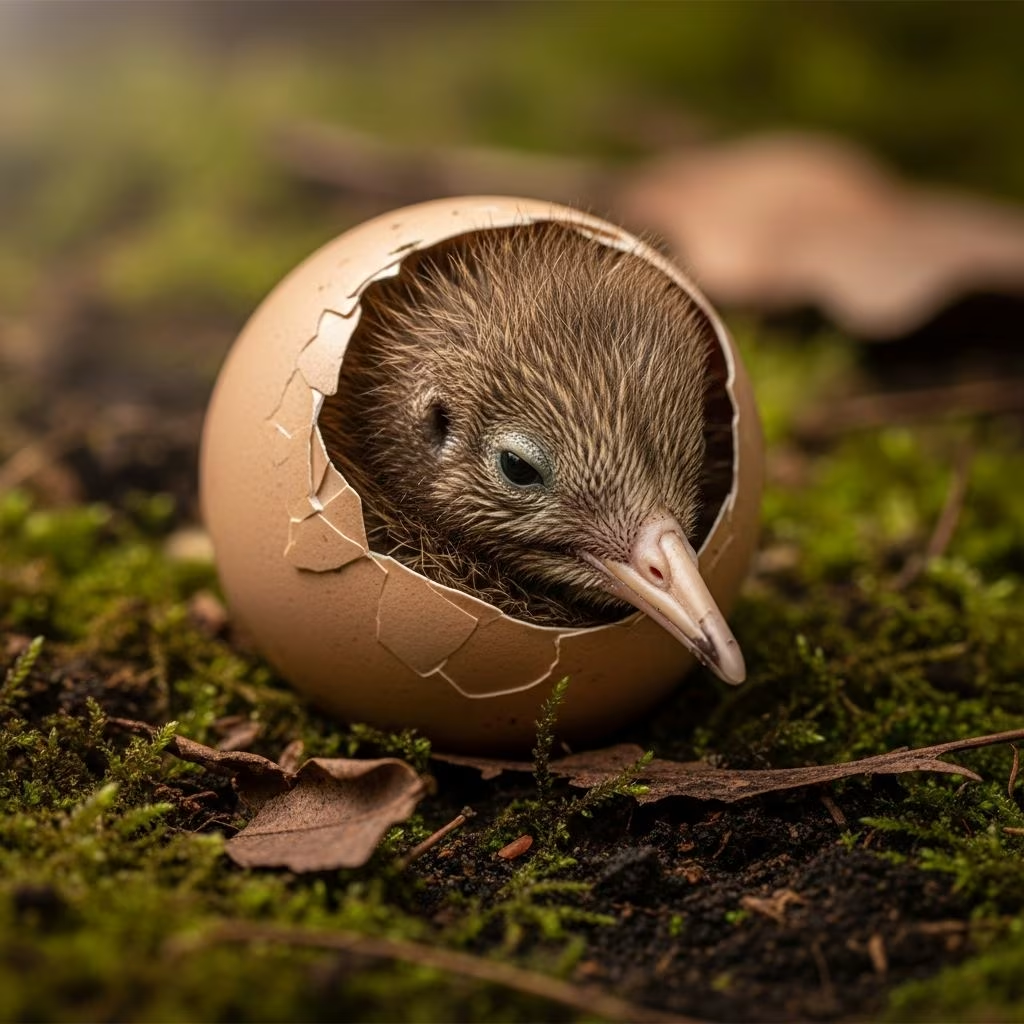
New Zealand’s kiwi birds represent a national treasure, enigmatic flightless wonders that embody the nation’s wild spirit. These nocturnal creatures, often called the unofficial mascot of Aotearoa, face significant threats from habitat loss and predators. Yet, innovative conservation initiatives allow visitors to witness one of nature’s most delicate moments: a kiwi chick breaking free from its egg. This article delves into the captivating world of kiwi hatching, highlighting key locations, the science behind it, and why these events draw global attention.
Kiwi eggs are marvels of nature, among the largest relative to body size in the bird kingdom. A female kiwi lays a single egg weighing up to 20% of her body weight, which she incubates for about 80 days. Upon hatching, the chick emerges fully feathered and precocial, ready to fend for itself in just days. These events, often livestreamed or viewable in person, offer a rare glimpse into avian rebirth.
Conservation programs like Operation Nest Egg collect eggs from the wild, incubate them in controlled environments, and raise chicks until they reach a size where predators pose less risk. This boosts survival rates dramatically, turning what was once a 5% wild success rate into over 65% for released birds.
One of the most celebrated kiwi hatchings unfolded live on national television, captivating audiences across New Zealand. On a crisp February morning, viewers tuned into a popular breakfast show watched as a tiny beak pierced the shell of an egg livestreamed from a dedicated kiwi burrow. The chick, named after the show in the Māori language, emerged to cheers from studio hosts and staff alike.
Six weeks later, this fluffy newcomer embarked on its next chapter. Accompanied by a TV presenter and conservation experts, the chick was transported to a predator-free sanctuary. There, it joined a thriving population, marking a triumphant step in rehabilitation efforts. Such broadcasts not only entertain but also galvanize public support for kiwi recovery, raising awareness and funds.
For travelers seeking an intimate encounter, New Zealand boasts world-class facilities where hatching unfolds before your eyes. The National Kiwi Hatchery stands out, offering guided tours through cutting-edge incubators and nocturnal houses. Visitors chat with on-site specialists, gaining insights into egg viability checks, temperature controls, and chick rearing protocols.
The prime viewing window spans September to March, aligning with peak hatching season. Even off-season, guests observe adult kiwis foraging in dimly lit enclosures, mimicking their natural twilight habits. These experiences blend education with excitement, often culminating in sightings of pip eggs—those showing the first cracks of life.
Major zoos contribute significantly to kiwi propagation. At one prominent Auckland facility, multiple chicks hatched in a single season under the watchful eyes of dedicated aviculturists. Zookeepers captured footage of these milestones, showcasing the third chick of the season destined for island release.
Another hatching featured a staff member documenting the second chick, highlighting the meticulous Operation Nest Egg process. These urban centers not only breed kiwis but also educate urban dwellers, fostering a connection to New Zealand’s biodiversity. Visitors can often view rearing pens, learning how chicks grow from 30g hatchlings to robust 1kg juveniles ready for wild release.
Post-hatching, chicks transition to expansive sanctuaries mimicking native forests. Sites like Sanctuary Mountain provide fenced havens free from invasive predators such as stoats and rats. Here, released kiwis like the famous TV hatchling learn to forage for worms and insects in safe environs.
These mainland islands host monitoring programs, tracking growth via radio tags and cameras. Success stories abound: recent wild births near urban centers signal ecosystem recovery after over a century. Travelers can hike these reserves, spotting kiwis at night with guided tours.
| Sanctuary/Hatchery | Location | Key Features | Best Visit Time |
|---|---|---|---|
| National Kiwi Hatchery | North Island | Live hatches, expert talks, nocturnal viewing | Sep-Mar |
| Sanctuary Mountain | Waikato | Predator-free release site, night walks | Year-round |
| Auckland Zoo | Auckland | Operation Nest Egg, chick rearing views | Year-round |
New Zealand’s kiwi efforts have notched remarkable achievements. One hatchery celebrated its 2000th chick on camera, a livestreamed event underscoring decades of dedication. Programs collaborate with iwi (Māori tribes), integrating cultural knowledge—kiwi hold deep significance in Māori lore as symbols of curiosity and stealth.
Funding from public broadcasters and trusts sustains these initiatives, ensuring eggs from remote nests reach incubators. The result? A population rebound from 20,000 to stabilized numbers, with 70 subpopulations under active management.
To catch a hatching, time your trip wisely. Monitor facility websites for live streams or tour schedules. Combine visits with regional attractions: pair a hatchery stop with geothermal wonders in Taupō or island ferries near Auckland.
Practical tips include booking nocturnal tours for peak activity, donning red-light headlamps to avoid startling birds, and supporting via donations or chick sponsorships. Families love these outings, blending adventure with purpose.
Despite progress, kiwis confront ongoing perils. Predation claims 95% of wild chicks without intervention. Habitat fragmentation from agriculture and urbanization compounds issues. Climate shifts may alter food availability, demanding adaptive strategies.
Yet optimism prevails. Community trappers remove thousands of predators yearly, while genetic research bolsters diversity. Visitor fees from hatcheries fund these battles, making tourism a conservation ally.
Hatching season runs September to March. Check facility calendars for live events.
Yes, controlled environments mimic natural conditions, with experts monitoring every step.
Many offer guided night tours where released kiwis roam freely.
Sponsor a chick, join trapping events, or donate via official programs like Save the Kiwi.
Evolutionary adaptations for nocturnal, ground-foraging life in predator-scarce ancient forests.
Beyond ecology, kiwis symbolize New Zealand identity. Māori tales portray them as guardians of the forest, their long beak probing secrets of the earth. Modern branding—from sports teams to currency—honors this icon. Witnessing a hatch connects visitors to this heritage, deepening appreciation for Aotearoa’s unique fauna.
In summary, kiwi hatching experiences offer profound insights into conservation triumphs. From screen-side thrills to sanctuary treks, these encounters inspire action to protect New Zealand’s feathered enigmas for generations.
