

 Travel Essentials
 Travel Essentials

Explore Costa Rica's sloth hotspots, learn about two- and three-toed species, and discover the best ways to observe these slow-moving wonders responsibly.
 Travel Essentials
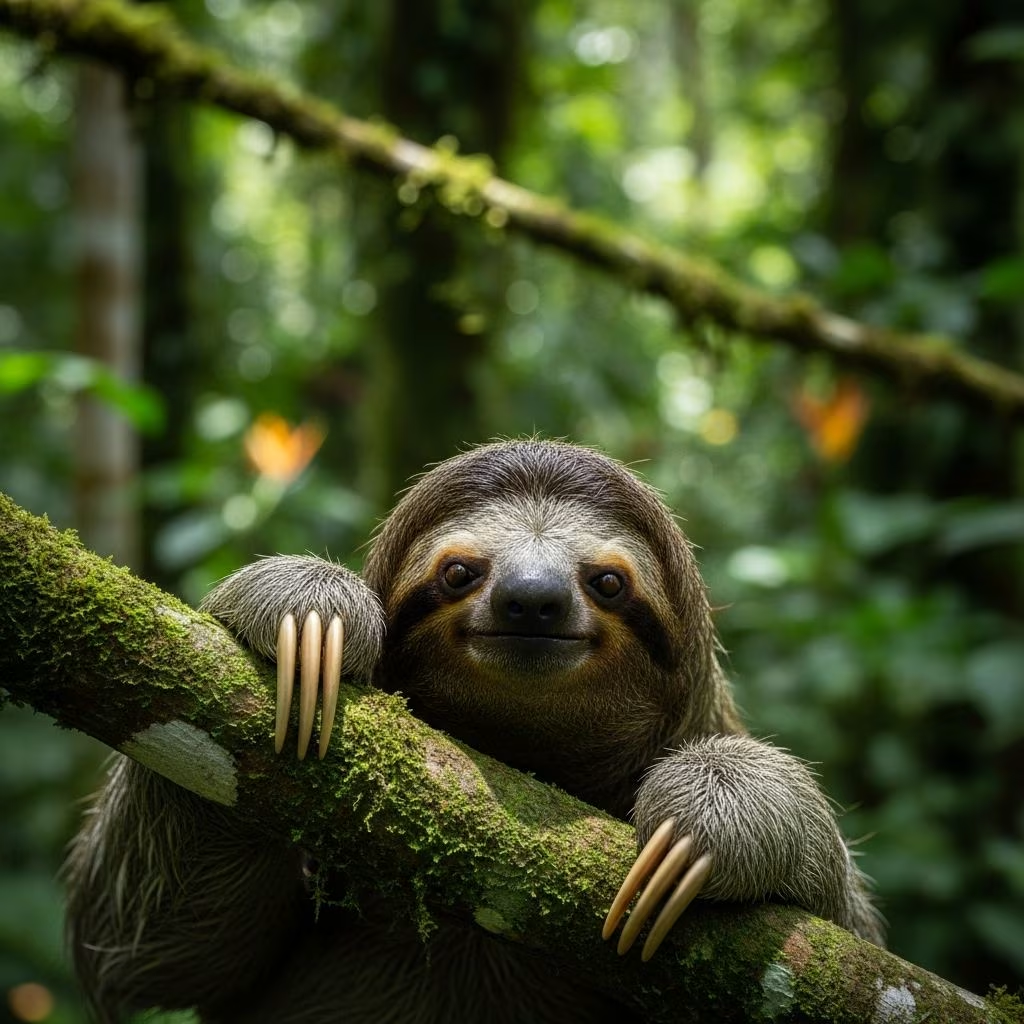
Costa Rica stands out as a premier destination for wildlife lovers eager to encounter sloths, those leisurely creatures synonymous with the nation’s lush rainforests. With diverse ecosystems hosting both two-toed and three-toed species, visitors can spot these animals in sanctuaries or the wild through guided experiences.
Sloths embody a serene pace in a fast-paced world, drawing millions to Costa Rica annually. Their slow movements, often mistaken for laziness, are evolutionary adaptations perfect for canopy life, where energy conservation is key amid limited food sources.
This combination of rarity and relatability makes sloth encounters unforgettable, boosting ecotourism while underscoring conservation needs.
Costa Rica harbors two main sloth genera: two-toed (Choloepus) and three-toed (Bradypus), each with distinct traits.
| Feature | Two-Toed Sloth | Three-Toed Sloth |
|---|---|---|
| Activity Pattern | Nocturnal | Diurnal |
| Fingers/Toes | Two on forelimbs | Three on forelimbs |
| Diet | Leaves, fruits, insects | Primarily leaves |
| Best Viewing Time | Night hikes | Day tours |
Two-toed sloths, like Hoffman’s, are elusive night-dwellers, while brown-throated three-toed sloths are more visible daytime hangers.
Costa Rica’s national parks and reserves offer reliable sloth encounters, especially with expert guides who spot them amid camouflage.
This misty haven in Puntarenas and Alajuela provinces packs 2.5% of global biodiversity into 100+ square kilometers across six ecological zones. Hanging bridges aid canopy views where sloths nap.
One of Costa Rica’s oldest parks in the northwest, it features tropical dry forests ideal for sloth spotting amid historical sites.
On the central Pacific coast, this compact park teems with wildlife, including sloths in beachside rainforests—perfect for family outings.
Dubbed the “most biologically intense place on Earth” by National Geographic, the Osa Peninsula’s 13 ecosystems host sloths alongside 140 mammal species.
In Heredia Province, this research site run by the Organization for Tropical Studies offers trails through primary rainforest teeming with sloths.
Southern Pacific regions, particularly the Osa Peninsula, yield higher concentrations due to preserved habitats.
Sloths blend seamlessly with foliage thanks to algae-covered fur, sleeping 15-20 hours daily high up. Success hinges on guides’ trained eyes.
In primary rainforests, they’re nearly invisible, but edge habitats near roads or trails improve odds—though this stresses habitat loss concerns.
For close-up views, sanctuaries rehabilitate orphaned or injured sloths. Costa Rica’s sole dedicated facility near Limón rescues abandoned and disabled individuals, offering tours on two- and three-toed sloths.
These centers educate on threats like deforestation and power line electrocutions, emphasizing release back to the wild when possible. Visitors learn feeding routines and see aviaries mimicking natural habitats.
From San José, it’s a 3-4 hour drive eastward, rewarding patient travelers with intimate, responsible interactions.
Despite popularity, sloths face habitat fragmentation from roads and development. Route 32’s expansion creates tree gaps, exposing them to predators and reducing canopy connectivity.
Tourism booms aid funding but risks disturbance. Sanctuaries and laws like 2021’s national symbol status bolster protections, yet primary rainforest loss persists.
Volunteering opportunities, such as with conservation teams, allow hands-on contributions to rescues and monitoring.
Book guided park tours or sanctuary visits via reputable operators. Pack insect repellent, sturdy shoes, and patience—sloths move at 0.15 mph on ground, slower in trees.
Combine with birdwatching or zip-lining for full immersion. Stay in eco-lodges near parks for dawn/dusk prime viewing.
With a guide, yes—especially in southern parks. They’re camouflaged but common.
Two-toed are nocturnal omnivores; three-toed diurnal folivores.
No—ethical viewing only from afar to avoid stress and disease transmission.
Year-round; dry season (Dec-Apr) offers clearer views.
They rehabilitate rescues for wild release, fund habitat protection.
Costa Rica’s sloth encounters thrive on sustainable practices. Choose certified guides, support conservation, and minimize impact to preserve these icons for future generations.
