

 Travel Essentials
 Travel Essentials

Explore Whitby's journey from ancient monastic site to gothic epicenter, fueled by Dracula's legacy, haunting ruins, and a thriving subculture scene.
 Travel Essentials
Perched on the rugged cliffs of North Yorkshire, Whitby stands as a captivating blend of serene seaside charm and profound gothic mystique. This unassuming coastal town has undergone a remarkable evolution, transforming from a historic fishing village into the undisputed epicenter of UK’s gothic subculture. Inspired by Bram Stoker’s iconic novel Dracula, Whitby’s landscape, legends, and landmarks have drawn enthusiasts of the macabre for over a century, fostering a vibrant community that celebrates darkness with style and reverence.
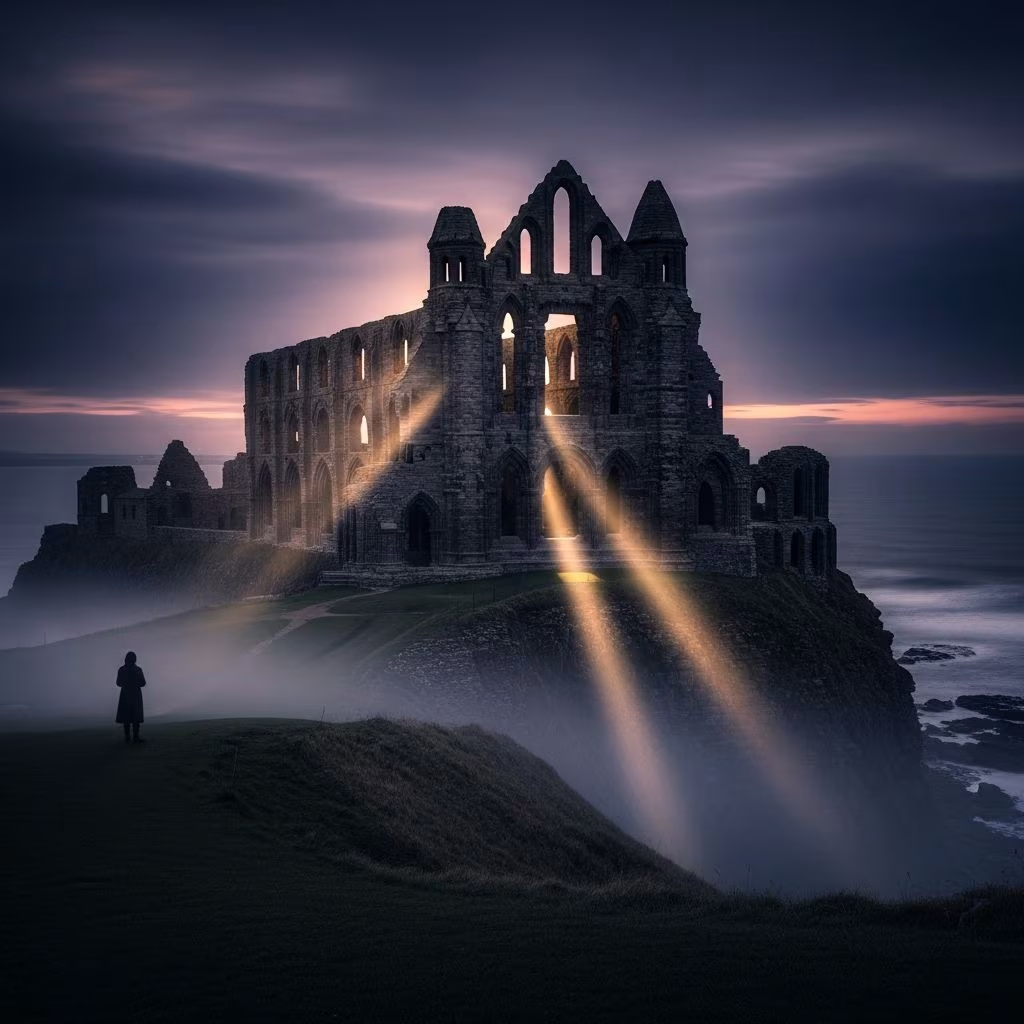
Whitby’s gothic persona is deeply rooted in its ancient past, long before modern vampires captured imaginations. Over 3,000 years ago, communities inhabited the headland where the town’s most iconic structure now looms. In AD 657, Abbess Hild established a groundbreaking double monastery for men and women on land gifted by King Oswiu, marking it as one of Anglo-Saxon England’s premier religious centers.
This site hosted the pivotal Synod of Whitby in 664, a gathering that resolved key ecclesiastical debates, including the calculation of Easter’s date. By aligning with Roman traditions over Celtic ones, the synod shaped the trajectory of English Christianity. Viking raids in the 9th century led to abandonment, but Benedictine monk Reinfrid revived the community in 1078. The monastery flourished until Henry VIII’s dissolution in 1539, leaving behind the dramatic ruins visible today.
The abbey’s Gothic architecture, evolving from Romanesque roots, features soaring arches and intricate stonework that evoke an aura of timeless eeriness. These ruins, high on the East Cliff, overlook the sea and have inspired poets like Cædmon, the 7th-century cowherd-turned-bard whose hymns added a layer of spiritual intrigue.
The catalyst for Whitby’s modern gothic fame arrived in 1897 with Bram Stoker’s Dracula. While vacationing in the town, the Irish author drew inspiration from its dramatic setting. In the novel, the menacing Count Dracula arrives on a ghost ship called the Demeter, crashing onto Whitby’s shores amid a fierce storm. This vivid scene cemented the town’s reputation as a gothic icon.
Stoker’s stay at a local guesthouse overlooking the harbor allowed him to absorb the misty cliffs, crashing waves, and shadowy abbey silhouette—elements mirrored in his masterpiece. Tourists today flock to the very spots that sparked his creativity, blending literary pilgrimage with the town’s natural spookiness. The novel’s impact persists, with visitors often inquiring about Dracula’s fictional grave, unaware it’s a product of pure imagination.
| Dracula’s Whitby Connections | Description |
|---|---|
| Ghost Ship Demeter | Strands on Tate Hill Sands during a tempest. |
| Abbey Ruins | Inspires Mina Harker’s ominous visions. |
| Local Folklore | Influences vampire lore with tales of witches and hanged men. |
Beyond literature, Whitby harbors tangible relics of its darker history. The Pannett Park Museum displays the infamous ‘Hand of Glory,’ a mummified hand allegedly severed from a 19th-century hanged criminal. Believed to possess supernatural powers, witches purportedly used it as a candleholder to paralyze victims or evade capture during nocturnal rituals. This grisly exhibit underscores the town’s longstanding association with paganism, witchcraft, and the occult.
Whitby’s jet-black stone, quarried locally, enhances its spectral ambiance. Victorian-era shops craft jewelry from this fossilized wood, evoking mourning and mystery. The town’s narrow alleys, fog-shrouded piers, and weathered gravestones in St. Mary’s Churchyard amplify the gothic atmosphere, drawing those attuned to its ‘spooky pull’.
Every autumn, Whitby erupts into a spectacle of black lace, leather, and velvet during the Whitby Goth Weekend. This biannual event, now one of Europe’s largest gothic gatherings, attracts thousands who parade through streets in elaborate costumes. Local businesses embrace the influx, with goths hailed for boosting the economy while infusing the town with creativity and camaraderie.
The festival features live music in venues like the Pavilion, gothic markets selling corsets and coffins, and themed walks exploring haunted sites. It’s a celebration of tolerance, where subculture thrives alongside traditional seaside life. Permanent gothic shops, tattoo parlors, and alternative cafes have taken root, making Whitby a year-round haven for pagans, witches, and warlocks.
Stoker’s 1890 visit exposed him to the abbey’s ruins, stormy seas, and local superstitions, which he wove into the novel’s iconic shipwreck scene.
English Heritage manages the site; it’s accessible daily in peak seasons but limited to weekends in winter months.
Combining Dracula’s legacy, historic ruins, witchcraft artifacts, and massive Goth Weekend, it uniquely blends history with modern subculture.
Yes, with beach activities by day and family-friendly festival events; the macabre elements are more theatrical than terrifying.
Visitors can climb the 199 stone steps from the harbor to Whitby Abbey, rewarded with panoramic views and whispers of history. The Captain Cook Museum honors the explorer born locally, juxtaposing enlightenment with enigma. St. Mary’s Church, with its atmospheric graveyard, offers gothic photo ops. For immersive experiences, join ghost tours recounting spectral sightings and sea captains’ tales.
Whitby’s goths aren’t transients; many reside permanently, contributing to a supportive network. Churches welcome them, appreciating their economic vitality and polite demeanor. The subculture has revitalized the town, countering seasonal tourism dips with year-round appeal. Events like alternative markets and burlesque nights keep the spirit alive.
This fusion of heritage and horror positions Whitby as a unique destination. Families bask on golden sands, while night owls revel in velvet-clad revelry. It’s proof that light and shadow coexist harmoniously.
Stay in cliff-top B&Bs echoing Stoker’s era or harbor inns with sea views. Dine on fresh fish and chips or gothic afternoon teas with blood-red velvet cake. Travel by train from York for scenic routes. Book abbey tickets online via English Heritage to skip queues.
Whether seeking literary thrills, historical depth, or subcultural immersion, Whitby delivers an unforgettable descent into the delightful macabre.
