

 Travel Essentials
 Travel Essentials

Airplane windows feature tiny holes to balance pressure, prevent fogging, and enhance safety during flights. Learn how these engineering marvels work.
 Travel Essentials
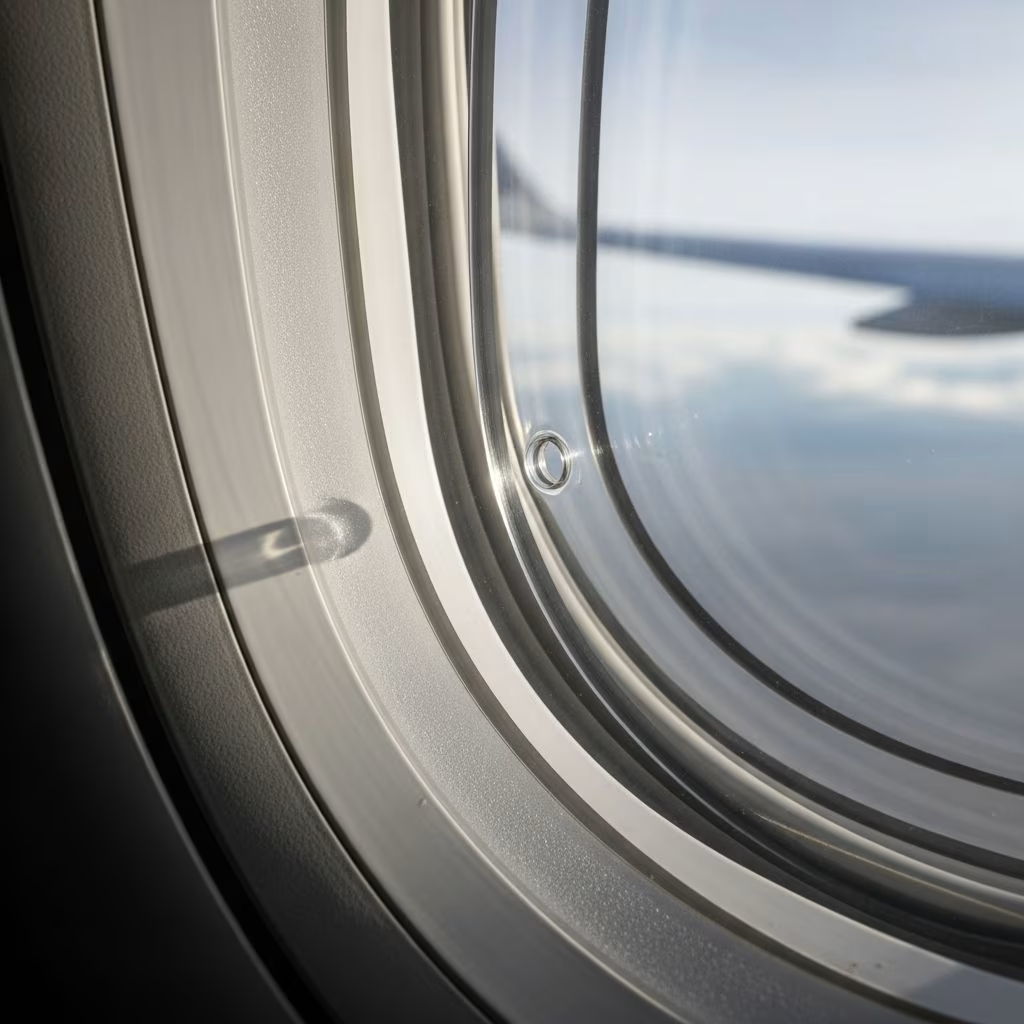
Modern commercial aircraft feature small, often overlooked holes in their windows, strategically placed to manage extreme conditions encountered at high altitudes. These openings, known as bleed or breather holes, perform vital functions that contribute to passenger safety and visual comfort during flights.
Aircraft windows are not single sheets of glass but sophisticated assemblies of three acrylic layers, chosen for their strength, lightness, and flexibility compared to traditional glass. The outermost layer bears the brunt of external forces, while the middle and inner layers provide redundancy and protection.
This layered approach ensures durability under cyclic stress from repeated takeoffs and landings.
At cruising altitude, external air pressure drops dramatically, roughly equivalent to conditions at 18,000 feet if unpressurized. Cabin pressurization maintains a comfortable equivalent of 6,000-8,000 feet to prevent hypoxia and discomfort.
The bleed hole in the middle pane allows controlled equalization of pressure between the cabin interior and the space between the panes. Without it, trapped air would expand during ascent, exerting undue force on inner layers not designed for such loads. By directing most stress to the robust outer pane, the hole preserves the integrity of the entire assembly.
| Altitude (feet) | External Pressure (psi) | Cabin Pressure (psi) | Pressure Differential |
|---|---|---|---|
| Sea Level | 14.7 | 14.7 | 0 |
| 35,000 (Cruise) | ~3.5 | ~11.0 | ~7.5 |
This table illustrates the stark contrast, highlighting why precise engineering is essential.
Beyond structural duties, bleed holes combat environmental challenges. High-altitude air is frigid (often -50°F or lower) and low in humidity, while cabin air carries moisture from passengers and systems.
The small airflow through the hole introduces dry cabin air into the inter-pane space, inhibiting condensation, fog, or ice formation. This keeps views unobscured, vital for navigation, photography, and enjoyment—especially for window-seat holders paying premiums.
In scenarios like rapid decompression or emergency descents, pressure shifts occur swiftly. Bleed holes mitigate shock loads on windows, reducing crack or shatter risks.
If the outer pane fails, the middle pane—bolstered by pressure equalization—temporarily holds, buying critical time for pilots and maintaining cabin integrity. This redundancy exemplifies aviation’s fail-safe philosophy.
Square windows on 1950s de Havilland Comets concentrated stress at corners, contributing to fatal failures despite other factors. Modern oval designs distribute forces evenly, with bleed holes optimizing layered acrylic for contemporary demands.
Today’s windows undergo rigorous testing simulating millions of flight cycles, ensuring reliability.
While universal, bleed hole visibility varies. Newer models like Boeing 787 or Airbus A350 integrate subtler placements for aesthetics, sometimes tinting or recessing them. Smaller jets or older fleets may show them more prominently.
Some believe holes allow outside air in—false; they only balance inter-pane pressure without compromising cabin seal. Others think they’re for maintenance access—no, purely functional for flight operations.
Windows are inspected regularly; outer panes may delaminate from scratches or UV exposure but rarely fail catastrophically due to design. Acrylic’s resilience extends service life to 10+ years per pane.
Emerging electrochromic windows dim electronically, potentially integrating smart sensors for dynamic pressure venting. Transparent OLED overlays for entertainment could coexist with bleed functions, enhancing multifunctionality.
Rarely an issue due to design, but blockage could lead to inter-pane stress or fogging; maintenance prevents this.
Yes, all pressurized commercial jets; military or unpressurized craft may differ.
No—the flow is minuscule and sealed from the cabin.
Acrylic is lighter (40% less weight), shatter-resistant, and molds to oval shapes efficiently.
Same engineering principles; larger panes may have proportionally sized holes.
Bleed holes exemplify how subtle innovations accumulate for holistic safety. From fuselage integrity to life-support systems, every component interlocks. As fleets electrify and fly higher, such features evolve, balancing efficiency with reliability.
Understanding these details fosters appreciation for the invisible engineering safeguarding millions of flights annually. Next time you peer through that crystal-clear pane at dawn’s glow or sunset hues, credit goes to that unassuming tiny hole.
