

 Travel Essentials
 Travel Essentials

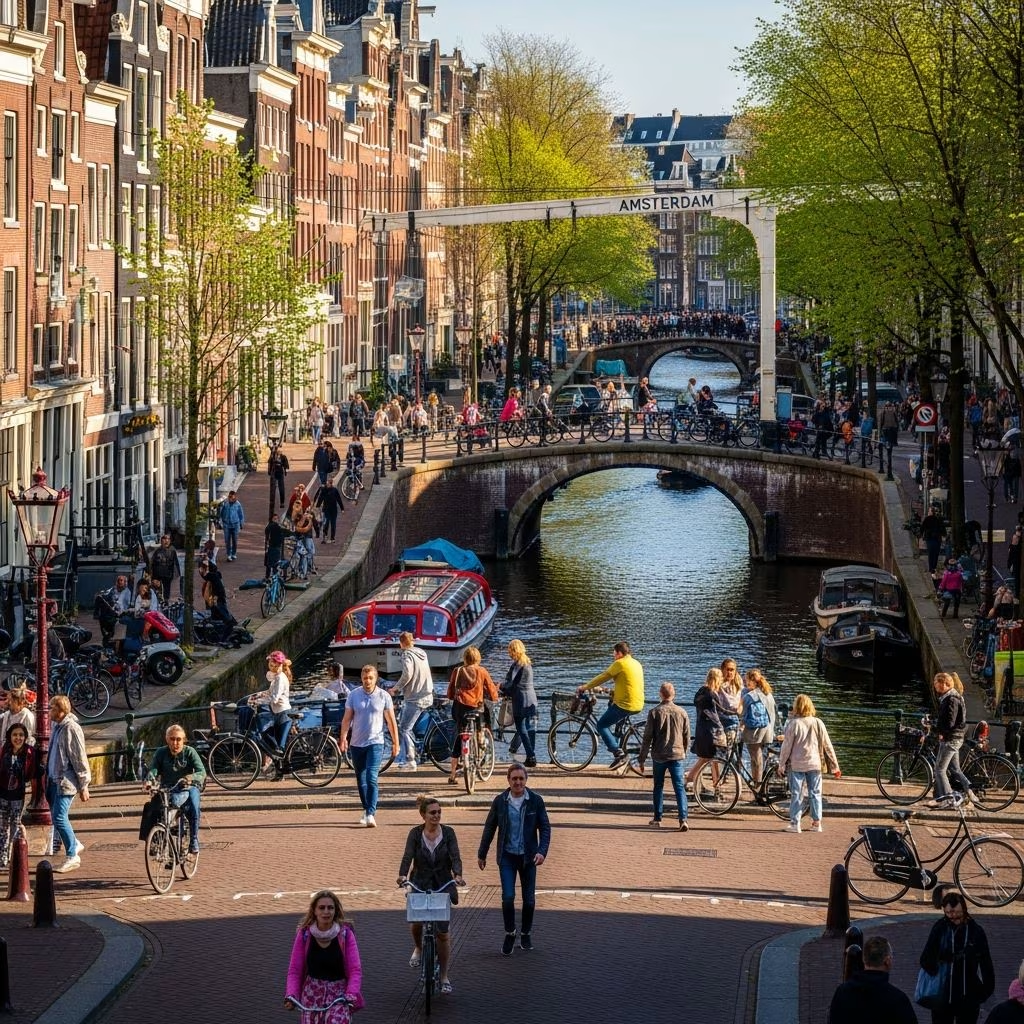
Amsterdam earns the crown as the world's most walkable city, thanks to its compact layout, extensive pedestrian paths, iconic canals, and vibrant neighborhoods perfect for strolling.
 Travel Essentials
Amsterdam has been recognized as the premier destination for pedestrians worldwide, offering an unmatched blend of accessibility, scenic beauty, and cultural immersion. This accolade stems from comprehensive studies evaluating urban design, safety, and connectivity, positioning the Dutch capital ahead of other major cities. With its intricate network of canals, bike paths, and foot-friendly streets, Amsterdam invites visitors to experience its charm without the need for vehicles.
At the heart of Amsterdam’s walkability lies its meticulously planned urban layout from the 17th century. The city’s **ring of canals**, a UNESCO World Heritage site, forms natural pathways that encourage exploration on foot. Unlike sprawling metropolises, Amsterdam’s core districts are compact, allowing travelers to cover key attractions within hours of walking. Pedestrian zones dominate the historic center, minimizing traffic and prioritizing human-scale navigation.
Government initiatives have further enhanced this environment. The municipality enforces strict vehicle restrictions in central areas, promoting **car-free zones** that extend from bustling squares to quiet alleys. Public infrastructure investments focus on wide sidewalks, clear signage, and seamless connections to public transport, making it ideal for all ages and abilities.
Amsterdam’s diverse quarters each offer unique walking experiences, from lively markets to serene parks. Here’s a breakdown of standout areas:
These neighborhoods exemplify how Amsterdam integrates residential, commercial, and recreational spaces, fostering spontaneous discoveries.
While cities like Paris, New York, and Tokyo boast pedestrian appeal, Amsterdam excels in several metrics. The table below contrasts key factors based on urban mobility indices:
| City | Pedestrian Network (km) | Car-Free Zones (%) | Walk Score (out of 100) | Top Attraction Walk Time |
|---|---|---|---|---|
| Amsterdam | 1,200+ | 45% | 98 | 15 min (Dam Square to Central Station) |
| Paris | 900 | 30% | 92 | 25 min (Louvre to Notre-Dame) |
| New York (Manhattan) | 1,000 | 20% | 89 | 20 min (Times Square to Central Park) |
| Tokyo | 800 | 35% | 91 | 18 min (Shibuya to Harajuku) |
Amsterdam’s superior scores reflect its emphasis on flat terrain, frequent benches, and integrated cycling paths that don’t impede walkers.
To maximize your pedestrian adventure, consider these strategies:
Seasonal considerations matter: spring blooms tulips along paths, while winter markets add festive flair without hindering mobility.
Choosing to walk in Amsterdam aligns with broader wellness trends. Studies show that regular urban strolling reduces stress, boosts cardiovascular health, and enhances mental clarity. The city’s clean air and green corridors amplify these effects, with over 70% of residents citing walking as their primary transport mode.
Sustainability is another win: pedestrian travel cuts carbon emissions dramatically compared to driving or flying short distances. Amsterdam’s policies, including expanded bike lanes that double as walking buffers, support eco-friendly tourism. Visitors contribute to this by opting for footpower, preserving the city’s low-emission profile.
Curated paths cater to varied interests:
These routes are signposted and accessible via the I amsterdam City Card, which bundles entry fees.
No city is perfect. Amsterdam grapples with overtourism in peak seasons, leading to crowded sidewalks. Recent measures include timed entries and expanded peripheral paths. Accessibility for wheelchairs is advancing, with 80% of central sidewalks now compliant. Future plans involve AI-optimized traffic signals and more elevated walkways over canals.
Its compact size, extensive pedestrian infrastructure, and car-reduced zones enable easy navigation between attractions.
Yes, with mild weather, covered walkways, and heated outdoor cafés ensuring comfort in rain or cold.
Typically 15,000–25,000, equivalent to 10–15 km, burning 500–800 calories.
Abundant options, from free Sandeman’s tours to themed ghost walks, starting daily from major squares.
Absolutely—flat paths, playgrounds, and kid-friendly museums make it stroller-compatible.
Though famed for bicycles, walking allows savoring details like canal reflections and flower boxes that bikes rush past. Transit is efficient but misses serendipitous encounters with buskers or pop-up markets. Walking immerses you fully in Amsterdam’s sensory tapestry.
In summary, Amsterdam’s walkability transforms travel into an intuitive joy, where every step reveals layers of history, flavor, and community. Plan your visit to step into this living masterpiece.
