

 Travel Essentials
 Travel Essentials

Explore the history behind Chicago dyeing its river green annually for St. Patrick's Day, from a practical plumbing test to a global spectacle drawing massive crowds.
 Travel Essentials
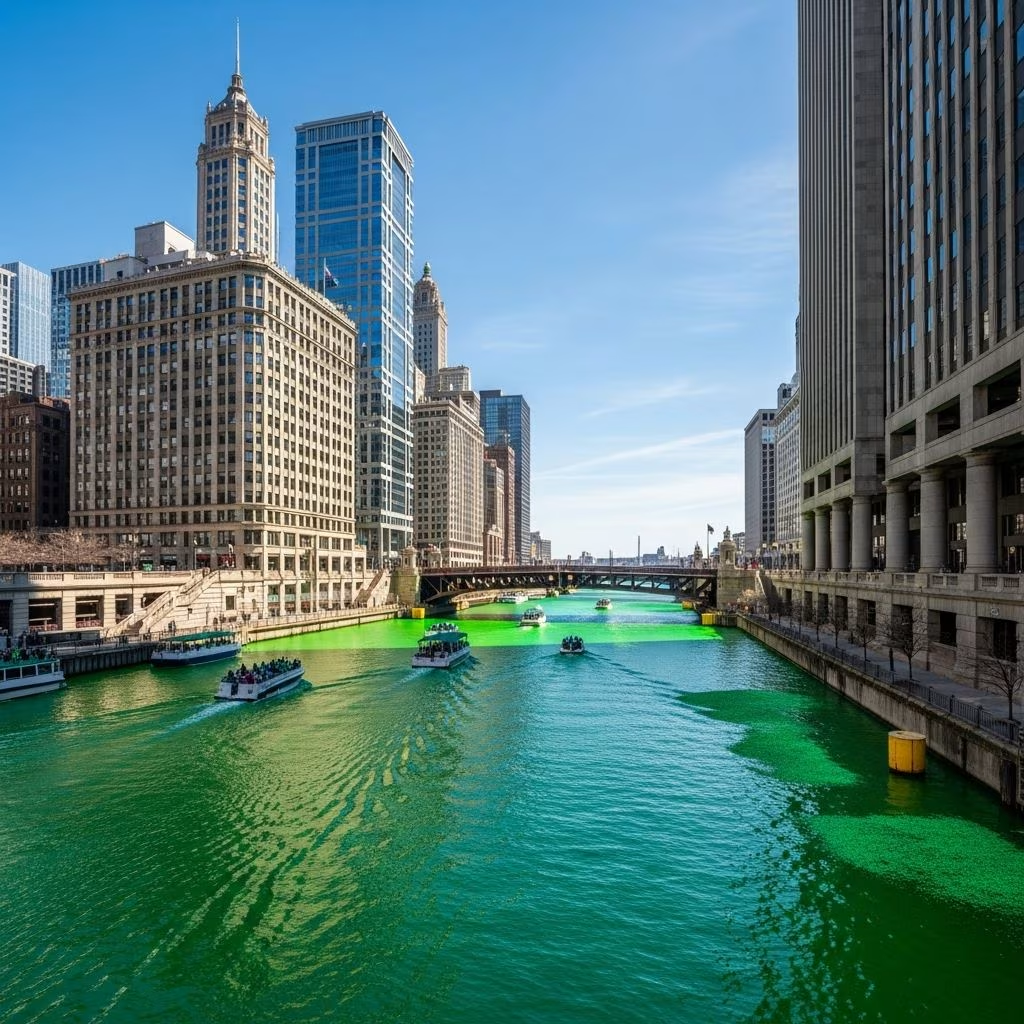
The annual transformation of Chicago’s river into a sea of emerald green stands as one of the most visually striking celebrations of St. Patrick’s Day in the United States. This spectacle, which draws hundreds of thousands of spectators, originated from a practical solution by local plumbers and evolved into a cornerstone of the city’s festive calendar.
In the early 1960s, members of the Chicago Journeymen Plumbers Local Union 130 faced the challenge of tracing illegal sewage discharges into the city’s waterways. They employed a vivid green dye to identify leaks in underground pipes, as the color would surface and reveal the contamination points. This technique proved highly effective, with one notable instance where a plumber returned with brightly stained overalls, prompting union business manager Stephen M. Bailey to inquire about the discovery.
Bailey, a Bridgeport native and close friend of then-Mayor Richard J. Daley, recognized the dye’s dramatic visual impact. Initially, there was even discussion of dyeing the much larger Lake Michigan green, but practicality led to focusing on the Chicago River instead. In 1961, the plumbers suggested using the dye for St. Patrick’s Day, and city leaders embraced the idea, turning a utilitarian tool into a celebratory tradition.
Since its inception, the event has grown exponentially. What began as a novel stunt quickly captured public imagination, going “viral” in an era before social media through word-of-mouth and media coverage. Today, it signals the kickoff to a weekend of parades, festivals, and Irish-themed events, generating significant economic boosts for Chicago through tourism and local spending.
Chicago’s St. Patrick’s Day observances date back over 175 years, but the river dyeing adds a unique, modern flair that distinguishes the city from other celebrations. The tradition has persisted annually, even adapting during challenging times like the COVID-19 pandemic when it was paused briefly before resuming.
Each year, the Chicago Journeymen Plumbers Local Union 130 oversees the operation with precision. The event occurs on the Saturday preceding St. Patrick’s Day, typically starting around 10:00 a.m. Central Time and lasting 45 minutes to one hour. For 2026, this is scheduled for March 14.
Two specialized boats participate: a lead vessel drops 40 to 60 pounds of the proprietary, plant-based dye—affectionately called “leprechaun dust”—while a chase boat mixes it into the water between Columbus Drive and State Street on the main branch of the downtown Chicago River. The formula, a closely guarded secret, is environmentally safe and derived from natural sources to minimize ecological impact.
The green hue reaches its most brilliant shade within minutes of application, creating a surreal emerald waterway that reflects off downtown skyscrapers. The color typically endures 4 to 5 hours at peak vibrancy, fading by mid-to-late afternoon due to water flow and sunlight. In earlier years, it lingered up to a week, but modern refinements ensure a temporary, contained effect.
For optimal viewing and photography, late morning to early afternoon offers the best conditions. Weather plays a role; calm days without strong winds or rain can extend visibility to 1-3 days.
Spectators flock to accessible riverside locations for unobstructed sights. Key vantage points include:
Arrive early, as crowds swell rapidly. Public transit or rideshares are recommended due to road closures for the subsequent parade.
Beyond visuals, the dyeing fosters community pride and Irish heritage celebration. It pairs with the South Side Irish Parade and downtown procession, attracting locals and visitors alike. Economic analyses highlight millions in revenue from hospitality, retail, and events.
The plumbers’ union’s enduring involvement underscores blue-collar contributions to civic joy. Fun spin-offs include a 2016 blue dyeing after the Cubs’ World Series victory, showcasing adaptability.
Early dyes raised concerns, but today’s version prioritizes safety. The reduced quantity and biodegradable composition align with Chicago’s waterway restoration efforts, monitored by agencies like the U.S. Environmental Protection Agency (EPA). The river, reversed in 1900 for sanitation, now supports this controlled spectacle without long-term harm.
| Aspect | Then (1960s) | Now |
|---|---|---|
| Dye Amount | 100 pounds | 40-60 pounds |
| Duration | Up to 1 week | 4-5 hours peak |
| Composition | Basic tracing dye | Plant-based, eco-safe |
To experience this, book accommodations early, especially river-view spots. Dress in layers for March weather, and consider parade timing post-dyeing. Families enjoy the free spectacle, while adults savor nearby pubs.
The Saturday before St. Patrick’s Day, around 10 a.m. CT. In 2026, March 14.
Plumbers union boats release and mix eco-friendly dye in downtown stretches.
4-5 hours vividly, fading gradually; up to days in ideal conditions.
Yes, modern plant-based formula is non-toxic.
Chicago Journeymen Plumbers Local Union 130, since 1961.
The river event anchors a rich tapestry of activities: parades marching through Bridgeport and downtown, music festivals, Irish step dancing, and pub crawls. Museums like the Chicago History Museum offer heritage exhibits, while Grant Park hosts family zones.
This tradition embodies Chicago’s resilient spirit—blending utility, friendship (Bailey-Daley bond), and festivity. It invites global participation, with live streams amplifying reach.
Whether bridgeside or remote, the green river captivates, reminding us how everyday ingenuity sparks enduring joy.
