

 Travel Essentials
 Travel Essentials

Explore the science and protocol behind flight attendants' brace position, ensuring crew stability and quick emergency response in critical flight phases.
 Travel Essentials
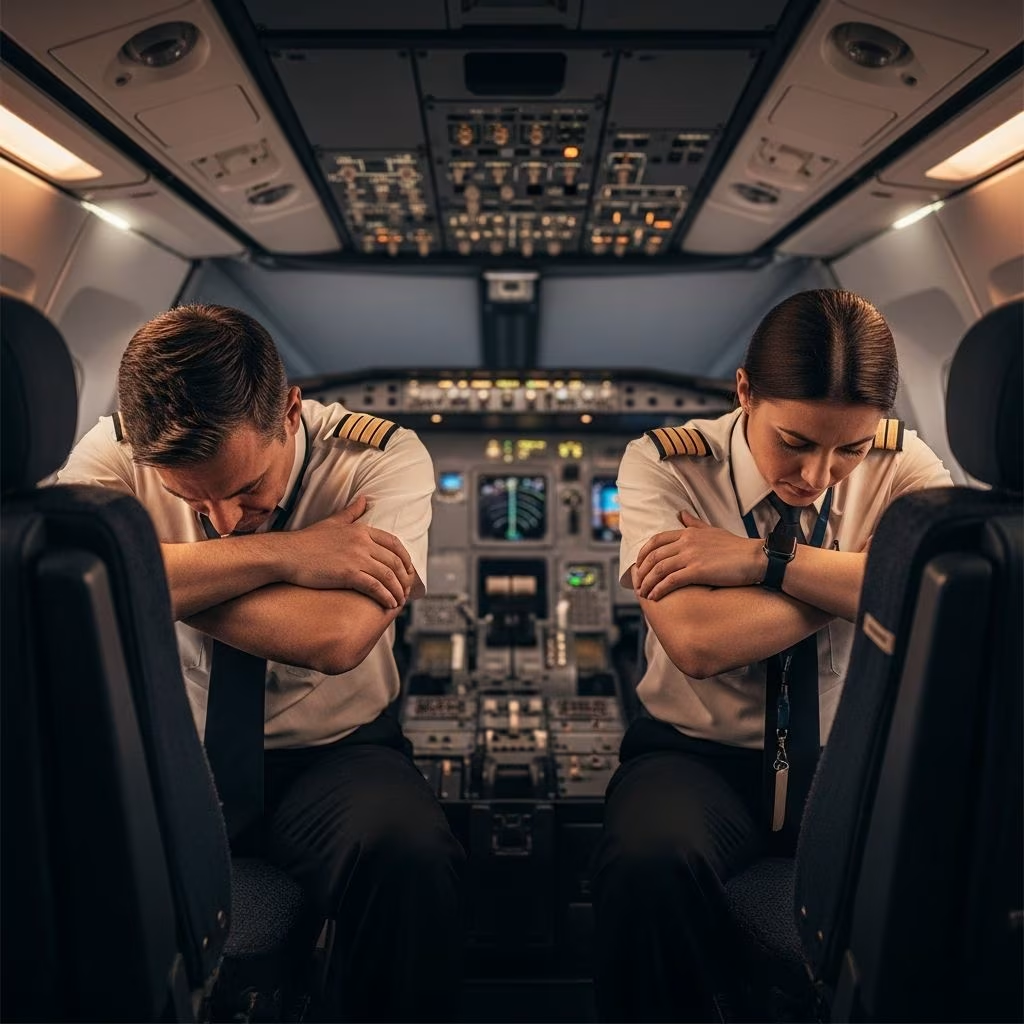
The distinctive posture adopted by flight attendants during the most vulnerable phases of flight—takeoff and landing—serves as a cornerstone of aviation safety. With hands tucked beneath their thighs and bodies held rigidly upright, cabin crew members position themselves not for comfort, but for optimal readiness in potential crises. This practice, observed universally across airlines, underscores the heightened risks associated with these flight segments, where rapid response can mean the difference between routine operations and emergency action.
Aviation statistics consistently highlight takeoff and landing as the periods with the highest incidence of incidents. According to data from regulatory bodies, over 80% of aviation accidents occur during these phases due to factors like bird strikes, runway excursions, or mechanical anomalies. Cabin crew training emphasizes that maintaining peak physical condition during these times is non-negotiable.
Jump seats, the fold-down perches used by flight attendants, are engineered for crashworthiness. These seats feature reinforced structures and harnesses designed to withstand forces up to 16G—far exceeding typical car seats. Yet, even with such robust equipment, human positioning plays a pivotal role in injury prevention.
The brace position is meticulously designed to minimize bodily harm from deceleration forces or turbulence. Here’s how it breaks down:
This configuration ensures crew members remain uninjured and mobile, capable of immediate evacuation leadership. Studies from crash investigations reveal that unbraced individuals suffer significantly higher rates of fractures and lacerations.
Flight attendant training academies drill the brace position relentlessly. Recruits undergo simulator sessions replicating turbulence, hard landings, and evacuations. Instructors stress that muscle memory from this posture activates instinctively under stress.
Airlines customize protocols based on aircraft type. For instance, narrow-body jets like the Boeing 737 may position crew at doors, while wide-bodies like the Airbus A380 scatter them strategically. Variations exist—some carriers advocate palms on knees for better harness access—but the core principle of body stabilization persists.
| Aircraft Type | Typical Brace Variation | Primary Benefit |
|---|---|---|
| Narrow-Body (e.g., 737) | Hands under thighs, feet braced | Quick door operation |
| Wide-Body (e.g., A350) | Palms on lap, head forward | Enhanced cabin visibility |
| Regional Jet (e.g., CRJ) | Full tuck with arm protection | Compact space accommodation |
Beyond physical safeguarding, the brace posture sharpens mental acuity. Sitting bolt upright with unobstructed views allows crew to scan the cabin for anomalies—unfastened seatbelts, anxious passengers, or unsecured items. This vigilance integrates with silent mental rehearsals of evacuation commands and routes.
Psychologists note that rigid postures correlate with heightened adrenaline responses, keeping crew hyper-alert without fatigue. It’s a deliberate counter to the monotony that lulls passengers but never the trained professionals.
The modern brace position emerged from post-accident analyses in the 1970s and 1980s. Early practices involved crossing arms over chests, but biomechanical research proved them inferior. Today’s standards, codified by the International Civil Aviation Organization (ICAO), mandate evidence-based postures tested in dynamic sled simulations.
Continuous refinements incorporate passenger feedback and new materials. Five-point harnesses, now standard, complement the position by securing the pelvis and shoulders independently.
Passengers often misinterpret the posture as discomfort or ritual. In reality:
While passengers can’t replicate the exact brace due to seat designs, approximations enhance survival odds. During preflight briefings, heed advice to stow trays, fasten belts low and tight, and assume a forward-leaning posture with hands over head if instructed.
Key passenger actions:
Historical incidents validate the protocol. In the 2009 Hudson River ditching, braced crew evacuated all aboard in minutes, crediting their positioning for zero serious injuries among staff. Similarly, runway overruns like the 2018 Philadelphia case saw crew lead flawless evacuations post-impact.
Not all airlines posture identically. European carriers often emphasize head-tuck variations per EASA guidelines, while Asian airlines prioritize group synchronization. Emerging tech like vibration-absorbing seats may evolve practices, but human factors remain paramount.
Passenger seats prioritize comfort over crash dynamics; crew jump seats are purpose-built for bracing.
Trained crew adapt quickly; discomfort is secondary to safety imperatives.
Pilots use cockpit-specific restraints and checklists, freeing hands for controls.
Undeniably—post-crash reports credit it in dozens of survivable incidents.
Adaptations occur, but core biomechanics endure.
Before each flight, crew briefings review brace efficacy alongside weather and passenger loads. Post-flight deconstructions analyze any deviations, fostering perpetual improvement. This culture of precision elevates aviation’s safety record to unparalleled levels—one braced posture at a time.
