

 Travel Essentials
 Travel Essentials

Florence earns the crown as Earth's most walkable city, offering seamless access to iconic art, historic sites, and vibrant neighborhoods—all on foot.
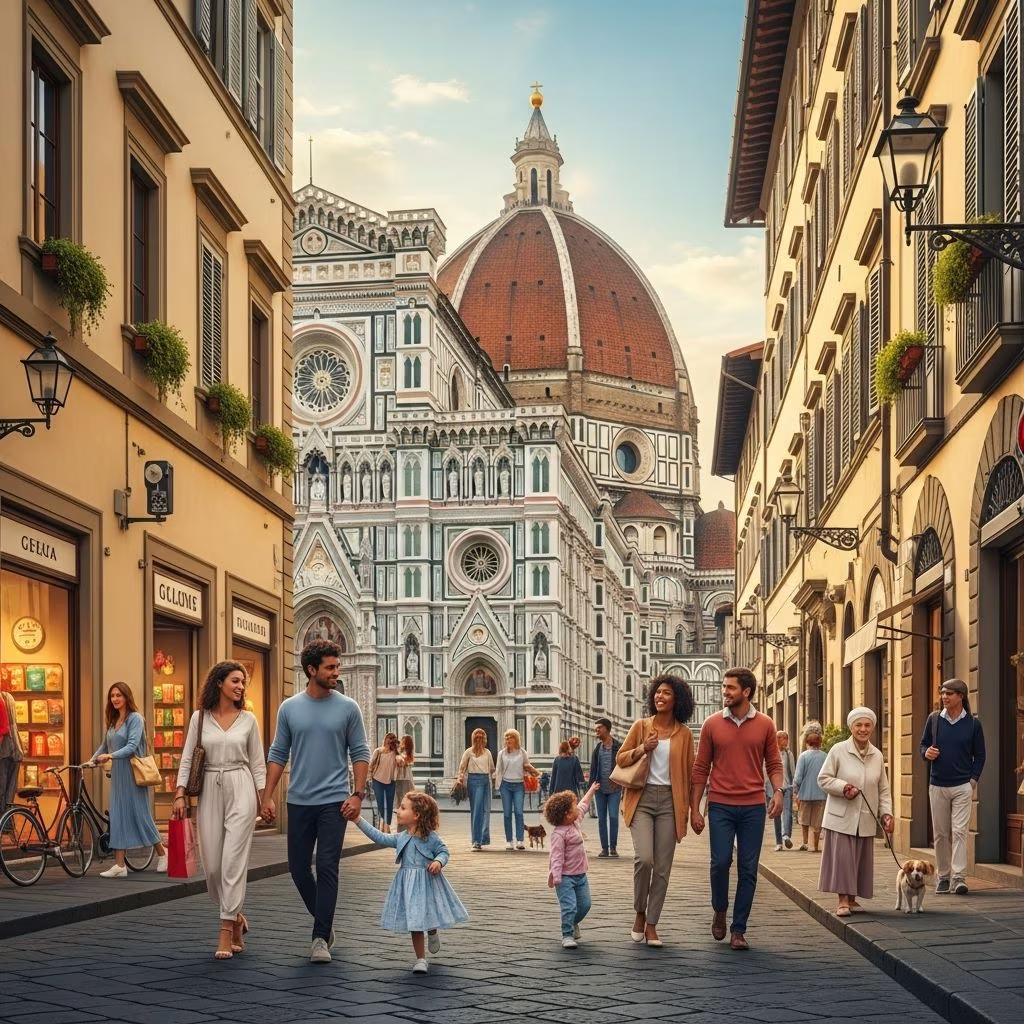 Travel Essentials
Florence, the cradle of the Renaissance, has been recognized as the most walkable city on Earth, captivating travelers with its compact layout and pedestrian paradise vibe. This accolade highlights how the city’s historic core allows visitors to discover world-class art, architecture, and cuisine without ever needing a car.
Nestled in the heart of Tuscany, Florence spans just a few square kilometers, making it ideal for those who prefer strolling over driving. Its **ZTL zones**—limited traffic areas—restrict vehicles, prioritizing foot traffic and creating serene pathways lined with medieval buildings and lively piazzas. This setup not only reduces congestion but also enhances safety and immersion in the city’s rich tapestry.
Walking here means encountering masterpieces at every turn: from the towering Duomo to the Uffizi Gallery’s treasures. The average visitor can cover major sights in a day or two, with distances rarely exceeding 2 kilometers between hotspots. This efficiency stems from thoughtful urban planning rooted in centuries-old design, where streets were built for people, not automobiles.
Florence’s neighborhoods each offer distinct flavors, all connected by intuitive walking routes.
These areas form a natural loop, enabling a full-day itinerary on foot. Maps are abundant, but the city’s scale means getting lost leads to delightful discoveries.
Structured paths elevate the experience. The **Via de’ Tornabuoni** fashion street links luxury shops with historic palazzos, while the **Lungarno** riverside promenades offer Arno River views under willow trees. For history buffs, trace the Renaissance trail from Palazzo Vecchio to the Accademia, where Michelangelo’s David stands.
A popular self-guided loop: Start at Piazza della Signoria (20 minutes from the train station), proceed to the Uffizi (5 minutes), cross Ponte Vecchio (3 minutes), explore Pitti Palace (10 minutes), and return via artisan streets (15 minutes). Total: under 2 hours of pure walking bliss, with ample stops.
| Route Name | Distance | Duration | Highlights |
|---|---|---|---|
| Historic Center Loop | 3 km | 1 hour | Duomo, Baptistery, Palazzo Vecchio |
| Oltrarno Artisan Walk | 2.5 km | 45 min | Ponte Vecchio, Boboli Gardens, Santo Spirito |
| Riverside Stroll | 4 km | 1.5 hours | Arno views, gelaterias, sunset spots |
| Market to Museum Path | 1.5 km | 30 min | San Lorenzo, Accademia Gallery |
These routes showcase Florence’s walkability score, often rated perfect for its flat terrain and minimal elevation changes outside hillside outskirts.
To maximize comfort, wear sturdy shoes—cobblestones demand them. Stay hydrated with public fountains offering fresh Tuscan water. Download apps like Google Maps offline or Visit Florence for real-time navigation.
Avoid peak summer heat by starting early; winter brings fewer crowds and crisp air. Public transport like buses complements walks for outskirts, but the core needs none. Budget €10-20 daily for entry fees to sites, many free to view externally.
Italy boasts several pedestrian havens, but Florence edges ahead for density of attractions.
| City | Walkability Strengths | Key Drawbacks | Top Walk Score |
|---|---|---|---|
| Florence | Compact core, ZTL zones, art overload | Crowds at peaks, cobblestones | 10/10 |
| Rome | Ancient ruins, wide avenues | Hilly, traffic outside center | 9/10 |
| Venice | No cars, canal paths | Bridges, flooding risks | 9.5/10 |
| Verona | Romantic streets, arenas | Smaller scale, fewer sights | 8.5/10 |
Rome impresses with Colosseum-to-Forum treks via car-free Via dei Fori Imperiali, yet its sprawl demands more planning. Venice’s alleys and bridges create magic but tire with steps. Verona charms with Juliet’s balcony walks on Via Mazzini. Florence wins for seamless, attraction-packed strides.
Walking Florence burns calories while slashing carbon footprints—ideal for eco-conscious trips. Studies link urban strolling to better mental health, with the city’s beauty amplifying endorphins. Locals cycle or walk daily, fostering a healthy culture visitors join effortlessly.
Venture beyond: Fiesole’s hills (bus up, walk down) offer Etruscan ruins. Or hike to Piazzale Michelangelo for skyline vistas—a 20-minute ascent rewarding sweat with photos.
Core zones are ZTL-restricted; cars enter peripheries but walking dominates.
3-4 days cover essentials; a week immerses deeply.
Yes, free or paid options from Piazza Santa Maria Novella; book via apps.
Visit Florence or Komoot for customized paths.
Absolutely—short distances, playgrounds in piazzas, stroller-friendly mains.
Rain possible; paths rarely icy, markets cozy.
Immerse in Florence’s strides, where every step unveils history.
