

 Travel Essentials
 Travel Essentials

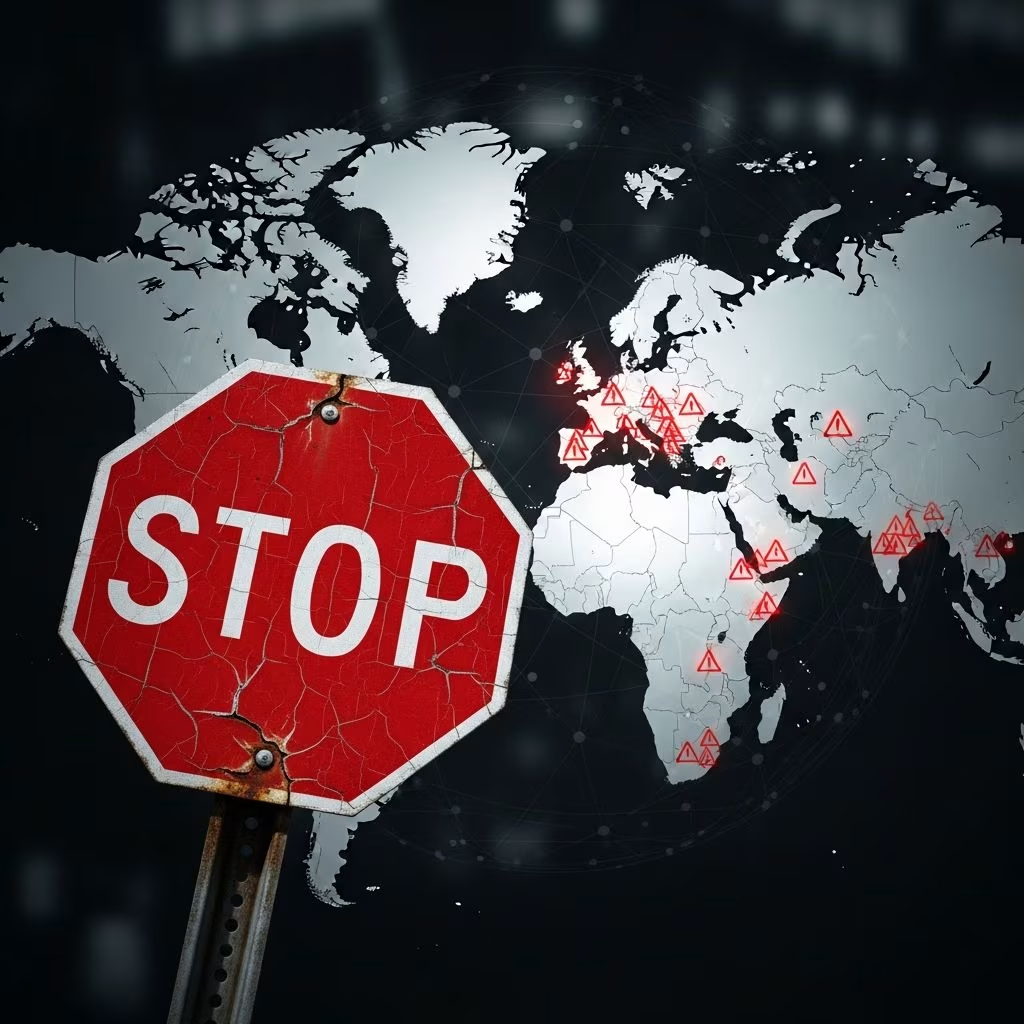
Several countries have elevated travel advisories for the United States, citing gun violence, civil unrest, and health risks. Travelers should check official guidelines before planning visits.
 Travel Essentials
Global perceptions of safety in the United States are shifting, prompting several governments to release formal advisories urging caution for their citizens planning trips there. These alerts stem from concerns over violent crime, widespread firearm access, political tensions, and environmental hazards, marking a notable reversal from the typical flow of warnings directed outward from the US.
Governments routinely monitor destinations to protect their nationals abroad. For the US, recent advisories reflect heightened worries about unpredictable risks. Unlike US Department of State advisories for other nations—which categorize threats into levels from normal precautions to do not travel—foreign warnings for America often emphasize localized dangers rather than blanket prohibitions.
This trend gained momentum amid high-profile incidents of mass shootings, urban unrest, and severe weather events. Official sources like the US State Department maintain their own global risk assessments, but reciprocal cautions from allies signal evolving international views on American stability.
Numerous nations have updated their guidance for the US, focusing on specific vulnerabilities. Here’s a breakdown of prominent examples:
These advisories are dynamic, often revised based on real-time events. For instance, Canada’s note on the 2026 FIFA World Cup co-hosted by the US underscores logistical challenges alongside baseline risks.
Advisories pinpoint recurring issues that differentiate the US from many peer destinations. Gun violence tops the list, with America’s unique firearm culture cited frequently. Mass shootings and random attacks contribute to perceptions of unpredictability.
| Risk Factor | Description | Affected Areas |
|---|---|---|
| Gun Violence | High rates of firearm ownership lead to frequent incidents, including active shooter events | Major cities, schools, public venues |
| Civil Unrest | Protests over politics, race, or policy can escalate quickly | Washington D.C., Portland, Los Angeles |
| Crime | Robberies, carjackings, and scams target tourists | Urban centers, tourist hotspots |
| Natural Disasters | Hurricanes, wildfires, tornadoes disrupt travel | Coastal Southeast, West Coast, Midwest |
| Health Risks | Opioid crisis, uneven medical access | Nationwide, especially rural areas |
Compared to US-issued advisories for places like Haiti (Level 4: Do Not Travel) or France (Level 2: Increased Caution), these foreign notices treat the US as a moderate-risk destination requiring preparation.
The US State Department uses a four-tier system: Level 1 (normal precautions), Level 2 (increased caution), Level 3 (reconsider travel), and Level 4 (do not travel). Only a handful of countries face Level 4, such as Afghanistan and Haiti, due to extreme unrest, crime, and health crises.
Foreign advisories for the US rarely reach equivalent severity, opting instead for “exercise caution” phrasing. This mirrors Level 2 designations the US applies to allies like France (terrorism and unrest) or Thailand (unrest). Canada’s approach aligns closely, blending general advice with border-specific alerts.
These warnings influence travel behavior. International arrivals, which hit record highs pre-pandemic, now face hesitation from wary Europeans and Asians. Families and solo travelers, in particular, reassess plans after seeing headlines about shootings or riots.
Airports in high-risk cities report softer bookings from advisory-issuing nations. Yet, the US remains a top draw for its landmarks, events, and diversity—provided visitors adapt strategies like sticking to safer zones and monitoring updates.
Despite cautions, millions visit safely annually. Key tips include:
For border crossers from Canada or Mexico, daytime travel via official points is essential. Dual citizens should carry proper documentation to sidestep entry issues.
US entry rules add complexity. Visa Waiver Program participants need ESTA approval, while others face stricter scrutiny. Recent proclamations limit nationals from certain countries, though Canadians on passports are exempt. Proof of ties abroad prevents overstay suspicions.
Vaccination isn’t mandated for yellow fever or similar, but routine shots are wise. The opioid epidemic prompts warnings against carrying certain medications without prescriptions.
Risks vary geographically:
National parks offer respite but demand bear spray and weather prep.
US domestic polarization fuels unrest, mirroring issues prompting its own advisories elsewhere—like unrest in Kyrgyzstan or terrorism in Kuwait. DHS terrorism alerts further inform the picture.
As the 2026 World Cup approaches, expect intensified security, but also crowd-related risks.
Not necessarily—most visitors encounter no issues. Assess personal risk tolerance and follow localized advice.
Places like Boston, Seattle outskirts, and smaller towns often rate lower risk; research via official maps.
Frequently, based on events. Check within 72 hours of travel.
No, they target outbound foreign travelers only.
The State Department maintains its low-risk self-view but encourages STEP enrollment.
While advisories underscore real challenges, informed planning mitigates them. Leverage tools like interactive maps from state.gov to visualize risks. Balance America’s unparalleled attractions against precautions, ensuring enriching experiences without undue peril.
