 Stays
StaysStays
Why Hotels Skip the 13th Floor
Explore the fascinating reasons hotels omit 13th floors, from ancient superstitions to modern psychology and business strategy.
 Stays
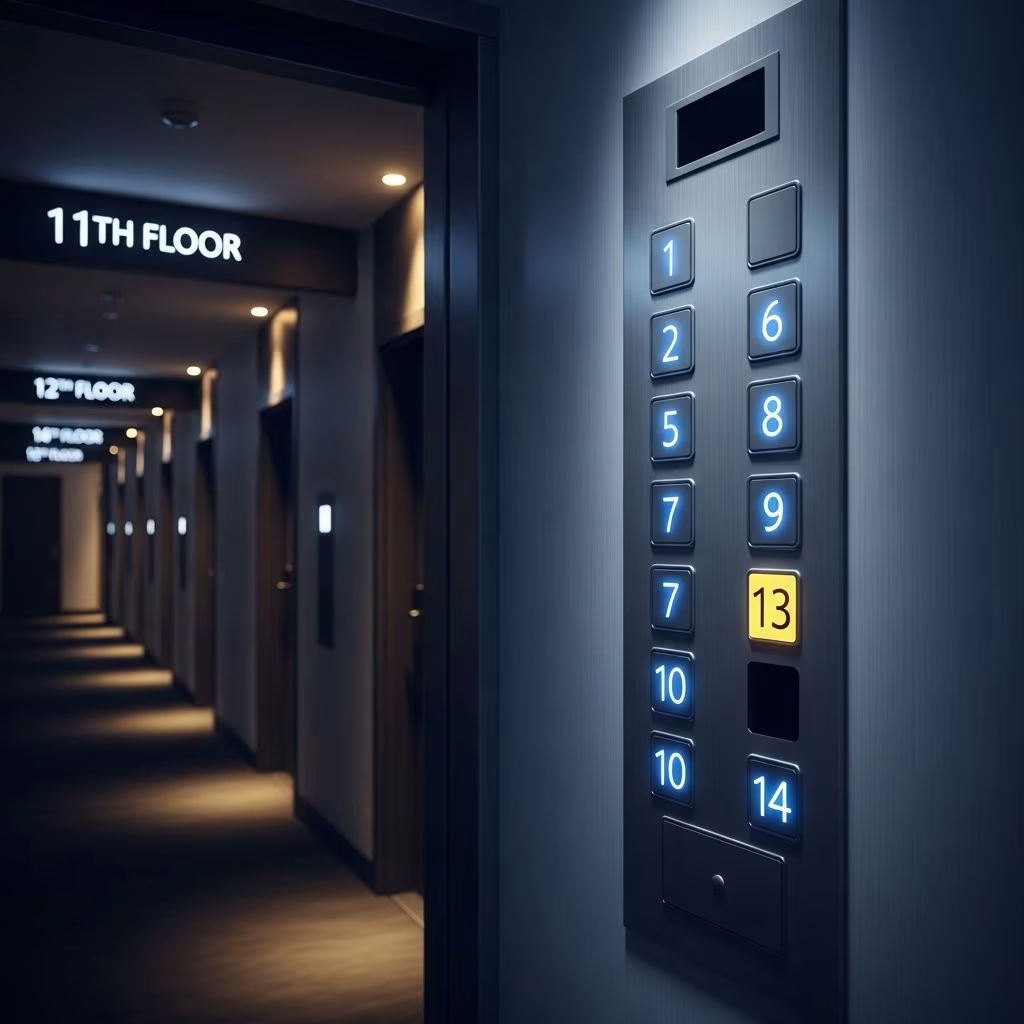
StaysWhen you arrive at a hotel and press the elevator button, you may notice something peculiar—the numbered sequence jumps from 12 directly to 14. This phenomenon is far from accidental. Across the globe, from luxury establishments to modest accommodations, the number 13 mysteriously vanishes from building layouts. This architectural quirk reflects a complex interplay of historical superstition, psychological principles, and business pragmatism that has shaped the hospitality industry for over a century.
Understanding the Historical Roots of Number 13 Avoidance
The practice of eliminating the 13th floor emerged during the early 20th century as high-rise architecture began transforming city skylines. During this era, architects and builders recognized that superstitious concerns influenced occupant preferences and purchasing decisions. Rather than risk alienating potential guests and residents, developers proactively excluded the 13th floor from their blueprints. Hotels, being intensely customer-focused, quickly adopted this strategy to ensure guest comfort and satisfaction.
The historical context reveals that this wasn’t merely about folklore. As urbanization accelerated and buildings grew taller, developers discovered that acknowledging superstitious concerns became a competitive advantage. By the mid-20th century, omitting the 13th floor had become standard practice across the hospitality sector, particularly in Western markets.
The Psychology of Triskaidekaphobia and Cognitive Ease
Triskaidekaphobia—the fear of the number 13—has deep historical roots in Western culture, often traced to Last Supper mythology and medieval folklore. However, modern psychology offers a more nuanced explanation for why hotels continue avoiding this number. The principle of cognitive ease explains that individuals naturally gravitate toward environments that feel familiar, simple, and emotionally safe. Even guests who don’t consciously fear the number 13 may experience subtle psychological discomfort when encountering it.
This phenomenon transcends conscious awareness. Hotel patrons often report requesting room changes or refusing accommodations on the 13th floor without fully understanding their hesitation. The discomfort operates at a subconscious level, making guests feel instinctively uneasy regardless of their rational beliefs about superstition. By eliminating this potential source of psychological friction, hotels create what they perceive as a more welcoming atmosphere.
Business Impact and Revenue Considerations
From a purely economic standpoint, avoiding the 13th floor or Room 13 represents a rational business decision. Research consistently demonstrates measurable revenue implications:
- A Gallup poll found that 13% of surveyed participants would feel bothered staying on the 13th floor
- Approximately 9% of respondents indicated they would request a room change if assigned to this level
- Booking platforms including Booking.com, MakeMyTrip, and Airbnb show significantly lower reservation rates for rooms numbered 13
- The Otis Elevator Company estimates that 80-90% of elevators installed in skyscrapers and large hotels lack a 13th-floor button
While these percentages might appear modest, they translate into substantial lost bookings for large hospitality chains. In competitive markets where profit margins remain tight, even small percentage declines in occupancy rates impact annual revenue substantially. Hotel managers reason that eliminating the 13th floor represents an inexpensive preventive measure compared to potential losses from guest dissatisfaction and reduced bookings.
How Hotels Implement the 13th Floor Removal Strategy
Hotels employ various creative approaches to address this architectural challenge. Rather than constructing buildings without 13 floors, many simply relabel their floor numbering schemes:
| Strategy | Description | Prevalence |
|---|---|---|
| Floor Renumbering | Skipping from floor 12 directly to floor 14 | Most common approach |
| Alphabetic Substitution | Labeling the 13th floor as “M” (the 13th letter) | Moderately common |
| Functional Conversion | Converting the 13th floor into storage, mechanical rooms, or staff zones | Less common but increasing |
| Double Designation | Numbering as “12A” instead of 13 | Occasionally implemented |
Some establishments have undertaken expensive retrofitting projects. Chicago’s historic Hotel Burnham, originally constructed in 1895 with a properly numbered 13th floor, later underwent costly renovations to remove the designation and renumber all subsequent floors. This willingness to invest significant resources demonstrates how seriously the hospitality industry takes this perceived concern.
Cultural Variations and Notable Exceptions
Despite the near-universal prevalence of 13th floor omission, certain establishments defiantly embrace the number. New York City’s iconic Flatiron Building, Empire State Building, and Waldorf Astoria Hotel all proudly feature 13th floors. London’s Carlton Hotel similarly maintains its 13th floor without compromise. The historic Thirteen Club in the United States was intentionally established to promote comfort with the supposedly unlucky number.
International differences also emerge in how rigorously hotels pursue this strategy. Some Asian markets demonstrate less concern about the number 13, reflecting cultural traditions where different numbers carry superstitious significance. The number four, for instance, carries negative connotations in several East Asian cultures due to linguistic associations with death, leading some hotels to skip floor four instead. This demonstrates how hotel design reflects cultural context and the diverse populations they serve.
Guest Behavior and Booking Preferences
Real-world data substantiates the business rationale behind 13th floor omission. Hotel staff regularly recount instances of guests specifically requesting room changes after discovering they’re assigned to floor 13, even when no other rooms are available. Booking platforms reveal that room 13 and rooms numbered in the 13xx range consistently underperform compared to adjacent numbered accommodations.
This booking behavior persists even among guests who claim rational skepticism about superstition. The gap between stated beliefs and actual behavior reveals that triskaidekaphobia operates partially outside conscious control. People may intellectually dismiss superstition while simultaneously experiencing genuine unease that influences their accommodation preferences.
Psychological Principles Beyond Simple Superstition
The persistence of 13th floor avoidance reflects deeper psychological phenomena than straightforward superstitious belief. Environmental psychology suggests that humans unconsciously seek spaces that feel predictable and aligned with their expectations. A numbered sequence that leaps from 12 to 14 violates pattern expectations, creating subtle cognitive dissonance.
Additionally, the mere awareness that a 13th floor has been eliminated activates superstitious thoughts in guests who might otherwise ignore the number. Marketing the absence paradoxically highlights what’s been removed, potentially amplifying concern rather than eliminating it. This creates an ironic dynamic where the very attempt to soothe superstitious concerns may inadvertently reinforce them.
The Future of Superstition in Hotel Design
While 13th floor omission remains widespread, industry trends suggest gradual evolution. Younger demographics demonstrate less susceptibility to traditional superstitions, potentially reducing future demand for this accommodation. International hotel chains increasingly recognize that what reassures Western guests may alienate visitors from cultures with different numerical taboos.
Progressive hospitality establishments are beginning to question whether the marginal revenue gains justify perpetuating superstitious practices. Some newer luxury hotels have quietly reintroduced 13th floors, betting that sophisticated clientele prioritizes authenticity over superstition. This shift reflects changing societal attitudes while acknowledging that for many guests, superstitious concerns remain psychologically real regardless of rational justification.
Frequently Asked Questions
- Do all hotels omit the 13th floor?
- No, while the practice is prevalent among Western hotels, not all establishments follow this convention. Some upscale hotels deliberately include the 13th floor, viewing it as a distinguishing feature. Hotels in Asian markets often maintain the 13th floor while omitting floors with other numerologically significant numbers.
- Is it illegal to have a 13th floor?
- There are no legal restrictions preventing buildings from including a 13th floor. The omission is entirely voluntary and driven by business and cultural considerations rather than regulatory requirements.
- Does the renumbering approach actually eliminate the superstition?
- Psychologically, simply renumbering the floor without removing the physical space doesn’t address the underlying superstition. Guests often remain aware that what’s labeled as floor 14 is actually the 13th level, maintaining the psychological discomfort.
- Why do some American buildings still have 13th floors?
- Older buildings constructed before 13th floor omission became standard practice often maintain original numbering. Some prestigious establishments consciously reject the superstition as part of their brand identity.
The Intersection of Science, Psychology, and Commerce
The phenomenon of missing 13th floors exemplifies how human psychology, cultural tradition, and business pragmatism intertwine in architectural decision-making. While superstition provides the historical foundation, modern hotels justify the practice through psychological principles and measurable economic impact. Whether future generations will maintain this convention remains uncertain, but the practice demonstrates how ancient beliefs continue shaping contemporary architecture and guest experiences.
References
- Why Most Hotels Do Not Have Room 13? The Superstition That Shapes Hotel Design — NDTV Travel. 2024. https://www.ndtv.com/travel/why-most-hotels-do-not-have-room-13-the-superstition-that-shapes-hotel-design-9294549
- The Mystery of the Missing 13th Floor — WSRB Blog. https://www1.wsrb.com/blog/mystery-of-missing-13th-floor
- Unveiling the Mystery: Why Don’t Hotels Have a 13th Floor? — Hotel Contract Beds. https://www.hotelcontractbeds.co.uk/blog/why-dont-hotels-have-a-13th-floor
- The Missing 13th Floor: How Ancient Fears Influence Modern Architecture — Planetizen. https://www.planetizen.com/blogs/120954-missing-13th-floor-how-ancient-fears-influence-modern-architecture
On This Page
Understanding the Historical Roots of Number 13 Avoidance The Psychology of Triskaidekaphobia and Cognitive Ease Business Impact and Revenue Considerations How Hotels Implement the 13th Floor Removal Strategy Cultural Variations and Notable Exceptions Guest Behavior and Booking Preferences Psychological Principles Beyond Simple Superstition The Future of Superstition in Hotel Design Frequently Asked Questions The Intersection of Science, Psychology, and Commerce← Previous
Dolce by Wyndham Hanoi Golden Lake: Hanoi’s Gold-Plated Luxury Hotel
Next →
Best Food Cities in America: Top U.S. Destinations for Food Lovers
Related Reading