

 Travel Essentials
 Travel Essentials

Learn why Kyoto’s Gion district restricts geisha photography, how the rules are enforced, and how visitors can experience the culture respectfully.
 Travel Essentials
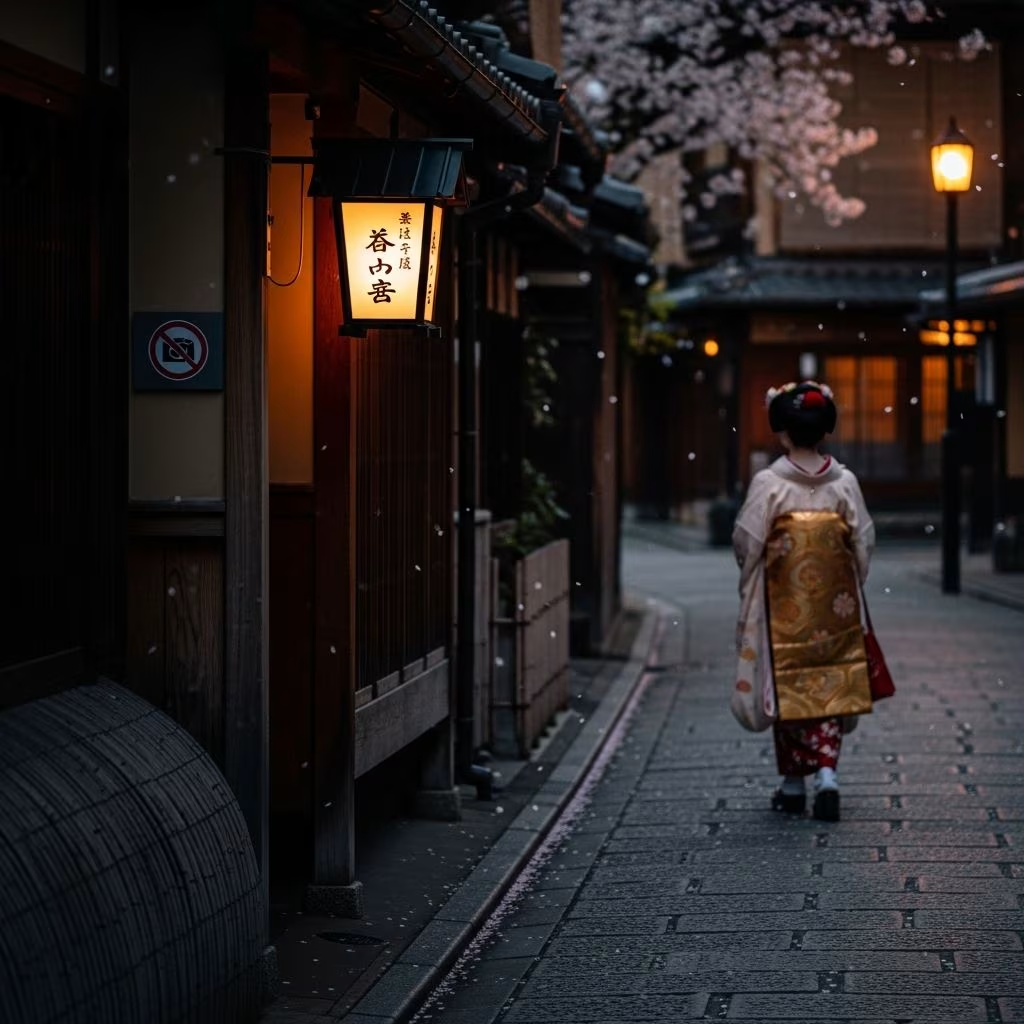
Kyoto’s Gion district stands as one of Japan’s most iconic cultural neighborhoods, instantly recognizable by its wooden machiya townhouses, narrow stone-paved streets, and the sight of elegantly dressed geisha making their way to traditional ochaya teahouses. Yet in recent years, this historic area has become the center of an increasingly contentious debate about tourism, cultural preservation, and the boundaries between respectful engagement and invasive behavior.
The introduction of photography restrictions in Gion represents a watershed moment in how destinations worldwide address the tension between visitor access and community wellbeing. What began as informal requests for courtesy has evolved into formal regulations with financial penalties, reflecting the severity of issues that prompted these measures.
The deterioration of visitor behavior in Gion reached critical levels during 2019, when documented incidents revealed the extent of harassment geisha and maiko faced from tourists. These weren’t isolated occurrences but systematic patterns of disrespectful conduct that fundamentally threatened the working conditions and safety of these cultural practitioners.
Reports documented tourists engaging in physically aggressive behavior, including:
These behaviors reflected a troubling phenomenon where cultural professionals were treated as living museum exhibits rather than workers deserving respect and professional boundaries. The cumulative effect drove community leaders to seek formal interventions to protect both the geisha workforce and the authentic cultural atmosphere that makes Gion distinctive.
Rather than implementing a blanket prohibition, Gion’s authorities created a nuanced regulatory framework that distinguishes between private and public spaces, reflecting an attempt to balance preservation with accessibility.
Photography is strictly prohibited on Gion’s private streets and alleyways. Violators face monetary penalties of ¥10,000 (approximately $92 USD), enforced through surveillance cameras installed on private roads. This category encompasses the narrow residential lanes where geisha live and work away from public view.
Photography remains permitted on designated public streets, though with important caveats. The main thoroughfares where photography is allowed include:
Even in these public areas, photography etiquette requires visitors to seek permission from geisha before photographing them, transforming the practice from an assumed right into a requested privilege.
Kyoto city has established an official permitting system for legitimate photography purposes. Those seeking to photograph geisha for journalistic, academic, or commercial reasons must obtain advance authorization rather than attempting candid photography. This formal process ensures that photography serves documented, legitimate purposes while protecting geisha from random tourist documentation.
The permit framework recognizes distinctions between different types of photography, acknowledging that professional and artistic documentation serves different purposes than casual tourist snapshots.
Kyoto implemented video surveillance on private streets to monitor compliance with photography restrictions. However, the enforcement infrastructure remains somewhat opaque, with ambiguity surrounding monitoring procedures and the specific entities responsible for violation enforcement. This unclear chain of authority has created confusion among some visitors regarding where precisely the ban applies and who validates compliance.
Information gaps persist between tourism offices and enforcement agencies, occasionally leaving visitors uncertain about exact boundaries despite signage throughout the district.
Gion district leadership explicitly framed these restrictions around cultural preservation objectives. Mimiko Takayasu, representing the association of local residents and shop owners, stated that the photography ban exists to “preserve Gion’s traditional atmosphere.” This rationale recognizes that constant photography, trespassing, and visitor harassment fundamentally alter the character of the neighborhood and compromise the authentic cultural practices it harbors.
The district’s architecture, performance traditions, and professional practices trace their lineage to Japan’s Edo period (1603–1868). Protecting these elements requires maintaining an environment where geisha can work without constant documentation and harassment. Photography restrictions serve as one mechanism within a broader cultural preservation strategy.
Kyoto’s tourism authority has developed additional educational resources addressing visitor conduct expectations. A digital manual detailing rules and etiquette guidance represents an effort to establish visitor norms before travelers arrive at popular destinations. This proactive approach acknowledges that many violations stem from cultural misunderstanding rather than intentional disrespect.
The timing of these initiatives coincided with Japan’s preparations for increased international tourism, particularly anticipating visitors traveling to Tokyo for Olympic events. Tourism officials recognized that without clear guidelines, increased visitor volume would amplify existing problems.
A fundamental misunderstanding underlying harassment involves tourists’ perception of geisha. Many visitors view geisha as performers existing for their entertainment, particularly as photographic subjects. In reality, geisha are trained professionals heading to work, deserving the same professional boundaries and privacy as any worker commuting to employment.
Geisha training represents years of disciplined study in traditional arts, music, dance, and cultural practices. Their movements through Gion streets are not performance moments but mundane professional transitions. The romanticization of these moments through photography transforms routine work into commodified spectacle, violating professional dignity.
Rather than attempting candid street photography, visitors genuinely interested in geisha culture have legitimate avenues for engagement:
These alternatives provide meaningful cultural engagement while respecting the working geisha’s professional space.
Despite clear intentions, the photography ban’s implementation has encountered practical challenges. Tourism office staff in some locations report insufficient information about precise restriction locations, forcing visitors to rely on signage without authoritative clarification. This implementation gap creates compliance difficulties for well-intentioned travelers.
The distinction between private and public streets, while clear in principle, can be ambiguous to outsiders unfamiliar with Gion’s layout. Some streets occupied by businesses operate with a quasi-public character that complicates classification. These gray areas require either clearer mapping or on-ground signage more explicit than current systems provide.
Gion’s photography ban exemplifies challenges facing cultural heritage sites worldwide. As international travel democratizes access to historically exclusive locations, communities must establish boundaries protecting cultural authenticity and resident wellbeing. Photography restrictions represent one approach among various possible interventions.
Some residents and cultural professionals advocate for even more restrictive measures, including complete tourist exclusion from certain areas during specific hours or comprehensive access bans. These proposals reflect frustration with the persistence of disrespectful behavior despite existing regulations.
Photography-related harassment directly affects geisha’s professional quality of life and career sustainability. When young women considering entering this demanding profession witness harassment and documentation without consent, career recruitment becomes more difficult. The restriction aims partially at preserving the profession itself by making work conditions more tolerable.
Cultural professionals in Gion stress that photography restrictions serve everyone’s interests—tourists gain authentic cultural experiences rather than staged interactions, while geisha work in environments permitting genuine cultural practice rather than constant performance anxiety.
Q: Is all photography banned in Gion?
A: No. Photography is prohibited only on private streets and alleys. Public thoroughfares like Hanami-koji, Shirakawa-dori, and Sannen-zaka allow photography, though visitors should request permission before photographing geisha.
Q: What happens if I photograph geisha without permission on private streets?
A: You face potential fines of ¥10,000. Video surveillance and enforcement mechanisms exist, though implementation specifics remain somewhat unclear.
Q: How do I obtain an official photography permit?
A: Contact Kyoto city authorities or tourism offices for information about permit applications. Professional photographers with legitimate purposes should inquire about formal authorization processes.
Q: Can I photograph geisha at cultural performances?
A: Photography policies vary by venue. Always inquire before photographing at theaters, museums, or formal performance spaces.
Q: Why are these restrictions necessary?
A: Restrictions protect geisha from harassment, preserve cultural authenticity, and maintain Gion’s traditional atmosphere against overwhelming tourism pressures.
Gion’s photography regulations represent an ongoing negotiation between visitor access and community protection. As tourism to Japan continues expanding, these policies may serve as models for other cultural heritage destinations facing similar pressures. Success requires ongoing dialogue between tourism authorities, geisha communities, and visitors, with flexibility to refine policies as implementation experience accumulates.
Ultimately, respecting photography restrictions reflects broader recognition that cultural preservation requires visitor consideration. Those visiting Gion serve their own interests—experiencing authentic cultural practice rather than staged tourism—by accepting these reasonable boundaries.
