

 Travel Essentials
 Travel Essentials

Discover how Memphis’s iconic pyramid became a bold arena, then a Bass Pro Shops destination, blending history, design, and tourism.
 Travel Essentials
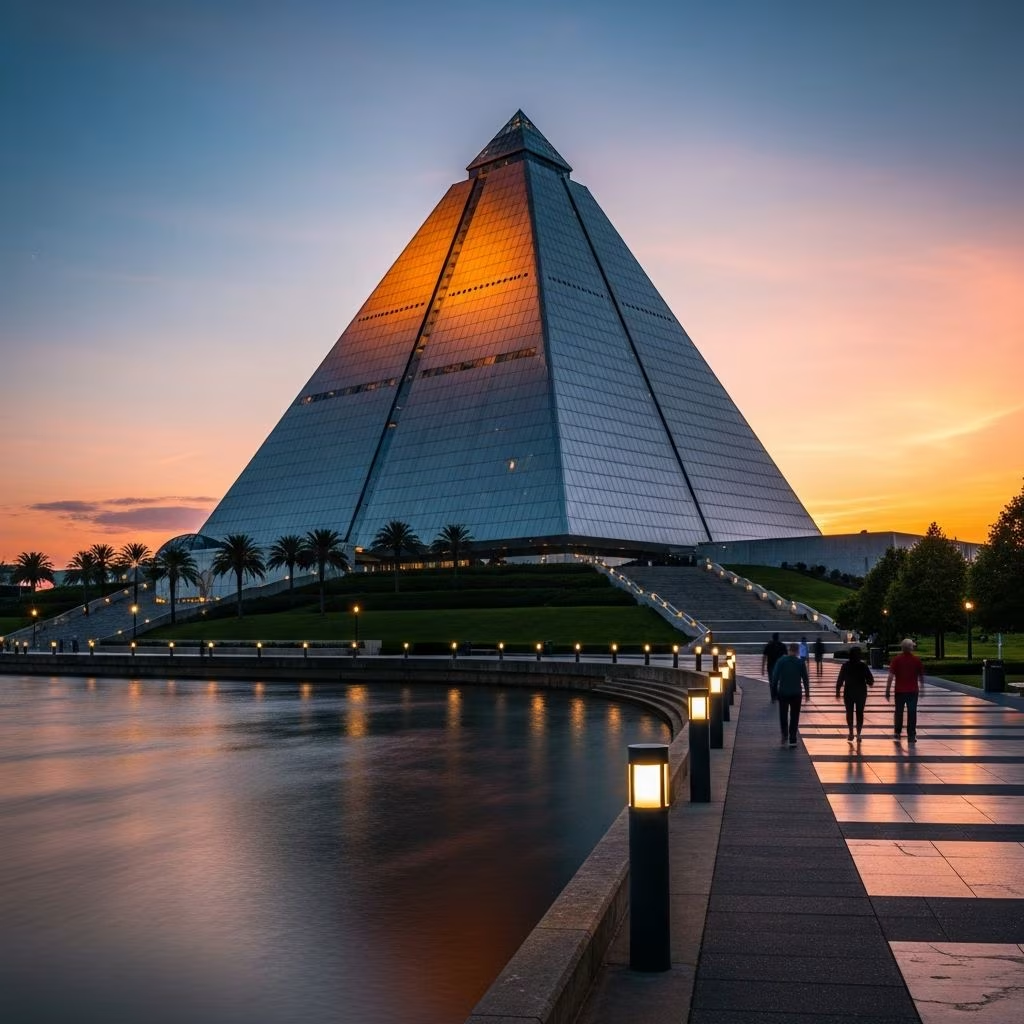
Downtown Memphis, Tennessee, features one of the most unusual and visually striking structures in North America: a massive pyramid rising 321 feet above the banks of the Mississippi River. This distinctive edifice, now home to Bass Pro Shops, stands as a testament to creative urban planning and represents a unique intersection of American commerce, sports culture, and architectural ambition. The pyramid’s prominence in Memphis’s skyline raises an intriguing question about why this particular geometric shape became the centerpiece of the city’s downtown revitalization efforts.
The story of the Memphis Pyramid begins not with modern construction but with the city’s founding narrative. During the 1820s, civic leaders chose to name their growing Tennessee settlement after the ancient city of Memphis, Egypt, a metropolis that stood along the banks of the Nile River much as their new city would eventually border the Mississippi River. This deliberate homage created a conceptual link between two significant river-based civilizations separated by centuries and continents.
The Egyptian connection remained largely symbolic until the late nineteenth century, when local leaders sought to physically represent this heritage. In 1897, the city constructed a wooden pyramid to showcase at the Centennial Fair in Nashville, offering a tangible representation of Memphis’s namesake. Though this structure served only a temporary purpose and was subsequently dismantled, it established a precedent for using pyramid architecture as a symbol of civic identity.
Decades passed before the pyramid concept resurfaced in Memphis’s collective imagination. Around mid-twentieth century, a local artist proposed a series of bronze pyramids as permanent downtown fixtures, though these ambitious plans never materialized beyond the conceptual stage. For years, the pyramid remained a fascinating “what-if” in Memphis’s urban development discussions, representing an imaginative yet unrealized vision for the city.
The transformation from concept to reality occurred during the mid-1980s, when several converging factors created the perfect opportunity for Memphis’s pyramid dream to materialize. The Memphis Tigers collegiate basketball program was experiencing unprecedented success, consistently selling out every home game at existing venues. This athletic triumph created an urgent infrastructure problem: the city lacked adequate facilities to accommodate both the demand for basketball games and other major entertainment events that could generate revenue and cultural prestige.
Recognizing this opportunity, city and county officials established a public building authority with an ambitious goal: constructing a multipurpose arena that would serve the community’s entertainment needs while simultaneously creating a distinctive architectural landmark. The decision to design this facility in pyramid form represented a breakthrough moment in Memphis’s urban planning. Rather than constructing a conventional rectangular arena, planners embraced the city’s Egyptian namesake and committed to realizing the long-deferred pyramid vision.
In 1988, Memphis voters approved a bond measure to fund the $39 million project. The decision reflected strong community support for the ambitious undertaking, demonstrating that residents valued the combination of practical utility and symbolic significance that the pyramid promised to deliver.
Construction began on September 15, 1989, and the completed structure opened to the public on November 9, 1991. The final architectural achievement measures 321 feet tall—approximately two-thirds the height of Egypt’s Great Pyramids—with square base sides extending 591 feet. This scale positions the Memphis Pyramid among the world’s most substantial pyramid structures, ranking approximately tenth in global pyramid height comparisons.
The builders selected stainless steel as the primary construction material, creating a gleaming exterior that contrasts dramatically with both the brick warehouses of the historic Pinch District and the conventional glass-and-steel skyscrapers surrounding it. This material choice provided both aesthetic distinction and practical durability, ensuring the structure would maintain its visual impact for decades.
A particularly notable design feature involved the pyramid’s relationship to the surrounding cityscape. The sloped walls created substantial unused floor space around the central arena, an initially perceived liability that would later prove strategically valuable. This unusual spatial configuration attracted the attention of entrepreneurs John Tigrett and Sidney Shlenker, whose vision for utilizing these spaces would ultimately shape the pyramid’s evolution.
Upon opening, the Memphis Pyramid functioned primarily as a basketball arena, hosting Memphis Tigers games and attracting major concert performances and sporting events. The distinctive architecture generated international attention, making it an iconic symbol of Memphis’s cultural aspirations. Visitors and local residents alike embraced the structure as a source of civic pride, and it became a defining element of the city’s visual identity.
However, like many arena venues dependent on specific entertainment markets, the facility faced economic challenges. The basketball program eventually relocated, and the revenue streams that had justified the initial investment diminished. Various operators attempted different approaches to maintain the facility’s viability, exploring alternative uses and events. Despite these efforts, the pyramid’s role as a primary entertainment venue gradually diminished over subsequent decades.
In 2015, the Memphis Pyramid underwent a comprehensive transformation that would reshape its purpose and visitor profile. Bass Pro Shops, the major outdoor retail corporation, partnered with Memphis leadership to convert the pyramid into an integrated retail, entertainment, and hospitality complex. This renovation represented one of the most ambitious adaptive reuse projects in contemporary American architecture, preserving the iconic exterior while fundamentally reimagining the interior functionality.
The Bass Pro Shops Pyramid now encompasses a sprawling wilderness-themed retail environment featuring an indoor swamp, multiple dining establishments, and the Big Cypress Lodge, a luxury hotel residence occupying portions of the structure. Rather than serving a single primary function, the pyramid now operates as a multi-purpose destination attracting tourists, shoppers, and adventure-seekers from throughout the region.
One of the most distinctive features distinguishing the Bass Pro Shops Pyramid from conventional retail environments is the observation deck located at the structure’s peak. Visitors access this vantage point via the nation’s tallest freestanding glass elevator, a thrilling twenty-eight-story ascent that provides spectacular views of Memphis and the surrounding Mississippi River valley. The glass-floored observation area allows visitors to stand directly above the city while experiencing the architectural marvel firsthand.
The Lookout restaurant, situated at the pyramid’s pinnacle, serves specialty cocktails and cuisine while offering panoramic vistas across Memphis. This combination of dining, observation, and the experiential elevator ride has become a significant draw for tourists and architecture enthusiasts seeking to experience the structure intimately.
The Memphis Pyramid has evolved from a controversial urban development project into one of Tennessee’s most recognizable landmarks. Its distinctive silhouette appears consistently in travel photography, tourism marketing, and architectural discussions. The structure represents a successful example of adaptive reuse, demonstrating how a specialized-purpose facility can be successfully repositioned to serve contemporary commercial and hospitality needs while maintaining its symbolic importance.
For Memphis residents and visitors, the pyramid embodies the city’s creative spirit and willingness to embrace distinctive architectural expression. Rather than constructing conventional structures that could be replicated in any metropolitan area, Memphis civic leaders invested in something uniquely tied to the city’s heritage and identity. This commitment to distinctive architectural identity has generated considerable cultural capital and contributed meaningfully to the city’s tourism and hospitality industries.
When considered from a contemporary architectural perspective, the Memphis Pyramid represents a fascinating artifact of late twentieth-century urban planning philosophy. Built during an era when many American cities pursued downtown revitalization through distinctive architectural landmarks, the pyramid embodies confidence in the power of bold design to attract investment, visitors, and media attention. Whether viewed as prescient or idiosyncratic, the structure undeniably succeeded in achieving its fundamental goal: making Memphis visually distinctive and memorable.
The pyramid’s transformation from arena to retail complex reflects broader patterns in American urban economic development. As sports franchises and entertainment-based economics shifted, adaptive reuse strategies became essential for maintaining the viability of specialized structures. The Memphis Pyramid’s successful conversion to Bass Pro Shops demonstrates that iconic architecture can retain relevance and generate revenue through creative repositioning.
Memphis, Tennessee was named after Memphis, Egypt in the 1820s, both cities situated along major rivers. The pyramid was built in 1991 as a sports arena to reflect this heritage and provide needed basketball and entertainment facilities.
The Memphis Pyramid stands 321 feet tall (98 meters), making it approximately two-thirds the height of Egypt’s Great Pyramids and roughly the tenth-tallest pyramid worldwide.
Today the structure operates as Bass Pro Shops Pyramid, featuring retail, the Big Cypress Lodge hotel, restaurants, an indoor swamp, and a Waterfowl Museum. The observation deck and glass elevator remain popular tourist attractions.
Yes, visitors can ride the nation’s tallest freestanding glass elevator to the observation deck and visit The Lookout restaurant, though there is a $10 fee for the elevator experience.
Construction began in September 1989 and the facility opened to the public on November 9, 1991. The transformation into Bass Pro Shops Pyramid occurred in 2015.
