

 Travel Essentials
 Travel Essentials

Monarch butterflies face steep population declines due to habitat destruction, pesticides, and climate shifts. Learn about causes, impacts on eastern and western populations, and recovery efforts.
 Travel Essentials
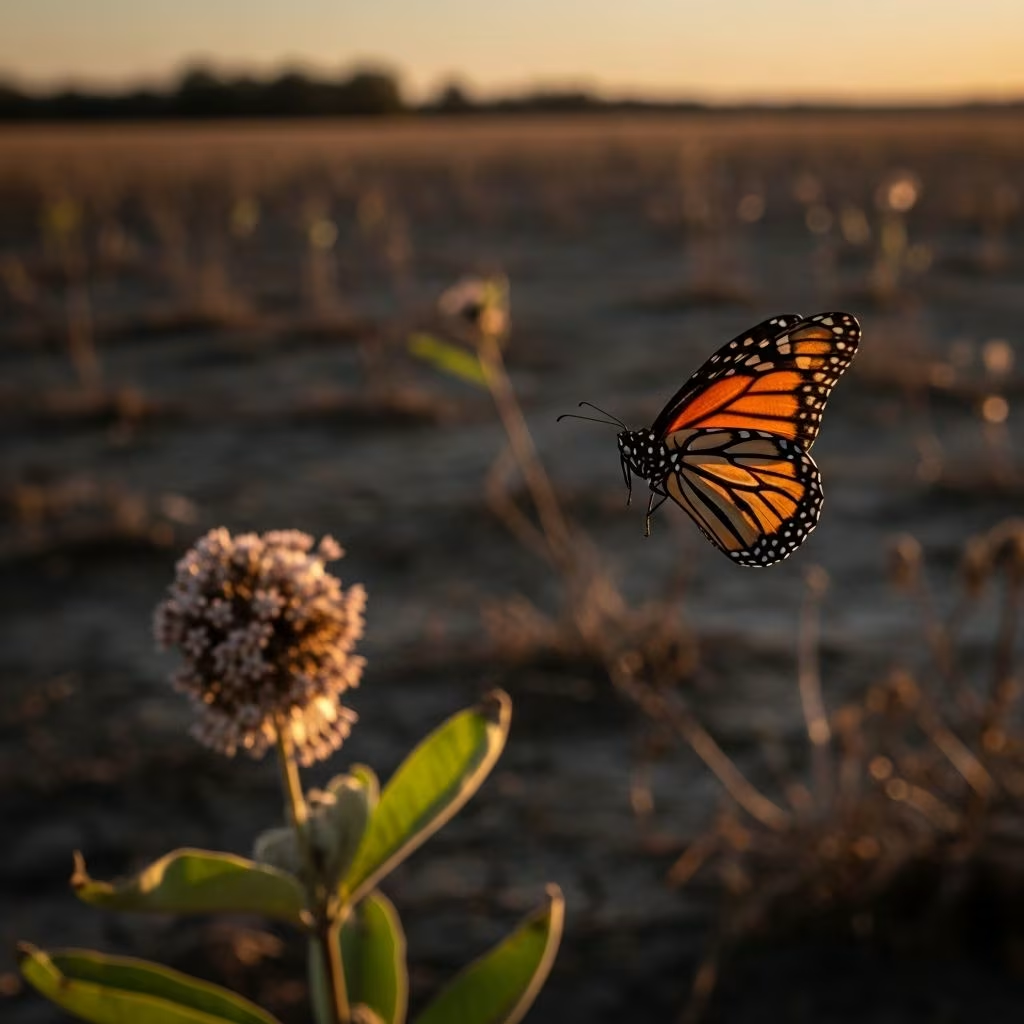
The monarch butterfly (Danaus plexippus), renowned for its breathtaking annual migration across North America, is experiencing a profound population crash that alarms scientists and conservationists alike. Once numbering in the hundreds of millions, eastern populations have plummeted by over 80% since the late 1990s, while western ones have dropped nearly 97% from their peak in the 1980s. This decline threatens not only a natural wonder but also pollination services vital to ecosystems and agriculture.
Monarchs divide into eastern and western groups, separated by the Rocky Mountains, each with unique migration routes and challenges. The eastern population breeds across the U.S. and Canada, migrates up to 3,000 miles to overwintering sites in Mexico’s oyamel fir forests, and returns north in spring. In contrast, western monarchs breed west of the Rockies and cluster at coastal California sites for winter.
Recent data highlights disparities: Eastern numbers at Mexican sites fell from peaks in the 1990s to critically low levels by 2020, with quasi-extinction risks estimated at 11-57% over two decades. Western populations, hovering around 200,000 individuals recently after nearing collapse, face even steeper localized threats.
Habitat destruction tops the list of threats, particularly the disappearance of milkweed—the sole food source for monarch larvae. In the Midwest, milkweed abundance dropped 58% from 1999 to 2010, largely due to herbicide-tolerant crops like glyphosate-resistant corn and soybeans. This agricultural shift reduced monarch reproduction by an estimated 81% in key breeding areas.
Conversion of Conservation Reserve Program lands to cropland exacerbates breeding habitat shortages. Meanwhile, avocado farming in Mexican overwintering zones adds pressure through habitat conversion.
Beyond habitat, pesticides pose direct and indirect dangers. Neonicotinoids and other insecticides kill non-target insects like monarchs and degrade foraging areas. Breeding-season neonicotinoid use shows negative correlations with abundance, though less potent than glyphosate effects.
Dicamba and 2,4-D herbicides present mixed impacts: declining northern use oddly aligns with population drops, while southern increases harm more directly. Overall, chemical-intensive farming fragments landscapes, reducing nectar sources and safe migration corridors.
Shifting weather patterns compound other pressures. Harsher winters at overwintering sites cause mass die-offs, while erratic springs delay milkweed emergence, mistiming with migrating adults. Models predict altered migration routes and breeding ranges, potentially rendering current habitats unsuitable.
Temperature and precipitation during breeding, migration, and overwintering critically influence survival. Warmer breeding-season temperatures drive annual fluctuations, but extremes like droughts or floods amplify declines. For western monarchs, ongoing research links climate variability to breeding habitat loss, though data remains preliminary.
Not all habitats are equally culpable. A 2024 USGS study ruled out major losses in Texas-Mexico migration corridors, suggesting breeding and overwintering zones bear primary responsibility. This shifts focus to targeted interventions rather than broad migration fixes.
Time-series analyses from 1993-2014 pinpoint glyphosate, forest loss, and neonicotinoids as top negative factors, with climate inducing variability around a potentially stable baseline if habitats recover. Western declines, less studied until recently, mirror eastern patterns but demand more investigation into pesticide and habitat synergies.
Hope lies in multifaceted actions. Restoring milkweed on roadsides, CRP lands, public spaces, and farms could offset losses. Protecting Mexican forests and California groves through anti-logging enforcement is crucial.
| Strategy | Target Area | Expected Impact |
|---|---|---|
| Milkweed planting | Breeding zones (Midwest) | +81% reproduction potential |
| Forest preservation | Overwintering (Mexico, CA) | Stable microclimates |
| Pesticide reduction | Agricultural fields | Reduced direct mortality |
| Climate-resilient habitats | Migration corridors | Adaptation to shifts |
Organizations like the Xerces Society advocate for these, alongside policy pushes for Endangered Species Act listing—currently proposed but not finalized by the U.S. Fish & Wildlife Service. Calls for $100 million annual funding aim to scale efforts. State wildlife action plans show variable commitment, urging stronger coordination.
Individual actions matter: Plant native milkweed, avoid pesticides, and support native plant gardens. Monarch Joint Venture promotes waystations—certified habitats providing milkweed and nectar.
Annual counts at overwintering sites track trends. Post-2020 rebounds offer optimism, but populations remain below recovery thresholds. If threats like glyphosate persist minimally and habitats expand, models forecast stabilization. However, unchecked climate change or logging could tip toward extinction.
Western populations, with scant research, highlight research gaps. Comprehensive studies on breeding/overwintering synergies are needed.
Main culprits include milkweed loss from herbicides, overwintering habitat destruction, pesticides, and climate change.
Eastern: 84% since 1996-1997; Western: 95-97% from 1980s peaks.
Yes, through habitat restoration, pesticide curbs, and protections—strategies projected to stabilize numbers.
Plant milkweed, create pollinator gardens, reduce yard chemicals, and advocate for conservation policies.
Proposed as threatened under the Endangered Species Act, but not yet listed.
Despite dire stats, monarch resilience shines: A single female lays hundreds of eggs, and recent upticks show response to efforts. Coordinated action across borders—U.S., Canada, Mexico—holds the key. By addressing root causes with science-backed measures, we can restore skies darkened by orange wings.
(Word count: 1678)
