

 Travel Essentials
 Travel Essentials

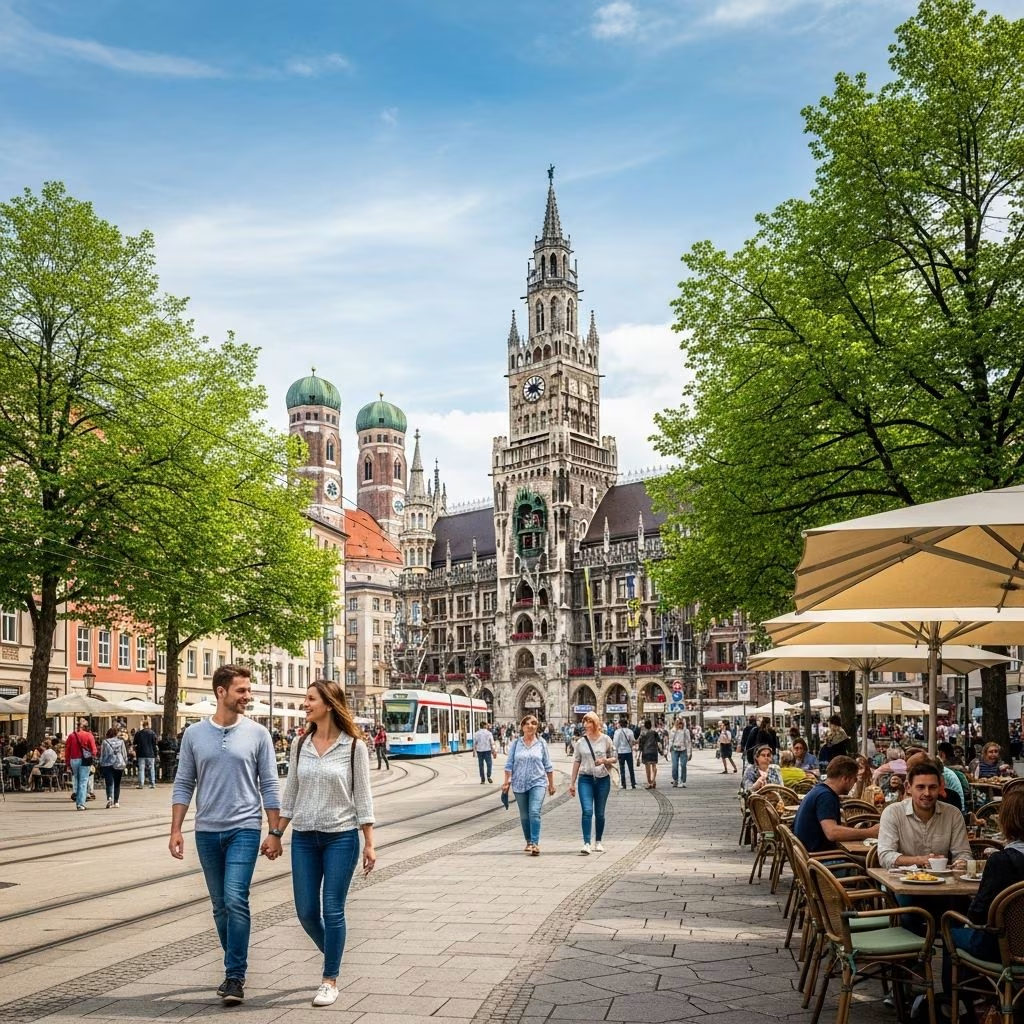
Munich tops the charts as the most walkable city worldwide, offering car-free zones, historic sites, vast parks, and efficient transit for seamless foot-powered adventures.
 Travel Essentials
Munich has earned the distinguished title of the most walkable city in the world, surpassing major global metropolises through superior pedestrian infrastructure, safety measures, and accessible attractions. This accolade stems from comprehensive evaluations highlighting its dense network of car-free areas, reliable public transport, and inviting urban layout that encourages foot travel over vehicular reliance.
The city’s walkability is rooted in thoughtful urban planning that prioritizes human-scale movement. An impressive 86% of Munich residents reside within one kilometer of a car-free zone, fostering a lifestyle where daily errands, leisure, and sightseeing unfold naturally on foot. Pedestrian zones boast high quality, complemented by extensive bike paths that reduce traffic congestion and enhance safety for all users.
Safety stands out as a cornerstone, with well-lit public spaces, low crime rates, and infrastructure designed to minimize accidents. Public transportation integrates seamlessly, featuring the U-Bahn, S-Bahn, trams, and buses that connect seamlessly with walking routes, eliminating the need for taxis in most scenarios.
Climatic factors further boost appeal: moderate precipitation levels and mild weather support year-round strolling. Proximity to essential services like healthcare and educational institutions ensures practicality, while affordable transit passes make exploration economical.
Independent analyses assessed cities on multiple dimensions, where Munich consistently scored above 5 points out of possible maxima. The evaluation framework included:
These elements propelled Munich ahead of competitors like Milan, Warsaw, Helsinki, and Paris, which excel in isolated areas but lack Munich’s holistic integration.
Central Munich revolves around Old Town, serving as an ideal hub for self-guided tours. Start at Marienplatz, the historic main square dating back to 1158, featuring the Glockenspiel’s mechanical show, the Fish Fountain, and towering town halls. Climb St. Peter’s Church tower for panoramic views encompassing the Frauenkirche’s distinctive green domes.
Cross the Isar River to Maximilianstrasse, a elegant boulevard lined with luxury shops and neo-Gothic facades. Nearby, the Residenzmuseum—the largest inner-city palace in Germany—reveals opulent royal interiors and Renaissance gardens, perfect for a leisurely amble.
Maxvorstadt, the university quarter, offers a vibrant contrast with indie boutiques, art galleries, and diverse dining. Transition into the Englischer Garten, a 926-acre green lung surpassing New York’s Central Park in size, with 50 miles of trails for walking, jogging, or cycling amid meadows, streams, and scenic bridges.
Venture to Schloss Nymphenburg, a sprawling 500-acre estate once Bavaria’s royal summer retreat. Public transit drops visitors directly at the gates, leading to grand baroque architecture, canal-lined gardens, and carriage paths ideal for extended walks.
The English Garden captivates with unique spectacles like surfers riding the Eisbach wave and beer gardens shaded by chestnut trees. Viktualienmarkt, a short stroll away, buzzes with fresh produce stalls, pretzels, and sausages—fuel for further exploration.
These sites underscore Munich’s free or low-cost attractions, many clustered within walking distance, making it feasible to cover highlights without spending on transport.
Munich’s transport system amplifies walkability. The S-Bahn links the airport straight to Marienplatz, while U-Bahn and trams fan out efficiently. Bikes share paths with pedestrians, and the MVV network offers day passes covering all modes.
| Transport Option | Key Routes | Walkability Boost |
|---|---|---|
| S-Bahn | Airport to City Center | Direct, frequent service reduces car dependency. |
| U-Bahn | Subway lines across districts | Short walks between stations and sights. |
| Trams/Buses | To parks and outskirts | Precise stops at major attractions. |
This multimodal approach ensures even peripheral gems remain accessible primarily by foot.
Embracing car-free travel promotes sustainability, cutting emissions and supporting local businesses. Health gains include improved fitness from daily steps amid fresh air and scenery. Tourists appreciate the mindfulness of slow-paced discovery, immersing in Bavarian culture—from architecture to cuisine—without rush.
City marketing leverages this with slogans like “Experience Munich car-free” and events such as Walk Munich Week, featuring guided tours and challenges. Digital tools like AR apps and interactive maps aid planning.
| City | Strengths | Munich Edge |
|---|---|---|
| Milan | Street cafés, fashion | Superior safety and park access. |
| Paris | Historic boulevards | Denser car-free zones, better transit. |
| Helsinki | Clean, green paths | Broader attractions network. |
| Warsaw | Affordable living | Higher overall infrastructure score. |
Munich synthesizes these virtues uniquely, per global benchmarks.
These strategies maximize enjoyment in this pedestrian haven.
Yes, according to a 2025 study by Compare the Market, Munich topped rankings due to its pedestrian zones, safety, and infrastructure.
The S-Bahn provides a direct 40-minute ride to Marienplatz; no walking required initially, but everything centers there afterward.
Marienplatz, Englischer Garten, and Viktualienmarkt offer gratis exploration packed with sights and vibes.
Absolutely, with dedicated paths and rental programs complementing foot traffic.
Yes, the Englischer Garten is a 20-minute stroll from Marienplatz; others link via short transit hops.
Whether chasing history, nature, or flavors, Munich invites you to step into its rhythm. Its layout rewards wanderers with authentic encounters at every turn, solidifying its status as a global walkability leader.
