

 Travel Essentials
 Travel Essentials

Learn about the safety protocols airlines use to protect flight operations, including the practice of serving different meals to pilots and how modern aviation prevents crew incapacitation.
 Travel Essentials
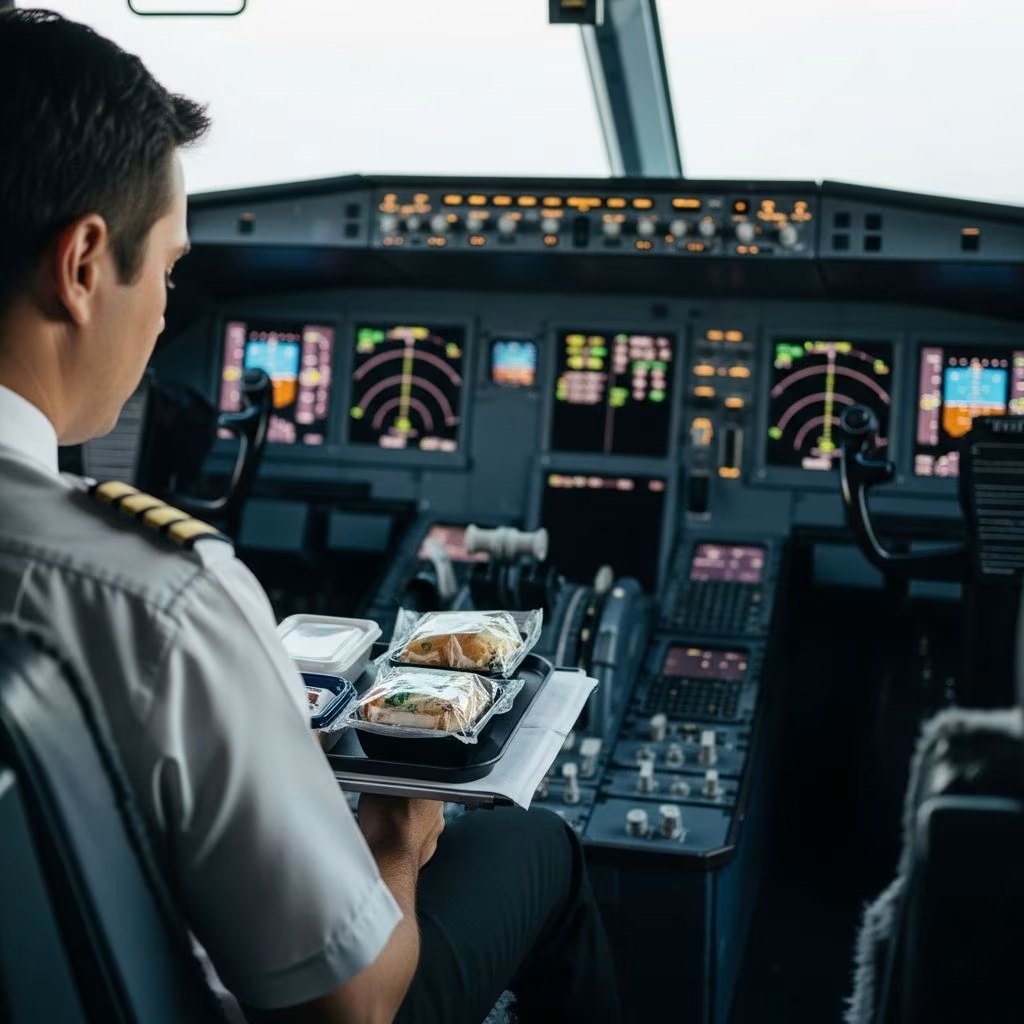
The practice of serving different meals to pilots during flight operations represents one of aviation’s most deliberate safety measures. While many travelers have heard the phrase “pilots eat different meals,” few understand the comprehensive reasoning, historical context, and modern evolution of this protocol. This practice, rooted in practical risk management, continues to shape how airlines approach crew welfare and flight safety today.
The requirement for pilots to consume different meals emerged from a fundamental concern about simultaneous crew incapacitation. If both members of a two-pilot flight deck were to become ill from contaminated food, the aircraft would be left without qualified command. During aviation’s earlier decades, when food safety standards were less rigorous and standardized catering protocols did not exist, this represented a genuine operational vulnerability.
Aviation safety authorities recognized that food poisoning could incapacitate crew members, potentially compromising flight safety during critical phases of operation. The solution was elegantly straightforward: mandate that flight crew members consume different meals, ensuring that any foodborne pathogen affecting one pilot would theoretically spare the other. This segregation strategy provided a crucial redundancy in human factors management.
The protocol became formalized in regulations and airline operating procedures throughout the latter half of the twentieth century. Airlines established specific guidelines requiring pilots to select from different menu options, and catering services were instructed to prepare and distribute meals with this separation in mind.
Pilot incapacitation refers to any condition rendering a flight crew member unable to safely operate the aircraft. This encompasses a broad spectrum of medical events, including gastrointestinal illness, sudden cardiac events, loss of consciousness, or other acute health episodes.
Research conducted by aviation safety authorities provides insight into incapacitation frequency. Between 2010 and 2014, Australia documented approximately 23 pilot incapacitation occurrences annually, with gastrointestinal illness representing the leading cause. When such events occur, the trained crew must execute emergency protocols, including potential diversion to the nearest suitable airport and notification of air traffic control.
In multi-pilot operations typical of commercial aviation, the consequences of single-pilot incapacitation are substantially mitigated by crew redundancy. However, preventing simultaneous incapacitation of both pilots remains a priority, as this scenario would require an air traffic control-assisted emergency landing or cabin crew intervention in extraordinary circumstances.
Contemporary aviation operates under substantially different food safety conditions than those existing when separate pilot meals became standard practice. Modern airlines maintain rigorous supplier certification requirements, temperature-controlled storage and transport systems, and comprehensive catering protocols.
Airlines work extensively with certified catering suppliers adhering to strict food safety standards. Catering containers maintain temperature-controlled environments throughout loading, flight, and storage sequences. Cabin crew members are trained to maintain container integrity, protecting meals from environmental contamination including temperature fluctuations, dust exposure, and pest intrusion.
The combination of advanced food handling technology, regulatory oversight, and professional catering standards has dramatically reduced foodborne illness incidents in commercial aviation. Despite the volume of meals served across global airline operations daily, serious food poisoning events affecting flight crews remain exceptionally rare occurrences.
Despite the historical reasoning behind separate pilot meals, regulatory requirements have evolved in response to improved food safety conditions. The practical risk of simultaneous crew food poisoning has become so negligible that many aviation authorities no longer mandate the practice as a regulatory requirement.
However, considerable variation exists across airlines regarding current protocols. Some carriers maintain the separate meal practice as part of their standard operating procedures, while others have moved away from mandatory separation. Airlines make these determinations based on their risk assessment, corporate safety culture, and regulatory environment.
When separate meals are still practiced, airlines typically utilize their existing catering infrastructure efficiently. Pilots may be offered selections from different passenger service classes—for example, one pilot receiving a meal from first-class service while the other receives business-class offerings. Alternatively, specialized crew meals with diverse composition options provide separation while maintaining service quality.
International airlines maintain varying approaches to pilot meal protocols, reflecting different regulatory environments and safety philosophies.
| Airline Approach | Protocol Details | Rationale |
|---|---|---|
| Mandatory Separation | Pilots required to eat different meals from different catering sources | Conservative safety approach prioritizing redundancy |
| Flexible Separation | Different meals recommended but not strictly enforced | Balance between safety priority and operational efficiency |
| No Mandatory Requirement | Pilots may eat identical meals or make personal choices | Risk assessment suggests separation unnecessary given modern food safety |
Avianca, Colombia’s major carrier, maintains mandatory different meals for pilots. Aerolíneas Argentinas similarly requires separation protocols. These decisions reflect each airline’s organizational risk tolerance and commitment to conservative safety practices.
When implemented, the separate meal protocol functions as an effective defense against simultaneous crew incapacitation. The Australian Transport Safety Bureau noted that in high-capacity air transport operations with multi-pilot crews, ensuring all pilots consumed different meals provided reliable protection against all crew members becoming simultaneously incapacitated.
This represents what safety professionals call a “defense in depth” approach—maintaining multiple layers of protection against catastrophic failure. Even though the base risk of contaminated catering is extremely low, the potential consequence of dual incapacitation justifies maintaining practical countermeasures with minimal operational burden.
The effectiveness lies not in preventing individual pilot food poisoning, which remains rare, but rather in providing assurance that if such an occurrence affects one pilot, the other remains operationally capable. This maintains the essential redundancy that defines safe multi-pilot operations.
Airlines invest substantially in pilot and cabin crew training regarding potential incapacitation events. This training ensures that crews understand incapacitation response procedures and can execute emergency protocols effectively.
When pilot incapacitation occurs, established procedures dictate that the incapacitated pilot immediately relinquish control to the unaffected crew member. Communication with air traffic control occurs immediately, with the flight declaring an emergency and proceeding to the nearest suitable airport for emergency services standby and medical evaluation.
Cabin crew members receive training in recognizing signs of pilot incapacitation and understanding their role in supporting emergency response. While rare, comprehensive training ensures that if incapacitation does occur, organizational response minimizes risk to passengers and aircraft.
The evolution of pilot meal practices reflects broader aviation industry dynamics. As safety science advances and operational data accumulates, aviation continuously reassesses traditional practices against current evidence.
The separate meal requirement originated from legitimate historical safety concerns, but modern food safety systems, catering protocols, and regulatory oversight have substantially reduced the underlying risk. Some argue that maintaining the requirement honors proven safety practices and maintains an additional layer of protection despite low probability. Others contend that evolving beyond mandatory separation reflects evidence-based decision-making appropriate for contemporary operations.
Most stakeholders recognize a middle path: while mandatory separation may no longer be regulatory requirement, airlines that choose to maintain the practice incur minimal operational burden while preserving an additional risk mitigation layer. This represents prudent stewardship of aviation safety without imposing unnecessary constraints.
Aviation regulatory authorities worldwide maintain different standards regarding pilot meal protocols. The Federal Aviation Administration, European Union Aviation Safety Agency, and other regulatory bodies have each evolved their positions as operational data and safety assessment findings have accumulated.
Variance in requirements reflects different regulatory philosophies and national risk assessments. Some aviation authorities maintain prescriptive requirements for crew meal separation, while others issue guidance permitting airline discretion based on demonstrated safety management systems.
This regulatory diversity means that international pilots may experience different meal protocols depending on their current assignment. A pilot operating for multiple carriers may encounter mandatory separation at one airline and optional separation at another, depending on each organization’s protocols and regulatory jurisdiction.
While pilot meal protocols represent internal airline operations, passenger awareness and confidence in crew safety protocols matters for airline reputation and passenger trust. Airlines that clearly communicate their commitment to crew safety, including meal protocols where maintained, reinforce passenger confidence in aviation safety systems.
The visible separation of pilot meals, when observed during flight operations, often reassures passengers regarding airline safety commitment. Conversely, lack of visible separation may prompt passenger questions about safety practices. Transparent communication about why meal protocols exist, whether currently enforced, and how modern food safety systems protect crews addresses passenger concerns constructively.
As aviation evolves, crew meal protocols integrate within broader crew welfare and fatigue management programs. Nutrition quality directly impacts pilot performance, alertness, and decision-making capability during extended flight operations.
Airlines increasingly recognize that meal quality, timing, and nutritional composition represent legitimate crew performance factors beyond simple food safety. Providing nutritious, satisfying meals at appropriate times supports pilot alertness and cognitive function. This expanded perspective on crew meal service transcends traditional food-poisoning prevention and encompasses proactive performance enhancement.
No. While some airlines maintain mandatory separate meal policies, others permit pilot discretion. Regulatory requirements vary internationally, and many regulatory authorities no longer mandate separation, allowing airlines to determine protocols based on their risk assessment.
Serious food poisoning affecting pilots is exceptionally rare in commercial aviation. Modern food safety standards, catering protocols, and supplier certification have minimized foodborne illness risks significantly compared to earlier aviation eras.
Trained crew members immediately notify air traffic control, declare an emergency, and proceed to the nearest suitable airport. The unaffected pilot assumes full command. Cabin crew receives specific training for responding to incapacitation events.
Some airlines maintain the practice as a conservative safety measure providing additional redundancy with minimal operational burden. Even though probability is low, preventing potential simultaneous incapacitation justifies the practical accommodation.
Requirements depend on each airline’s protocols and regulatory jurisdiction. At airlines where separation is mandatory, pilots typically must comply. At airlines without requirements, pilots exercise discretion, though some may choose separation voluntarily.
The practice of serving different meals to pilots represents a case study in systematic safety thinking. Emerging from legitimate historical concerns about simultaneous crew incapacitation, the protocol has evolved as operational experience and food safety systems have advanced. While mandatory separation no longer constitutes universal regulatory requirement, airlines that maintain the practice demonstrate commitment to protecting against low-probability but high-consequence events.
Contemporary aviation safety reflects layered, redundant systems protecting against multiple failure scenarios. Pilot meal separation, whether required or voluntary, exemplifies how aviation industry maintains conservative safeguards while continuing to evolve practices based on evidence and operational experience. Understanding this practice provides insight into how aviation systematically identifies vulnerabilities and implements practical countermeasures protecting passengers and crews.
