

 Travel Essentials
 Travel Essentials

Explore the strategic renaming of PyeongChang for the 2018 Winter Olympics, its rich ski heritage, and why it became Korea's alpine gem amid geopolitical sensitivities.
 Travel Essentials
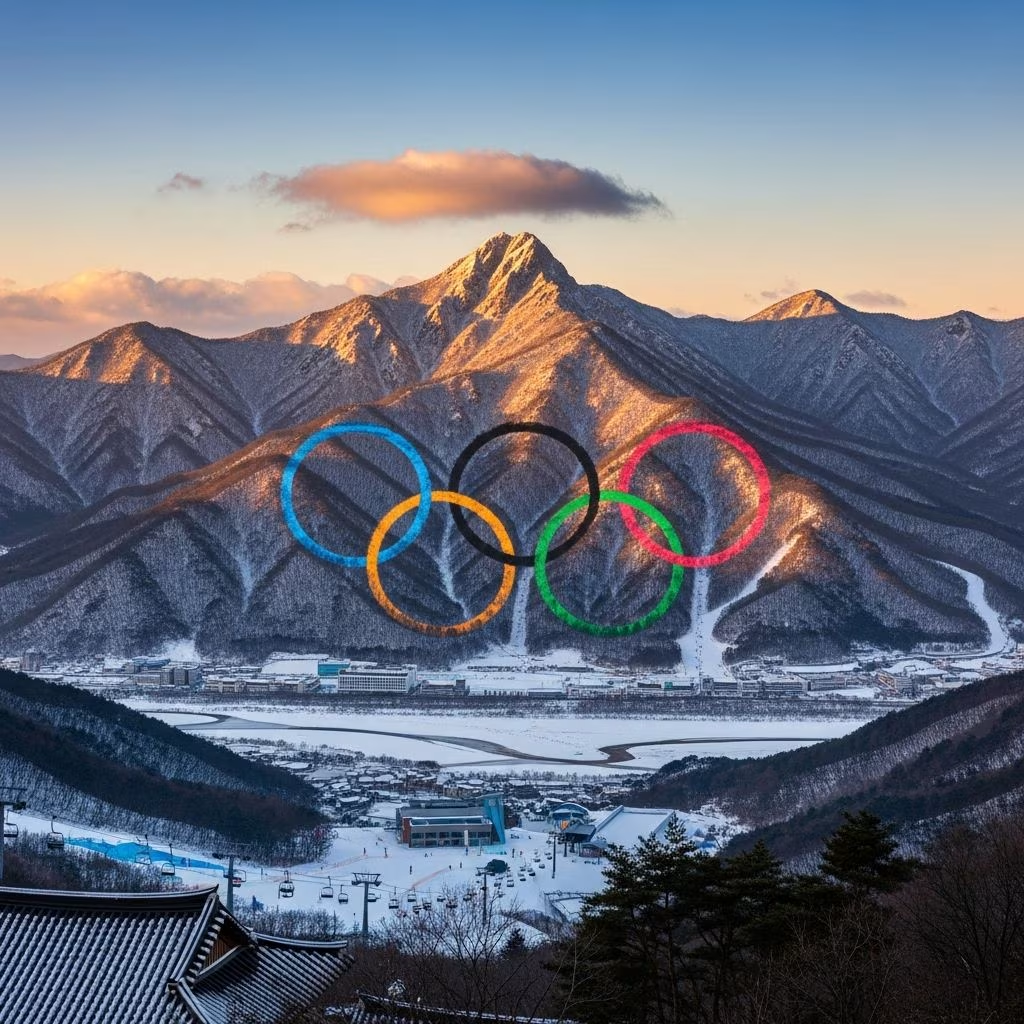
The small county of PyeongChang in South Korea’s Gangwon Province made headlines not just for hosting the 2018 Winter Olympics, but for a clever branding tweak: capitalizing the ‘C’ in its name. This subtle change from Pyeongchang to PyeongChang aimed to visually separate it from Pyongyang, North Korea’s capital, ensuring global audiences associated the event with South Korea’s snowy mountains rather than political tensions.
Transliteration challenges have long plagued Korean place names in Roman letters. PyeongChang, nestled in the Taebaek Mountains, traditionally rendered as ‘Pyeongchang’ under older systems. However, its phonetic similarity to ‘Pyongyang’—North Korea’s capital—posed risks, especially for an international event like the Olympics.
In the early 2000s, South Korea adopted a revised Romanization system, inserting ‘eo’ to better capture mid-central vowel sounds, evolving ‘Pyongchang’ to ‘Pyeongchang’. Linguists note this wasn’t directly about North Korea but standardization. Yet, as PyeongChang bid for the Olympics in 2007, officials amplified distinction by styling it ‘PyeongChang’, capitalizing ‘C’ for visual pop.
This wasn’t arbitrary; style guides like AP and Canadian Press adopted it, spreading through media worldwide.
Beyond nomenclature, PyeongChang earns its ‘Alps of Korea’ moniker. Skiing traces back to 1949 with the nation’s first slope, igniting a winter sports culture. Located hours from Seoul in Gangwon Province, its Taebaek terrain offers prime elevation for snow sports.
Pre-Olympics, the area boasted resorts like Yongpyong, Asia’s largest ski field. Post-2018, it transformed into a year-round haven, blending skiing with hiking and eco-tourism.
| Era | Key Developments |
|---|---|
| 1940s-1970s | Skiing pioneers; first resorts open. |
| 1980s-2000s | Industry growth; Olympic bids begin. |
| 2018-Present | Global spotlight; tourism boom. |
From February 9-25, 2018, PyeongChang hosted the 23rd Winter Olympics, South Korea’s first and only the second Olympics overall after Seoul 1988. Spanning 13 venues across PyeongChang county and nearby Gangneung, it featured alpine skiing, biathlon, and ice events.
Gangneung handled ice disciplines, while PyeongChang’s mountains shone for snow sports. The Games drew 3,000+ athletes from 92 nations, showcasing feats amid Korea’s divided history—North Korea even participated.
Infrastructure legacies endure: high-speed rails link Seoul to venues, boosting accessibility.
The name tweak addressed more than linguistics; it navigated Korean Peninsula sensitivities. Pyongyang’s shadow loomed large, but PyeongChang’s ‘C’ capitalization clarified South Korean pride.
Experts like Duk-Soo Park from the University of Sydney highlight Romanization divergences: South’s ‘eo’ vs. North’s ‘o’, inherently distinguishing yet visually close.
Marketing savvy turned potential confusion into a unique identity, aligning with Olympic ideals of unity and clarity.
2018 catalyzed growth. Visitor numbers surged; resorts expanded. Today, PyeongChang offers family ski packages, freestyle parks, and summer trails.
Alpensia Resort, an Olympic hub, now hosts concerts and adventures. Yongpyong thrives with night skiing. Eco-initiatives promote sustainable tourism in this biodiversity hotspot.
Winter brings powder; summer, wildflowers and treks.
This ‘Alps of Korea’ symbolizes resilience. Olympic fame elevated local economy, preserved culture. Festivals like the PyeongChang Trout Festival blend tradition with thrill.
For adventurers, it’s purity: uncrowded slopes, fresh air, authentic Korea.
To distinguish from Pyongyang via capitalized ‘C’ during 2018 Olympics bidding.
Yes, resorts offer gentle slopes and lessons.
About 180km; 2-hour drive or train.
Hiking, temples, festivals year-round.
Many yes, like Alpensia and bobsled track tours.
Whether chasing Olympic echoes or powder turns, PyeongChang delivers. Its name may have evolved for clarity, but its spirit—vibrant, mountainous, welcoming—remains timeless.
