

 Travel Essentials
 Travel Essentials

Explore why Spaniards savor dinner around 10 PM, from a WWII time zone shift to climate adaptations and social rhythms that prioritize connection over clocks.
 Travel Essentials
Spain’s tradition of eating dinner as late as 10 PM or later stands out in a world accustomed to earlier evenings. This practice stems from a unique combination of historical decisions, geographical realities, and deeply ingrained cultural norms that shape daily life across the country.
In 1940, during World War II, General Francisco Franco advanced Spain’s clocks by one hour to align with Nazi Germany, placing the nation on Central European Time (CET) instead of its natural Greenwich Mean Time (GMT) zone, which it shares geographically with Portugal and the UK. This adjustment, meant to foster political solidarity, was never reversed, even after the war. As a result, Spain’s solar day lags behind official clock time by about an hour. When clocks strike 10 PM, the sun’s position feels more like 9 PM, naturally extending daylight into the evening and delaying meal times.
This mismatch has persisted for decades, influencing not just dining but the entire rhythm of Spanish society. Official documents from Spanish timekeeping authorities confirm that the peninsula’s longitude aligns more closely with GMT, underscoring the artificial nature of the current setup. Efforts by groups like the National Commission for the Rationalization of Spanish Schedules advocate reverting to GMT to better match natural light cycles and potentially improve sleep patterns.
Spanish work schedules contribute significantly to late dinners. A typical day begins around 9 AM, includes a mid-morning break, and extends through a substantial lunch period often lasting two hours—the famous siesta window from 2 PM to 4 PM in many areas. Although the full nap has faded in urban centers, the extended break persists, pushing the workday’s end to 7 or 8 PM.
Government labor statistics from Spain’s Ministry of Labor indicate average finish times around 7:30 PM in professional sectors, leaving little room for early dinners. This structure ensures that by the time Spaniards gather for their evening meal, it’s well past what visitors might expect.
Spain’s Mediterranean climate, particularly in southern regions like Andalusia, features sweltering afternoons with temperatures often exceeding 35°C (95°F) in summer. Eating a heavy meal during these hours would be uncomfortable, so traditions evolved to prioritize lighter lunches followed by rest, with dinners reserved for cooler evenings. The Instituto Nacional de Meteorología records confirm that peak heat from 1 PM to 5 PM historically dictated schedules, a pattern embedded in cultural memory even with modern air conditioning.
This adaptation turns evenings into prime time for outdoor activities. Families stroll through plazas as temperatures drop, transitioning seamlessly into dining. In cities like Seville or Valencia, summer nights remain lively until midnight, blending meal times with social hours.
Understanding Spain’s full meal cycle reveals why dinners arrive late. Breakfast, or desayuno, is minimal—often coffee with toast or a bocadillo—keeping mornings light. A mid-morning almuerzo provides snacks like olives or sandwiches around noon.
| Meal | Typical Time | Common Foods | Purpose |
|---|---|---|---|
| Breakfast | 7:30–9:00 AM | Coffee, toast, juice | Quick energy boost |
| Mid-morning snack | 10:00–12:00 PM | Bocadillo, fruit | Sustain until lunch |
| Lunch (Comida) | 2:00–4:00 PM | Paella, stew, salad | Main daily meal, family time |
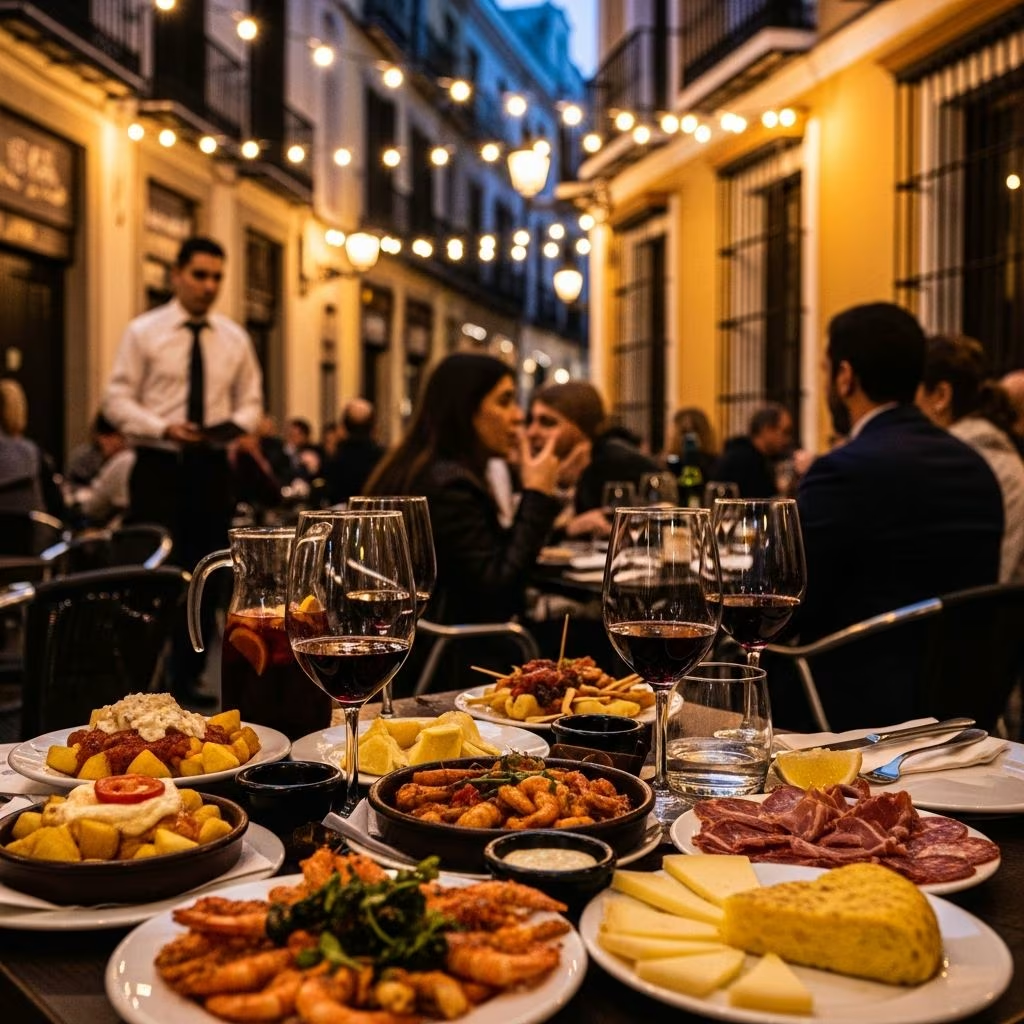
| Dinner (Cena) | 9:30–11:00 PM | Tapas, gazpacho, fish | Social gathering, lighter fare |
Lunch serves as the day’s nutritional centerpiece, often multi-course and shared, making an early dinner redundant. Restaurants rarely open before 8 PM, reinforcing the norm.
Beyond logistics, late dinners embody Spain’s emphasis on convivencia—shared living. Meals extend for hours, fostering conversations that strengthen family and community ties. Tapas culture encourages communal plates, passed around leisurely. In rural areas, agricultural legacies mean evenings were for gathering after fieldwork, a habit urban life hasn’t erased.
Cultural studies from Spain’s Consejo Superior de Investigaciones Científicas highlight how these rituals prioritize relationships, contrasting with faster-paced societies. Even children participate, underscoring inclusivity.
While nationwide, nuances exist. Northern regions like Galicia, cooler and rainier, sometimes dine slightly earlier, around 9 PM, per regional tourism data. Southern hotspots like Málaga push to 11 PM or later in peak summer. Islands such as Mallorca blend influences, with tourist areas adapting but locals holding firm.
Late nights spark discussions on well-being. Spaniards average 6.5–7 hours of sleep, per Spain’s National Statistics Institute, adapting via consistent routines. However, advocates for time zone reform argue misalignment contributes to fatigue, citing European Commission reports on circadian rhythms.
Nutrition experts note lighter dinners aid digestion before bed, aligning with Mediterranean diet principles endorsed by the World Health Organization.
Visitors can thrive by adapting:
Hydrate well in heat, and remember: patience enhances the experience.
In rural and southern areas, yes, but urban professionals often use it for extended lunches. It’s more cultural than literal napping today.
Most authentic ones open 8–9 PM; tourist spots may start earlier. Always check hours.
They start days at 7–8 AM, maintaining steady cycles. Late finishes are normalized.
Absolutely—children join, with bedtimes adjusted. It’s family-inclusive.
Some advocate time zone shifts for health, but tradition holds strong.
