

 Travel Essentials
 Travel Essentials

Explore how atmospheric scattering creates vibrant sunset colors, from fiery reds to golden oranges, and tips for witnessing nature's masterpiece worldwide.
 Travel Essentials
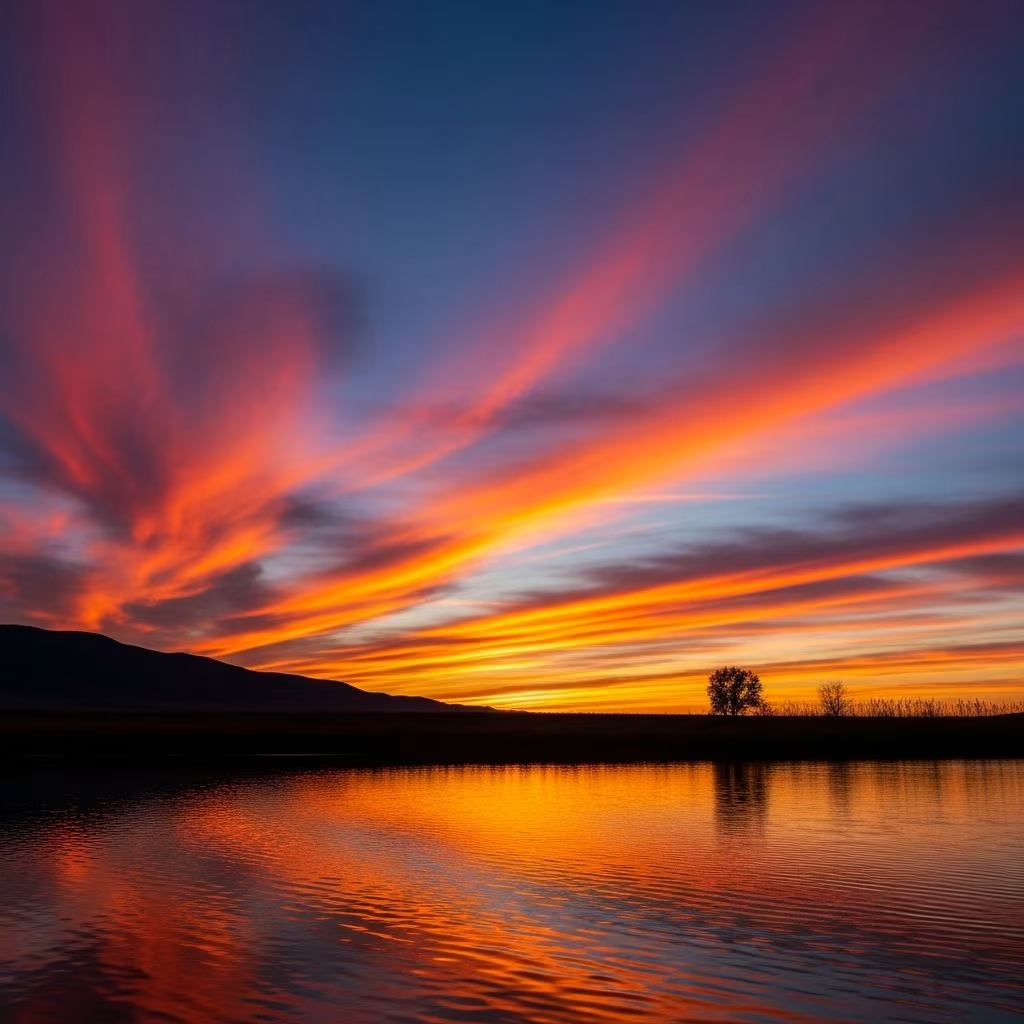
The transformation of the sky during sunset captivates travelers and nature enthusiasts alike, painting the horizon in vivid reds, oranges, and purples. This daily spectacle results from sunlight interacting with Earth’s atmosphere in precise ways, primarily through a process known as Rayleigh scattering.
Sunlight appears white but comprises a spectrum of colors, each with distinct wavelengths: shorter for blue and violet, longer for red and orange. As sunlight enters the atmosphere, gas molecules like nitrogen and oxygen scatter these wavelengths differently. Shorter blue waves deflect more readily than longer red ones, making daytime skies appear blue.
During midday, with the sun overhead, light travels a shorter path through the air, scattering just enough blue to dominate our view. Human eyes perceive blue over violet due to greater sensitivity to it and the sun’s stronger blue emission.
At sunset, the sun’s low position forces its light through a thicker atmospheric layer—up to 40 times more than at noon. This extended journey scatters nearly all blue and violet light away, leaving longer-wavelength reds, oranges, and yellows to reach our eyes.
Red light, with the longest wavelength, scatters least, often tinting the sun itself crimson near the horizon. Clouds or particles can amplify this by reflecting remaining warm hues, creating layered displays.
Beyond gases, aerosols like dust, smoke, or volcanic ash influence hues. Small particles scatter like molecules, intensifying reds; larger ones reflect light neutrally, muting blues for grayer skies.
Post-volcanic events, increased particulates yield spectacular sunsets, as seen after major eruptions when extra scattering filters more blues. Pollution can mimic this but often dulls vibrancy with haze.
| Particle Type | Effect on Sky Color | Example |
|---|---|---|
| Gas molecules (N2, O2) | Strong blue scatter daytime; red dominance at sunset | Clear skies |
| Dust/pollution (small) | Enhances reds/oranges | Desert sunsets |
| Cloud droplets (large) | Reflects incoming light evenly | Colorful cloud glows |
| Volcanic ash | Intensifies warm tones dramatically | Eruption aftermath |
Sunset colors vary by location and season. In polar regions like Antarctica, prolonged low sun angles create extended displays. Tropical areas with clean air show purer gradients, while coastal spots add moisture for pastels.
Winter sunsets often glow brighter due to clearer, colder air with fewer water droplets. Summer humidity can soften edges but mute intensity.
Chase these horizons for optimal color shows:
Timing matters: Arrive 30-45 minutes early, face west, avoid city lights.
Across history, sunsets symbolize renewal. Ancient Egyptians revered Ra’s descent; Polynesians navigated by color cues. Today, photographers capture them via golden hour rules—soft light 1-2 hours post-dawn or pre-dusk.
In travel, they anchor rituals: Bali cliffside offerings, Sedona vortex meditations. Understanding the science deepens appreciation, turning passive views into informed awe.
Enhance memories with these techniques:
Apps like PhotoPills predict peak colors via clear-sky indexes.
Rayleigh scattering removes shorter blue wavelengths over the sun’s long atmospheric path, favoring reds.
Rare ‘green flash’ occurs when refraction bends green light as the sun dips, visible in clear conditions.
Yes, thin cirrus clouds reflect warm light, adding texture without blocking the sun.
Sometimes; particulates scatter more blues, intensifying oranges, but heavy smog grays them out.
Higher elevations mean thinner air, less scattering—crisper blues by day, subtler sunsets.
Climate change alters aerosols and humidity, potentially muting colors via increased cloud cover. Conservation preserves clear vistas; reducing emissions maintains scattering purity.
Volcanic monitoring predicts ‘super sunsets’ from eruptions, blending science with spectacle.
