

 Travel Essentials
 Travel Essentials

Explore Toulouse's distinctive pink architecture, rich Occitan heritage, aerospace innovation, and culinary traditions that make this southwestern French city a must-visit destination.
 Travel Essentials
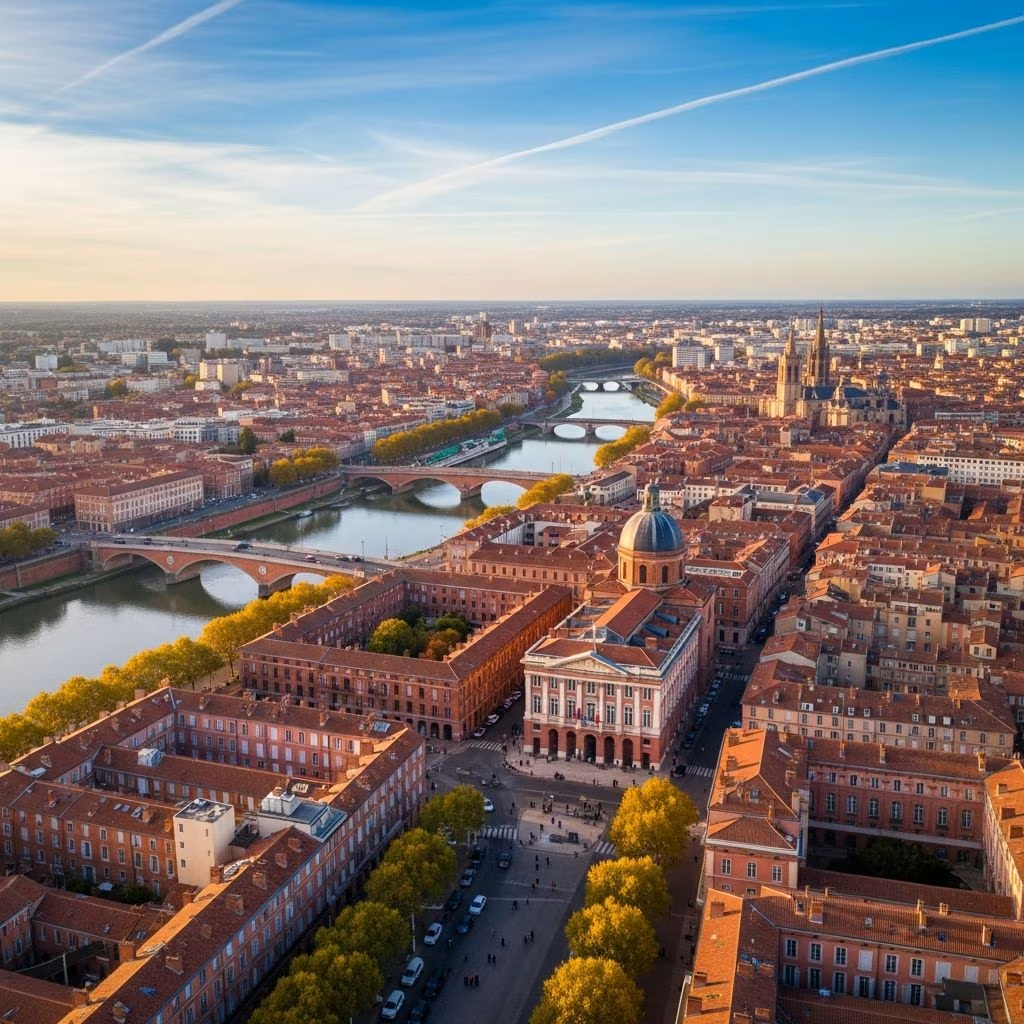
Toulouse has earned its reputation as one of Europe’s most visually distinctive cities, though the reasons behind its famous appearance extend far deeper than simple aesthetics. The city’s defining characteristic—its unmistakable rosy glow—stems from centuries of architectural tradition rooted in geography and material availability. The surrounding region’s clay-rich soil provided abundant natural resources that shaped both the city’s appearance and its economic development over centuries.
The predominant construction material throughout Toulouse’s historic center consists of **terracotta bricks**, crafted from clay deposits abundant in the Garonne flood plain. These aren’t modern additions to create a tourist attraction; rather, they represent genuine architectural continuity dating back to Roman times. The bricks possess a distinctive reddish-orange hue, ranging from deep crimson to softer rose tones depending on light conditions, clay composition, and firing techniques employed by traditional manufacturers.
What makes Toulouse’s pink tone particularly enchanting is its dynamic quality. During golden hour—that magical period surrounding sunset—the entire cityscape appears to shimmer with warmth, as if the buildings themselves are glowing from within. On overcast days, the terracotta takes on more muted, ember-like qualities. This chromatic variability ensures that no two visits to the city feel entirely identical; seasonal changes and weather patterns continuously reshape the visual experience.
Understanding Toulouse requires acknowledging its profound historical complexity. Unlike many French cities that experienced devastating damage during twentieth-century conflicts, Toulouse largely escaped major destruction, allowing its medieval street patterns and architectural heritage to survive largely intact. This preservation wasn’t accidental but rather reflected the city’s limited industrialization compared to northern French centers—a characteristic that ultimately proved advantageous.
Medieval Toulouse served as a cultural powerhouse in southwestern France. The city’s prestigious university, established in 1229, attracted scholars from across Europe and contributed to making Toulouse a center of intellectual discourse. This academic tradition continues influencing the city’s character today; contemporary Toulouse hosts approximately 125,000 students, creating a youthful, dynamic atmosphere that contrasts with its ancient monuments.
The city’s rebellious spirit manifests throughout its history. From its involvement in the Cathar heresy controversies to resistance movements during the Spanish Civil War and World War II, Toulouse consistently positioned itself as a refuge for independent thinkers and those seeking political asylum. This legacy of openness and resilience remains embedded in local culture, evident in contemporary festivals, artisan markets, and community-centered social practices.
Toulouse’s economic history reveals fascinating transitions in fortune and specialization. During the sixteenth century, wealth flowed into the city through an unexpected source: the **woad plant** (pastel in French). This yellow-flowered species produces leaves containing precious blue dye compounds highly valued throughout medieval and early modern Europe. Toulouse merchants controlling woad trade routes accumulated substantial fortunes, which they invested in constructing grand civic and religious buildings—many of which remain standing today.
Evidence of this blue-dye wealth persists throughout the city. Visitors observing carefully will notice shutters, lampposts, doors, windows, and ornamental ironwork rendered in subtle blue-grey tones that complement the ancient red brickwork perfectly. This color scheme wasn’t chosen arbitrarily; it reflects the mercantile heritage that literally painted the city’s aesthetic identity.
The twentieth and twenty-first centuries brought completely different economic drivers to Toulouse. The city emerged as a crucial center for aerospace development and research. Both the Concorde supersonic aircraft and the modern Airbus commercial aircraft were developed and manufactured in Toulouse. This transformation positioned the city as a hub for cutting-edge technological innovation, creating an unusual juxtaposition: medieval cobblestone streets and centuries-old churches standing near state-of-the-art research facilities and manufacturing complexes.
While Toulouse’s distinctive coloring attracts initial attention, the city’s architectural treasures reward deeper exploration. Several structures merit particular attention from visitors interested in European medieval and Renaissance design.
Basilique Saint-Sernin represents one of France’s most significant Romanesque structures and holds UNESCO World Heritage designation. This massive pilgrimage church, originally constructed to house relics of Saint Saturnin (the city’s patron saint), dominates the urban landscape through its imposing brick tower. The basilica’s architectural importance extends beyond aesthetics; it illustrates the technical sophistication of medieval builders and the religious devotion that shaped medieval French society.
Place du Capitole functions as Toulouse’s principal public square and civic heart. Dominated by the imposing Capitole building—seat of municipal governance—this plaza serves as a gathering point for locals and visitors. The building’s interior features remarkable painted ceilings that deserve examination. The surrounding plaza encourages people-watching and provides authentic glimpses into contemporary urban life.
Pont Neuf (despite its name meaning “New Bridge,” dating to the sixteenth century) spans the Garonne River with seven elegant arches. This structure provides one of the city’s most photographed vantage points, particularly during sunset when the terracotta buildings and river reflections create particularly striking compositions.
Beyond these major attractions, wandering **Rue du Taur** offers visitors an immersive experience of authentic Toulouse character. This pedestrian-friendly street connects Saint-Sernin basilica to Place du Capitole while passing through areas combining historic architecture with contemporary boutiques, galleries, and cafés. The contrast between ancient brickwork and modern retail activity encapsulates Toulouse’s fundamental character: a living city that honors its past while embracing contemporary culture.
Toulouse serves as a cultural capital for Occitanie, the southwestern region of France. The Occitan language—distinct from standard French—maintains active usage despite centuries of French political centralization efforts. Observant visitors notice bilingual signage throughout the city, with French paired alongside Occitan text. This linguistic continuity represents more than nostalgic preservation; it reflects genuine cultural persistence and regional pride.
Occitan traditions permeate local festivals, culinary practices, and artistic expressions. Unlike regions where traditional culture exists primarily in museums or academic contexts, Toulouse’s Occitan heritage remains woven into contemporary daily life. Community celebrations, artisan markets, and food traditions explicitly connect modern residents with ancestral practices, creating genuine cultural continuity rather than artificial reconstruction.
Toulouse’s gastronomic reputation extends far beyond casual dining. The city’s food traditions tell stories of regional history, agricultural traditions, and cultural values. Cassoulet—a hearty bean and meat dish originating from the Occitanie region—represents perhaps the most iconic local culinary creation. This rustic preparation combines white beans with preserved duck, pork, and sausage, requiring hours of slow cooking. More than simply a dish, cassoulet embodies regional identity and traditional cooking methods that contemporary cooks still honor.
Beyond cassoulet, Toulouse offers sophisticated dining reflecting both traditional Occitan cooking and contemporary French culinary innovation. The city supports numerous restaurants ranging from casual bistros to Michelin-starred establishments. Food represents a vehicle through which travelers can experience authentic local culture—understanding what people eat reveals fundamental information about their environment, values, and history.
Modern Toulouse experiences remarkable demographic and economic growth. The city’s population continues expanding rapidly, with projections suggesting it will surpass Lyon as France’s third-largest metropolitan area. This growth reflects Toulouse’s appeal to younger residents, professionals, and entrepreneurs drawn by quality of life, cultural amenities, and economic opportunities.
The average age of Toulouse residents hovers around 36 years, suggesting a population skewing younger than many established European cities. With approximately 125,000 students enrolled in local universities, the city radiates youthful energy reminiscent of a university town despite its substantial population. This demographic composition creates dynamic neighborhoods featuring creative enterprises, contemporary art spaces, revitalized museums, and emerging culinary scenes alongside historical attractions.
Optimal Travel Timing: Toulouse’s climate supports year-round visitation, though spring and autumn typically offer the most pleasant weather. Summer temperatures can become quite warm, while winter remains relatively mild by northern European standards.
Transportation: The city’s pedestrian-friendly layout encourages walking through historic districts. Public transportation systems efficiently connect peripheral areas with the city center.
Accommodation Range: Toulouse offers accommodation options spanning luxury hotels to budget-friendly hostels, with numerous mid-range establishments offering excellent value. Properties located near Place du Capitole provide convenient access to principal attractions.
Toulouse appeals to different traveler demographics for distinct reasons. History enthusiasts appreciate the authentic medieval architecture and continuous cultural traditions. Art lovers find inspiration in galleries, museums, and contemporary creative spaces. Food-focused travelers discover culinary traditions rooted in regional character. Technology-interested visitors can explore aerospace heritage and modern innovation centers. Nature appreciators enjoy riverside walks along the Garonne and green spaces throughout the metropolitan area.
The city fundamentally rejects superficial tourism experiences. Rather than functioning primarily as a museum preserving past glories, Toulouse constitutes a genuine community where historical consciousness coexists with contemporary dynamism. Visitors who spend time simply observing daily life—sitting in cafés, walking quiet streets, conversing with residents—often report experiencing Toulouse’s most meaningful aspects.
Whether drawn by architectural beauty, cultural heritage, culinary excellence, or simple human curiosity, Toulouse offers experiences that resonate long after departure. The Pink City’s distinctive appearance provides an immediate visual marker, but the city’s true character emerges through deeper engagement with its history, people, traditions, and contemporary vitality. Toulouse exemplifies how historic cities can honor ancestral legacies while remaining genuinely alive, relevant, and continuously evolving.
