

 Travel Essentials
 Travel Essentials

Venice faces rising floods from climate change and sinking ground. Discover why it happens, how MOSE helps, and what’s next for the city.
 Travel Essentials
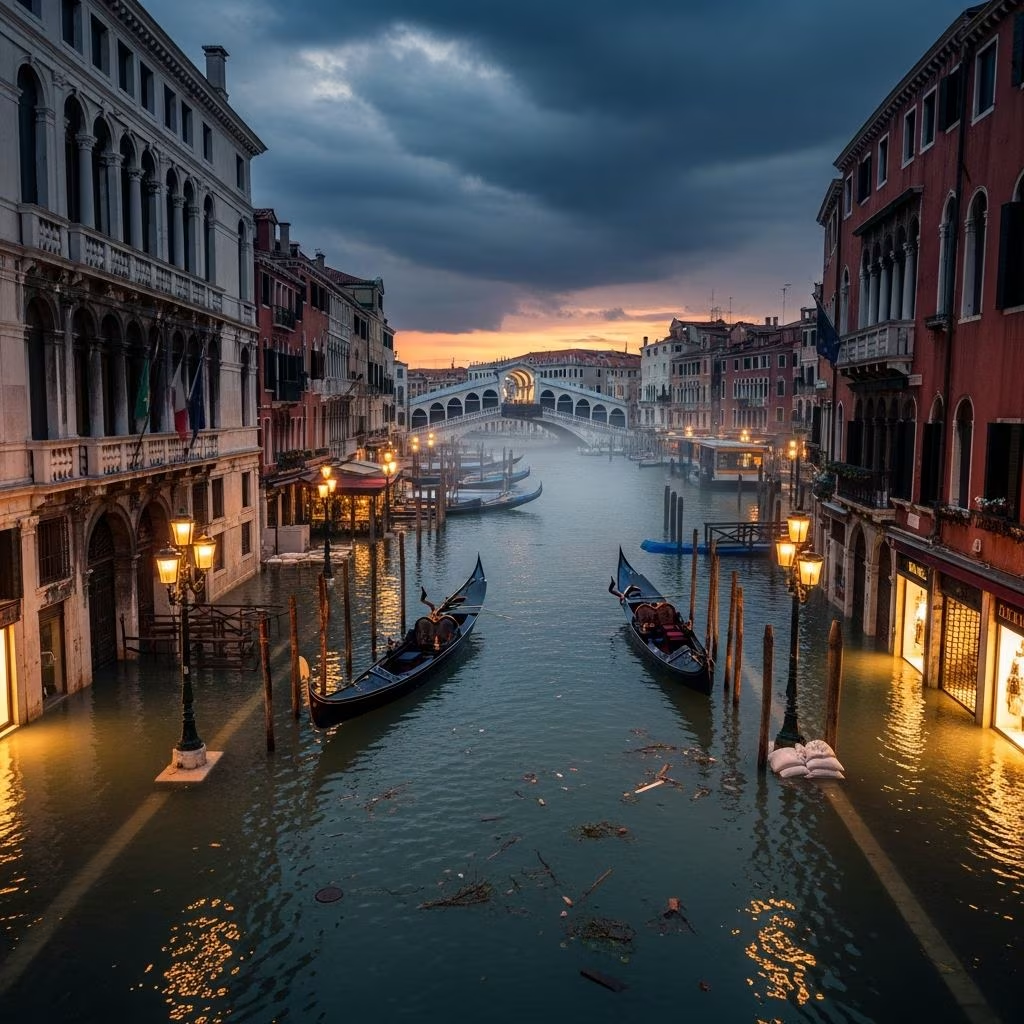
Venice, the floating jewel of Italy, faces an existential threat from recurrent flooding that submerges its streets, damages its treasures, and disrupts daily life. Known locally as acqua alta, these high tides have intensified over decades, culminating in devastating events like the one in November 2019. This article delves into the roots of the crisis, its profound consequences, ongoing mitigation efforts, and what lies ahead for this UNESCO World Heritage site.
On November 12, 2019, Venice endured one of its most severe floods in recorded history. Water levels surged to over 1.87 meters above average, inundating more than 80% of the city at peak. Historic palazzos, churches like St. Mark’s Basilica, and countless businesses were swamped, marking the second-worst flooding since records began in 1872.
This event was not isolated. Official data reveals 324 intense high-water episodes since 1872, with over half—187—occurring in the last 30 years alone. The frequency underscores a troubling escalation, transforming seasonal nuisances into perennial perils.
Venice’s vulnerability stems from its unique geography: 118 islands in a shallow lagoon open to the Adriatic Sea. High spring tides naturally pose risks, but seasonal sirocco winds exacerbate this by generating storm surges that push seawater inland.
Combined, these forces have made flooding more frequent and fierce. Since the 20th century, subsidence rates have accelerated, exposing the city further to Adriatic tides.
The 2019 flood inflicted over €1 billion in damages, per then-Mayor Luigi Brugnaro. Water gutted homes, shops, and museums; salt-laden surges corroded foundations and artworks. Tourism, Venice’s economic lifeline, plummeted with cancellations, compounding losses.
| Flood Event | Water Height | Areas Flooded | Estimated Cost |
|---|---|---|---|
| November 12, 2019 | 1.87m+ | 80-85% | €1B+ |
| Historical Average (1872-2019) | Variable | Partial | N/A |
| Post-1989 Trends | Increasing | City-wide | Billions cumulative |
Residents wade through knee-deep water in iconic squares, while restoration efforts strain limited budgets. Cultural losses are incalculable—frescos and mosaics suffer irreversible decay from repeated saltwater exposure.
After decades of delays and cost overruns, the MOSE (Modulo Sperimentale Elettromeccanico) system activated in 2020. Comprising 78 movable gates across three lagoon inlets, it rises with compressed air to block surges up to 3 meters.
Its debut on October 3, 2020, thwarted a 1.35-meter tide, keeping the city dry—a triumph after $6.2 billion invested (triple initial estimates). Since then, MOSE has prevented numerous inundations, proving its worth during high-tide seasons.
Experts like Fabio Pranovi from Ca’ Foscari University warn that MOSE alters tidal flushing, potentially harming sediment dynamics and biodiversity in the lagoon ecosystem.
Projections indicate sea levels could rise 0.5-1 meter by 2100, outpacing MOSE’s design limits. Venice’s subsidence—1-2mm annually—compounds this, demanding adaptive strategies beyond barriers.
Acqua alta frequency has surged: from occasional to dozens yearly. Human-induced warming, via greenhouse gases, fuels fiercer storms and thermal expansion, hitting coastal gems like Venice hardest.
MOSE buys time, but holistic plans are essential. Initiatives include:
Venice’s plight mirrors other low-lying cities—Amsterdam, Miami—urging worldwide coastal engineering innovations.
Travelers can still experience Venice safely. Monitor tide forecasts via apps; visit during low season (spring/fall); explore higher-ground neighborhoods like Cannaregio. High boots are sold locally for acqua alta days—embrace the adventure!
Yes, at 1-2mm/year from subsidence and sea rise, though groundwater bans since 1970 slowed it.
Over 50 times yearly recently, vs. rare pre-1980s.
It blocks inlet surges but not extreme rises or rain floods; maintenance is ongoing.
Yes, with precautions—many enjoy the surreal watery streets.
Over €1 billion in damages and lost revenue.
Venice’s resilience shines through innovation and spirit. Yet, without global climate action, its canals may forever claim more territory. Plan your visit thoughtfully, supporting sustainable efforts to preserve this lagoon legend.
