


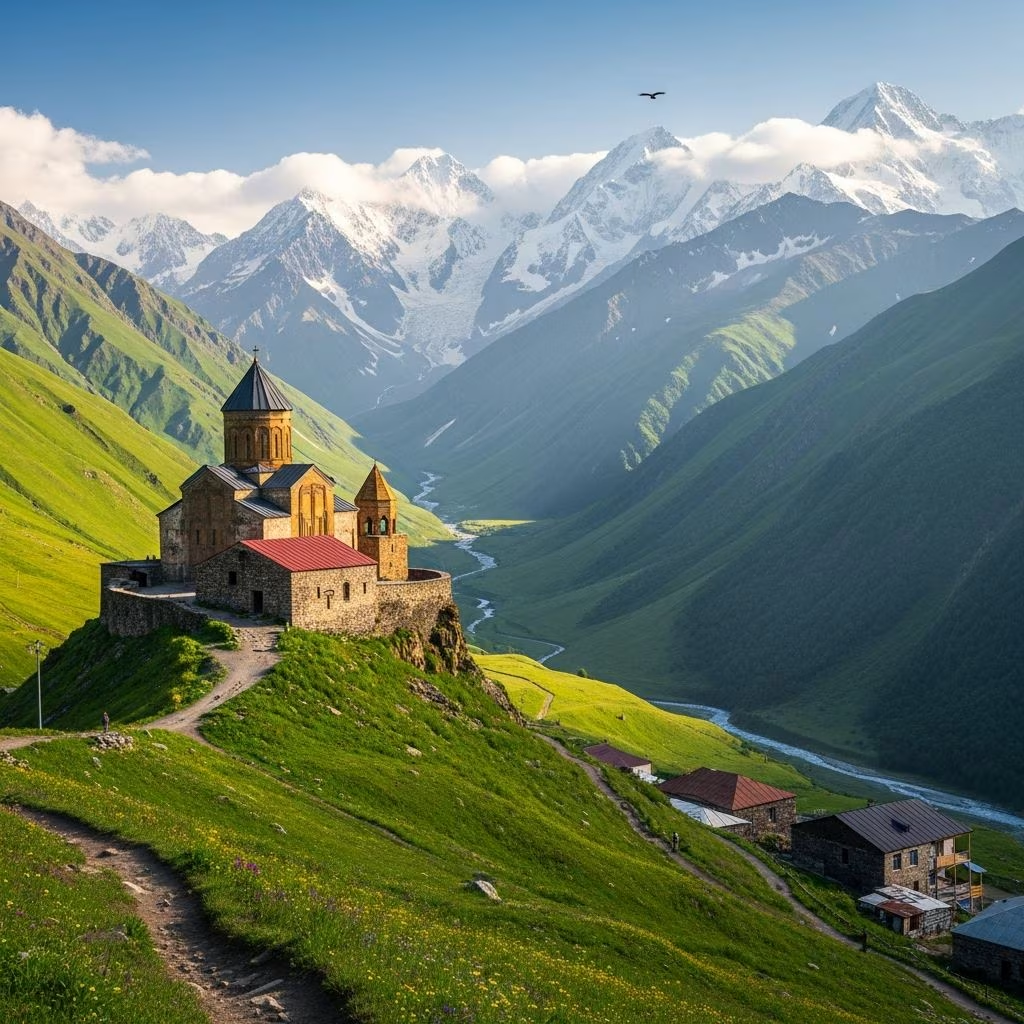
Nestled between two continents, Georgia presents an extraordinary blend of natural beauty and cultural richness that captivates visitors immediately upon arrival. The country’s geographic position, cradled between the towering peaks of the greater and lesser Caucasus mountain ranges, creates a diverse landscape where subtropical valleys exist alongside imposing peaks. Within this relatively compact territory lies a destination that has remained largely under the radar of mainstream tourism, yet offers experiences that rival far more widely recognized travel destinations. The genuine warmth of the Georgian people and their deep commitment to hospitality transform a simple visit into an immersive cultural experience.
The Magnetic Appeal of Georgia’s Capital
Tbilisi serves as the beating heart of Georgia, a city that embodies the contradictions and charm that define modern Georgia. The capital presents a fascinating juxtaposition of architectural styles, from meticulously preserved historical structures to contemporary buildings that rise alongside crumbling Soviet-era residences. This visual tapestry tells the story of a nation that has navigated complex historical periods while maintaining its distinct identity.
Visitors to Tbilisi discover neighborhoods that each possess their own character and appeal. The old town features narrow winding streets, traditional Georgian houses with ornate wooden balconies, and numerous cultural landmarks that have withstood centuries of change. The city’s energy pulses through its vibrant café culture, eclectic restaurant scene, and dynamic nightlife that caters to diverse interests and preferences.
The city functions as an excellent base for exploring Georgia, offering convenient transportation connections to virtually every corner of the country. Yet Tbilisi itself demands at least two to three days of exploration to adequately experience its many attractions, museums, galleries, and cultural institutions. The sulfur baths, once enjoyed by visiting dignitaries and now open to all travelers, provide a window into the city’s layered history.
Monastic Heritage and Spiritual Landmarks
Georgia’s deep reverence for its religious heritage manifests throughout the country in countless ancient monasteries and cathedrals that dot the landscape. These structures represent far more than architectural achievements; they embody the spiritual resilience of the Georgian people across centuries of occupation and cultural pressure. The monasteries showcase remarkable stone masonry, intricate carvings, and strategic positioning that often takes advantage of dramatic natural settings.
The significance of these religious sites extends beyond their historical importance. Many monasteries continue to function as active religious centers, allowing visitors to witness living traditions that stretch back over a millennium. The spiritual atmosphere within these walls creates a profound sense of connection to Georgia’s past, even for visitors without particular religious inclinations.
Exploring these monastic centers provides insights into Georgian Christianity, which developed its own distinct character separate from both Eastern Orthodox and Western traditions. The architectural evolution visible across different sites demonstrates how Georgian builders adapted and refined their techniques over successive centuries. Many of these monasteries are easily accessible from major towns, making them integral components of any Georgian itinerary.
The Timeless Appeal of Underground Cities
Georgia contains extraordinary cave towns that showcase the ingenuity of ancient inhabitants who carved dwellings directly into cliff faces. These remarkable sites demonstrate sophisticated understanding of architecture, engineering, and defensive positioning centuries before modern construction techniques emerged. Visitors can walk through chambers that once housed thriving communities, touching walls that craftsmen shaped by hand in antiquity.
The cave towns served multiple purposes throughout history, functioning as monasteries, fortresses, and residential centers depending on the era and prevailing circumstances. The density of carved structures sometimes surprises first-time visitors, who underestimate the scale and complexity of these underground settlements. The natural rock formations create an otherworldly aesthetic that photographs cannot fully capture; the experience demands physical presence to appreciate completely.
These sites require varying levels of physical fitness to explore thoroughly, with some areas involving steep climbs and narrow passages. However, most major cave town complexes offer accessible routes for visitors of different abilities. The combination of natural geological formations and human artistic achievement creates a unique historical narrative visible nowhere else in the world.
Viticulture and Georgian Wine Traditions
Georgian winemaking traditions represent one of the world’s oldest continuous wine cultures, with archaeological evidence confirming grape cultivation and wine production dating back over eight thousand years. This ancient heritage places Georgia among the earliest civilizations to develop systematic viticulture, predating many of Europe’s celebrated wine regions by millennia. The importance of wine extends throughout Georgian culture, influencing art, literature, social customs, and national identity.
The country’s diverse microclimates and soil compositions across different regions produce wines with distinctive characteristics that reflect their terroir. The Kakheti region, located in eastern Georgia, stands out as the primary wine-producing area, though vineyards flourish throughout much of the country. Visiting wineries provides opportunities to taste wines in settings where production methods have evolved over generations while maintaining traditional techniques.
Georgian wine culture intertwines with hospitality traditions, as offering wine to guests represents a fundamental expression of respect and welcome. Wine tastings often accompany meals and social gatherings, providing the opportunity to understand how wine functions as a social lubricant and cultural marker within Georgian society. The experience of sharing Georgian wine creates personal connections that transcend typical tourist-guide relationships.
Culinary Experiences Beyond Ordinary
Georgian cuisine represents one of the world’s most underrated culinary traditions, combining flavors and cooking methods that reflect the country’s geographic position and historical connections. The food emphasizes fresh ingredients, aromatic spices, and preparation techniques refined over centuries. Dishes featuring walnuts, pomegranate, and locally-grown vegetables create complex flavor profiles that distinguish Georgian cooking from other regional traditions.
The hospitality culture extends prominently into dining customs, where hosts prepare elaborate meals showcasing regional specialties and family recipes. Travelers who venture into local neighborhoods will discover modest establishments serving authentic cuisine that tourists-focused restaurants cannot replicate. The opportunity to eat where locals eat provides invaluable insights into daily life and food priorities.
Bread holds special significance in Georgian food culture, with traditional methods of preparation preserved in bakeries throughout the country. The distinctive cone-shaped loaves, known as puri, emerge from wood-fired ovens using techniques passed down through generations. Sharing bread with guests maintains ancient symbolic importance, representing trust and acceptance within Georgian social customs.
Diverse Landscapes Within Compact Territory
Georgia’s relatively small geographic footprint contains astonishing landscape diversity that rivals destinations spanning far greater distances. Black Sea beaches provide coastal recreation opportunities, while the Caucasus mountains offer alpine scenery and challenging terrain for experienced mountaineers. Between these extremes lie lush valleys, underground cave systems, and unique geological formations that create visual variety at every turn.
The ability to transition between dramatically different environments within hours of driving positions Georgia as an ideal destination for travelers seeking varied experiences without extensive travel time. Morning activities might include swimming in the Black Sea, while afternoon drives lead to mountain communities where entirely different climates and cultures prevail. This accessibility creates possibilities for adventure tourism that countries with larger territories sometimes struggle to provide efficiently.
Adventure enthusiasts discover numerous pursuits suited to different skill levels and interests. Skiing in designated mountain areas satisfies winter sports enthusiasts, while horseback riding through valleys appeals to those seeking less strenuous outdoor experiences. Paragliding from mountain heights offers adrenaline-pumping activities for experienced adventurers, while hiking trails of varying difficulty provide options for casual nature walkers.
Vibrant Urban Centers Beyond the Capital
While Tbilisi commands attention as the national capital, other Georgian cities possess distinct character and appeal worth exploring. Secondary urban centers like Kutaisi and Batumi offer more intimate encounters with Georgian city life while maintaining their own cultural attractions and characteristics. These cities remain less overwhelmed by tourism than Tbilisi, allowing visitors to experience Georgian urban culture with fewer crowds.
Batumi, Georgia’s primary beach resort on the Black Sea coast, combines maritime recreation with botanical gardens, historical old town architecture, and artistic street installations. The city represents Georgia’s more relaxed, vacation-oriented atmosphere compared to Tbilisi’s intensity. The surrounding mountains provide dramatic backdrop to seaside relaxation, and nearby towns offer day-trip opportunities.
Kutaisi, Georgia’s second-largest city, often receives less attention than it deserves from international visitors. The city serves as a regional hub with convenient access to spectacular nearby attractions including monastery complexes, cave systems, and scenic natural areas. For travelers seeking authentic Georgian city experiences without tourist infrastructure, Kutaisi provides excellent opportunities for cultural immersion.
Affordability and Value for Travelers
Georgia’s cost structure makes it an exceptionally affordable destination compared to Western Europe or other popular tourism regions. Accommodation across price ranges remains reasonably priced, from luxury hotels to comfortable guesthouses operated by local families. Food costs rank among Europe’s most reasonable, particularly when dining at local establishments frequented by residents rather than tourist-focused restaurants.
The favorable exchange rate combined with genuine hospitality and reasonable prices creates extraordinary value for travelers maintaining modest budgets. Visitors discover that travel experiences achievable in Georgia would consume substantially greater resources in other European destinations. This affordability extends across transportation, entertainment, and recreational activities, allowing extended stays within reasonable budgetary constraints.
The value proposition attracts digital nomads and long-term travelers seeking destinations where modest incomes support comfortable lifestyles. Many visitors plan shorter Georgian visits but extend stays after discovering how far their resources stretch. The combination of reasonable costs and exceptional experiences creates compelling arguments for Georgia among budget-conscious travelers.
Frequently Asked Questions About Visiting Georgia
What is the best time to visit Georgia?
Spring (April-May) and autumn (September-October) offer ideal weather for most visitors, with comfortable temperatures and lower rainfall compared to other seasons. Summer allows beach tourism but brings crowds and heat to Tbilisi. Winter suits skiing enthusiasts but makes some mountain areas inaccessible.
Is Georgia safe for tourists?
Georgia maintains good safety records in areas frequented by tourists, with minimal crime affecting visitors. Standard travel precautions apply, as with any destination. Local authorities generally maintain order, and travelers following common sense practices encounter few issues.
What language do Georgians speak?
Georgian represents the primary language, featuring a unique alphabet developed specifically for the language. English proficiency varies by age and urban versus rural location, with younger Tbilisi residents more likely to speak English. Learning basic Georgian phrases enhances interactions with locals.
How long should I spend in Georgia?
One to two weeks allows meaningful exploration of major attractions and regions. Shorter visits focus on Tbilisi and nearby sites, while extended stays enable deeper regional exploration. The compact size permits diverse experiences without excessive travel time.
What should I pack for Georgia?
Layered clothing suits Georgia’s variable climates across seasons and elevations. Comfortable walking shoes prove essential for exploring cities and archaeological sites. Sun protection, particularly at higher elevations, warrants attention. Specific items depend on intended activities and travel season.
Planning Your Georgian Adventure
Visiting Georgia requires minimal advance planning compared to many destinations, as the country maintains straightforward visa policies for most nationalities and functions well-equipped with tourism infrastructure. Transportation networks efficiently connect major attractions, and accommodation options span all price ranges and preferences. The welcoming attitude toward visitors means that even spontaneous decisions often result in rewarding experiences.
Creating an itinerary should balance time in Tbilisi with regional exploration, allowing adequate time for each component. Including at least one monastic site, a wine region visit, and exploration of geological formations ensures diverse experiences. Remaining time can expand visits to secondary cities or adventure activities based on personal interests.
Georgia’s position between Europe and Asia, combined with its distinctive culture and welcoming people, creates a travel destination that rewards curious visitors with authentic experiences and genuine human connections. The combination of natural beauty, cultural heritage, culinary excellence, and affordability positions Georgia as an exceptional choice for travelers seeking destinations that offer genuine value and memorable encounters.
References
- 6 Reasons to Visit Georgia — Lonely Planet. Accessed April 2026. https://www.lonelyplanet.com/articles/6-reasons-to-visit-georgia
- Georgia Travel Guide: Why You Should Visit — Georgia Travel (Official Tourism Board). Accessed April 2026. https://georgia.travel/why-georgia
- 15 Reasons to Visit Georgia — My Wanderlust Travel Blog. Accessed April 2026. https://www.mywanderlust.pl/visit-georgia/

