

 Travel Essentials
 Travel Essentials

Explore why winter transforms the Côte d'Azur into an ideal destination combining coastal beauty, snow sports, festivals, and authentic local experiences.
 Travel Essentials
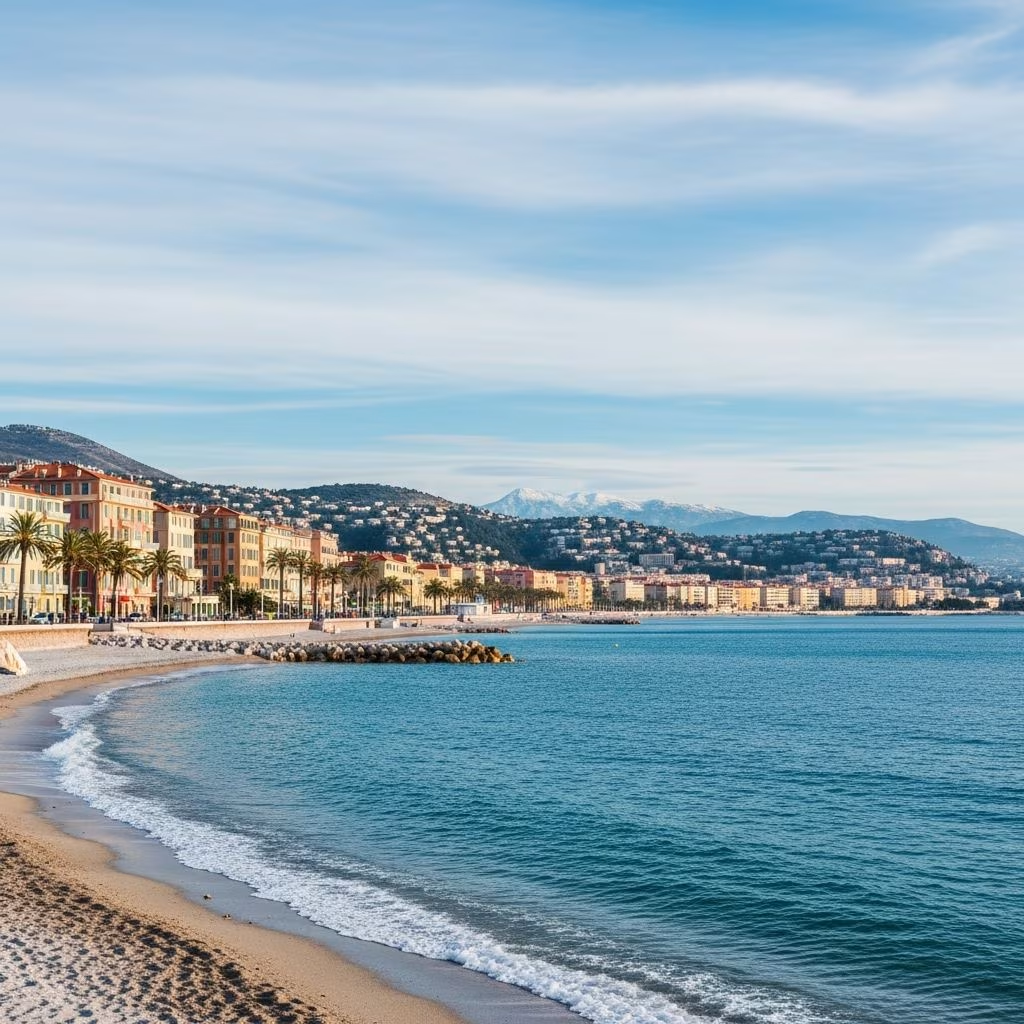
The Côte d’Azur, commonly known as the French Riviera, holds a reputation as Europe’s premier summer destination. However, the region transforms into something equally captivating during the colder months. Winter presents a unique opportunity to experience this celebrated coastline without the overwhelming crowds, excessive heat, or inflated summer prices. The season offers an intriguing blend of mild Mediterranean weather, Alpine adventure, vibrant local celebrations, and outdoor pursuits that rival any other time of year.
One of the most compelling reasons to visit the French Riviera during winter involves its surprisingly pleasant weather patterns. Unlike Northern European destinations that endure harsh freezes and limited daylight, the Côte d’Azur maintains a temperate climate throughout the winter season. Temperatures typically hover around 12 degrees Celsius (54 Fahrenheit), with readings rarely dipping below freezing. This characteristic climate allows visitors to comfortably explore coastal regions and engage in outdoor activities that would be impractical in more northerly locations.
The combination of mild temperatures and abundant Mediterranean sunshine creates ideal conditions for extended hiking expeditions, leisurely seaside walks, and outdoor cultural experiences. Visitors can enjoy warm afternoons without the intensity of summer heat, making physical activities more pleasant and sustainable throughout longer days of exploration.
From January through March, the French Riviera undergoes a remarkable seasonal transformation centered around one of Europe’s most impressive botanical events. The mimosa flowers reach their peak bloom during these months, creating spectacular displays of golden yellow blossoms across hillsides and valleys. This phenomenon serves as the inspiration for the famous Route du Mimosa, a 130-kilometer scenic journey that winds through picturesque villages and natural landscapes.
The route originates in Bormes-les-Mimosas and culminates in the alpine town of Grasse, traversing through the ancient Tanneron massifs, where Europe’s largest mimosa forest flourishes. Along this journey, villages host guided tours and specialized walks designed to educate visitors about mimosa cultivation and the region’s horticultural heritage. The golden-hued landscape provides extraordinary photography opportunities and connects travelers with rural communities that often go unvisited during peak tourism seasons.
Perhaps the most distinctive aspect of winter travel on the Côte d’Azur involves its unusual geographical positioning. Within approximately ninety minutes of travel, visitors can transition from Mediterranean beaches to Alpine ski terrain. This remarkable juxtaposition means that an active traveler could realistically begin their morning swimming in coastal waters and conclude their afternoon skiing on snow-covered slopes.
Several ski resorts operate in proximity to the coast, including Isola 2000 (featuring 120 kilometers of slopes), Auron (offering 135 kilometers of skiing terrain), Valberg, and Saint Dalmas le Selvage. These facilities operate within the Mercantour National Park region and provide varied terrain suitable for beginners through advanced skiers. While not positioned among Europe’s most prestigious or expensive ski destinations, these resorts offer competitive value compared to renowned facilities like Mont-Blanc and Courchevel.
The practical reality of this arrangement allows visitors to experience genuine Alpine après-ski culture—complete with mulled wine and mountain hospitality—while maintaining proximity to sophisticated Mediterranean dining and accommodation options. This contrasting experience epitomizes what makes winter on the French Riviera distinctive.
The French Riviera encompasses approximately 200 kilometers of interconnected coastal trails, many of which follow historical pathways originally used by customs officials. These trails reveal dramatic landscapes and lead to exceptional viewpoints that demonstrate why the region captivated artists, writers, and travelers for centuries.
Notable walking options include the Cap de Nice route, which extends from Port Lympia eastward to Villefranche-sur-Mer, providing panoramic views of coastal architecture and Mediterranean vistas. The Nietzsche Trail offers a more challenging inland option, ascending from Èze-sur-Mer to the medieval village perched above, rewarding hikers with sweeping perspectives of the coastline below.
Additional notable trails include the Cap Ferrat coastal path and the Le Corbusier Promenade along Cap Martin, where distinctive modernist villas designed by Eileen Gray and Le Corbusier dot the landscape. Winter weather creates optimal conditions for these walking pursuits—temperatures remain comfortable, and the lower tourist volume means trails remain pleasantly uncrowded. Hikers benefit from clear air quality and the rare combination of Mediterranean palms, red-stone gorges, and snow-capped Alpine peaks within a single viewshed.
The winter season brings distinctive cultural events to French Riviera communities, offering visitors authentic connections to local traditions and heritage. These celebrations represent deep historical roots rather than tourist-oriented fabrications.
Nice’s renowned Carnaval, documented as occurring since 1294, represents one of Europe’s oldest continuously celebrated festivals. This multi-week event features elaborate floats, costumed participants, and culminates in the ceremonial “Burning of the King,” symbolizing the end of winter festivities and the transition toward spring. Thousands of participants and spectators create an energetic atmosphere throughout Nice’s central districts.
Menton, located on the French-Italian border, hosts the Fête du Citron (Lemon Festival) during winter months, transforming the town’s public spaces with enormous sculptural creations constructed from fresh lemons and oranges. This visually striking celebration celebrates the region’s citrus agricultural heritage while attracting visitors interested in innovative public art installations.
Villefranche-sur-Mer presents the Combat Naval Fleuri, a distinctive tradition where local fishermen perform ceremonial gestures of tossing flowers into the harbor waters. This poetic observance connects maritime cultural heritage with the region’s aesthetic sensibilities.
While beach swimming may not dominate winter itineraries, the Mediterranean shoreline offers distinctive experiences during this season. Without summer crowds, beaches become accessible for contemplative walks, photography, and genuine appreciation of coastal landscapes.
Antibes presents one of the Côte d’Azur’s most visually dramatic coastal perspectives, particularly during sunrise and sunset hours when atmospheric conditions create extraordinary color displays. The beach offers views of snow-capped Alpine peaks appearing to rise directly from Mediterranean waters—a visual phenomenon impossible to fully appreciate during hazy summer months.
La Croisette beach in Cannes provides views of the Lérins Islands and maintains the sophisticated atmosphere the town is known for. Additional notable winter-friendly beaches include the crystal-clear waters of Pampelonne in Ramatuelle, the secluded coves of Pointe de l’Aiguille Natural Park near Théoule-sur-Mer, and the family-oriented Cavalière beach in Le Lavandou. The Promenade des Anglais in Nice, stretching along the coastline, becomes an ideal setting for sunset walks without the density of summer pedestrian traffic.
Winter travel to the French Riviera presents practical advantages alongside its natural and cultural attractions. Accommodation rates decline substantially compared to summer months, making luxury hotels and prestigious resorts financially accessible to broader visitor demographics. Restaurant reservations become available without weeks of advance planning, and tourist-related services operate with shorter wait times.
Nice emerges as the optimal base for winter exploration due to its scale, transportation infrastructure, and seasonal stability. As the Riviera’s primary transportation hub, Nice offers regional train connections extending both eastward toward Monaco and Italy and westward toward Cannes and Provence. The city maintains sufficient cultural institutions, dining establishments, and accommodation variety to remain engaging even during lower-tourism periods.
Travelers should exercise caution regarding winter scheduling for activities requiring advance payment, as certain hill villages and specialized experiences may operate on limited schedules. Public transportation frequencies to inland communities may decrease compared to summer availability, necessitating advance research and planning.
Beyond conventional downhill skiing, the Alpine regions accessible from the Côte d’Azur support diverse winter pursuits. Snowshoeing provides an accessible alternative to skiing, requiring minimal equipment and allowing exploration of snowy landscapes at relaxed paces. Dog sledding experiences connect visitors with traditional winter transportation methods while traversing pristine mountain terrain. Cross-country skiing and snowboarding offer additional options for visitors with varying skill levels and interests.
Guided nature experiences at resorts like Gréolières les Neiges combine morning skiing sessions with afternoon wildlife observation and nature walks conducted by knowledgeable local guides. This integration of contrasting winter activities provides comprehensive engagement with the Alpine environment.
Winter light quality on the French Riviera produces distinctive visual characteristics that photographers and visual artists specifically value. The lower sun angle creates extended golden-hour periods during morning and evening hours, while the presence of snow-capped mountains provides dramatic compositional contrasts against Mediterranean waters and coastal vegetation.
The reduced atmospheric haze common during summer months allows for exceptional clarity and visibility during winter conditions. Photographers benefit from these atmospheric properties when capturing both landscape vistas and architectural details within coastal communities.
Winter temperatures on the Côte d’Azur average approximately 12 degrees Celsius (54 Fahrenheit), with freezing temperatures occurring rarely. This mild climate allows comfortable outdoor exploration and activity participation.
Mimosa flowers bloom most prominently from January through March, creating the optimal window for experiencing the Route du Mimosa and related botanical attractions.
Most coastal communities are located approximately ninety minutes from accessible ski resorts via direct bus connections or personal vehicle travel.
Yes, winter accommodation rates, dining costs, and tourist service prices typically decrease substantially compared to peak summer season pricing.
Major winter celebrations include Nice’s Carnaval (February), Menton’s Fête du Citron (February-March), and Villefranche-sur-Mer’s Combat Naval Fleuri (varying dates).
Constructing an effective French Riviera winter itinerary requires balancing several strategic considerations. Begin by establishing a central base—Nice remains the optimal choice due to its transportation accessibility and seasonal stability. From this foundation, organize daily expeditions targeting specific experiences: dedicated walking days, ski resort visits, festival attendance, and village exploration.
Research specific operating schedules for accommodations, restaurants, and attractions in smaller communities, as some establishments reduce winter hours or close seasonally. Consider purchasing regional transportation cards to optimize travel between coastal and Alpine destinations.
The French Riviera’s winter season represents a distinctive convergence of Mediterranean charm and Alpine adventure. The region’s mild temperatures, cultural celebrations, accessible outdoor recreation, and comparative solitude create opportunities for meaningful travel experiences distinct from its celebrated summer reputation. Whether pursuing active skiing expeditions, contemplative coastal walks, cultural festival attendance, or leisurely Mediterranean café culture, winter transforms the Côte d’Azur into a multifaceted destination that genuinely fulfills the promise of European travel excellence.
