

 Travel Essentials
 Travel Essentials

Wetlands are powerhouse ecosystems offering flood control, water purification, biodiversity support, and economic benefits. Explore their global importance and conservation needs.
 Travel Essentials
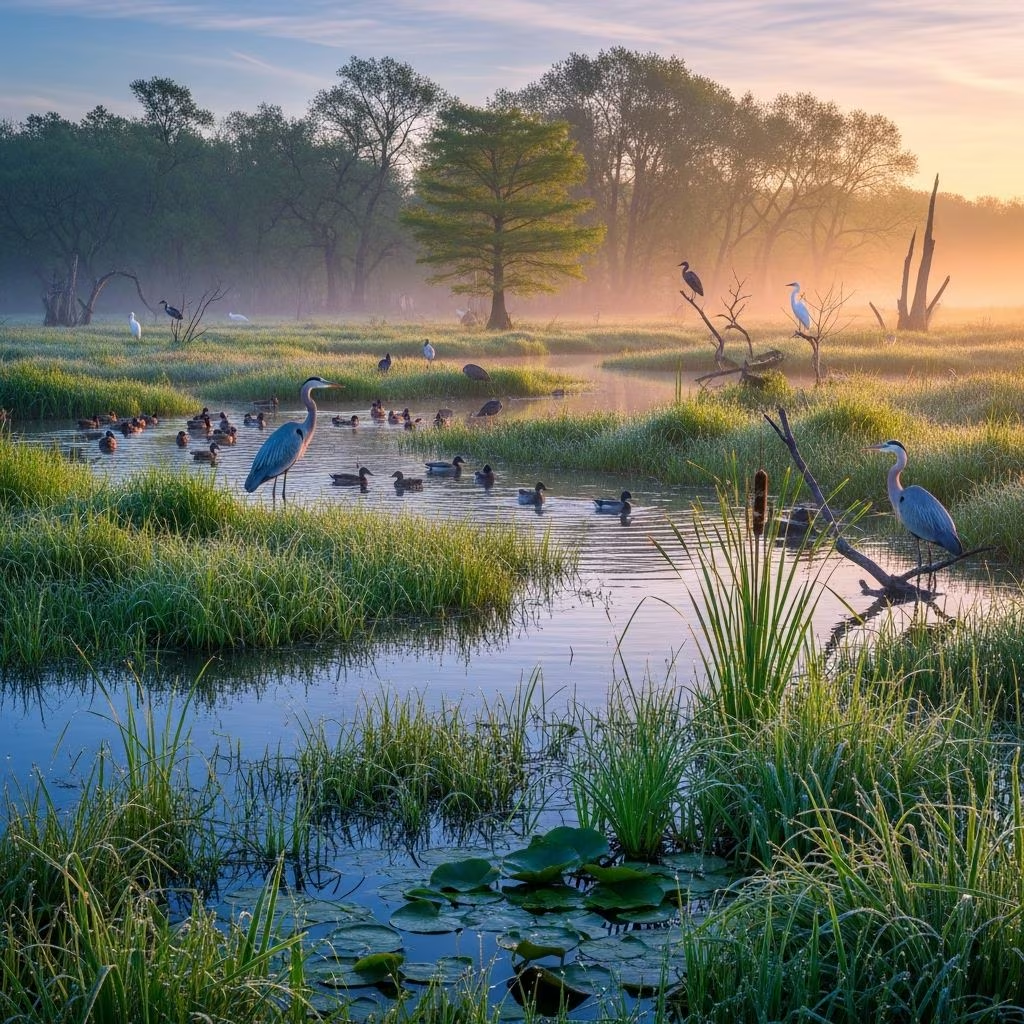
Wetlands, encompassing marshes, swamps, bogs, and mangroves, represent some of the most productive ecosystems on Earth. Covering just 6% of the planet’s land surface, they support 40% of all plant and animal species, making them indispensable for global biodiversity.
These water-saturated lands perform a multitude of functions that underpin life. From filtering pollutants to storing floodwaters, wetlands act as nature’s kidneys and sponges. Wetland vegetation traps sediments laden with heavy metals, pesticides, and fertilizers, ensuring cleaner water reaches rivers, lakes, and aquifers.
Moreover, they regulate water cycles by absorbing excess rainfall and releasing it gradually, maintaining stream flows during dry spells. This storage capacity is vital in watersheds, buffering ecosystems from extreme flows and supporting agriculture, urban water supplies, and recreation like fishing and rafting.
Wetlands are cradles of diversity, hosting species that depend on their shallow waters, nutrient-rich soils, and abundant vegetation. Over 80% of wildlife in regions like the Intermountain West relies on them at some life stage.
This rich tapestry supports global cycles of water, nitrogen, and sulfur, with microbes and plants playing key roles.
In an era of intensifying storms, wetlands’ role in disaster mitigation is paramount. They function like natural sponges, trapping rainwater, snowmelt, and floodwaters, then releasing them slowly to lower peak flows and reduce erosion.
Urban wetlands are especially valuable, countering runoff from impervious surfaces. Along the Mississippi River, remaining bottomland wetlands store floodwater, though diminished capacity highlights the cost of losses—once holding 60 days’ worth, now just 12.
Coastal wetlands, including mangroves, buffer shorelines against waves and storms. Their dense roots stabilize soils, preventing erosion and protecting communities from sea-level rise.
Wetlands excel at improving water quality. Plants, soils, and microbes remove contaminants: nitrogen through uptake and transformation, phosphorus and metals via storage.
As carbon sinks, they sequester CO2 via photosynthesis, storing it in biomass and soils, aiding climate moderation. This rivals forests in impact, enhancing ecosystem resilience amid climate change.
| Function | Environmental Benefit | Human Benefit |
|---|---|---|
| Flood Storage | Reduces peak flows | Protects property, saves lives |
| Water Filtration | Removes pollutants | Clean drinking water, recreation |
| Carbon Sequestration | Mitigates GHG | Climate stability |
| Erosion Control | Stabilizes shores | Coastal protection |
| Habitat Provision | Supports biodiversity | Fishing, ecotourism jobs |
Beyond ecology, wetlands drive economies. Coastal ones bolster commercial and recreational fisheries, supporting jobs and harvests. They enable hunting, wildlife viewing, and boating, generating revenue through ecotourism.
By safeguarding water for industry and agriculture, they underpin food production and urban sustainability. Restoring wetlands often proves cheaper than building levees or dredges for flood control.
Everglades, USA: This vast subtropical wetland filters water for millions, hosts rare species like the Florida panther, and demonstrates restoration’s potential despite historical drainage.
Pantanal, Brazil: The world’s largest tropical wetland pulses with seasonal floods, nurturing jaguars, hyacinth macaws, and caimans in a biodiverse floodplain.
Sundarbans, Bangladesh/India: Mangrove forests shield against cyclones, house Bengal tigers, and sequester carbon while purifying estuarine waters.
Okavango Delta, Botswana: An inland delta sustains elephants, hippos, and over 400 bird species, showcasing wetlands’ adaptability in arid zones.
These sites illustrate wetlands’ universal value, from tropics to temperate zones.
Despite benefits, wetlands face dire threats. Development, agriculture, and pollution have erased over half of U.S. wetlands since colonization. Globally, rates continue, converting vegetated areas to open water or dry land unsuitable for dependent species.
Climate change exacerbates issues via sea-level rise, droughts, and altered hydrology. Conservation efforts, like those by NOAA and Ducks Unlimited, focus on restoration and protection to reverse trends.
A wetland is land saturated with water long enough to support specialized vegetation and hydrology, including marshes, swamps, and peatlands.
They sequester carbon, store floodwaters amid heavier rains, and buffer coasts from rising seas.
Yes, as nurseries for fish like salmon and redfish, boosting commercial and recreational catches.
Conversion to farmland, urban sprawl, and drainage for development, with U.S. losses over 50%.
Advocate for policies, reduce pollution, support conservation groups, and visit responsibly.
Investing in wetlands yields compounding returns: resilient communities, thriving wildlife, and a stabler climate. Integrated management—blending science, policy, and local stewardship—can secure their future. As pressures mount, recognizing wetlands as foundational infrastructure, not wastelands, is key to planetary health.
