

 Travel Essentials
 Travel Essentials

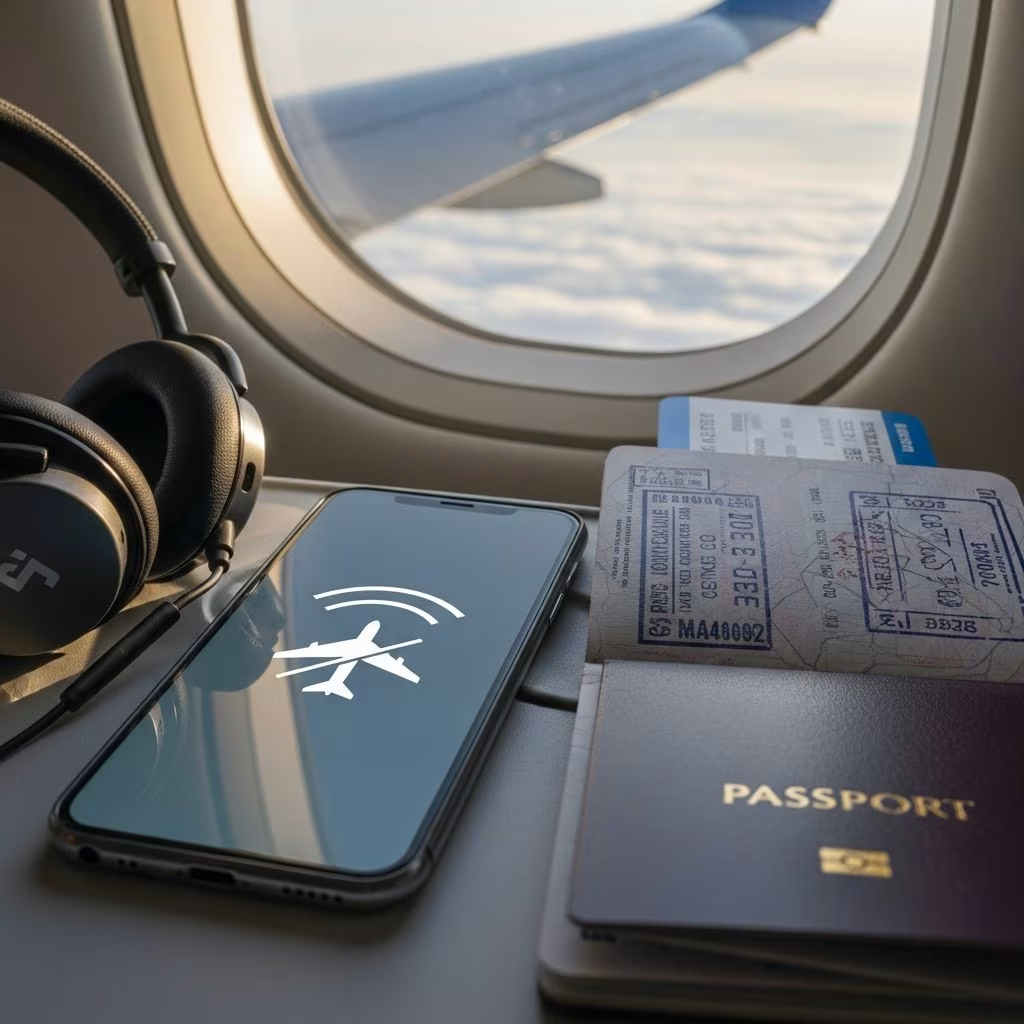
Why flight mode matters on planes: it helps prevent interference, protects aircraft systems, and keeps your device ready for offline use.
 Travel Essentials
Every passenger boarding an aircraft hears the familiar announcement: enable flight mode on all portable electronic devices. While this instruction may seem like a routine procedural requirement, the reasoning behind it encompasses critical safety considerations for modern aviation. The mandate to activate flight mode represents a sophisticated response to the technological challenges posed by wireless-enabled devices operating at high altitudes.
Modern aircraft depend on intricate communication and navigation systems that operate within specific frequency bands. When passengers carry smartphones, tablets, and laptops equipped with cellular transmitters, these devices emit radio-frequency signals capable of operating on similar frequencies to those used by aircraft instrumentation. The Federal Communications Commission recognized this potential conflict and established regulations prohibiting the airborne use of cell phones and wireless transmitters during flight.
Electronic devices continuously searching for cellular signals create a particular concern during critical flight phases. As an aircraft gains altitude during departure or descends during approach, ground-based cellular networks become inconsistent and fragmented. Passenger devices simultaneously attempting to connect to multiple cell towers generate cumulative electromagnetic noise that can potentially interfere with sensitive avionics equipment. Pilots have reported audible background interference and static in their communication headsets when electronic devices remain active during landing procedures—precisely when clear communication channels between pilot and air traffic control are most essential.
The concern extends beyond theoretical risk. According to Federal Aviation Administration records, reports of suspected interference to communication and navigation systems appear in both the NASA Aviation Safety Reporting System and the FAA’s Service Difficulty Reporting system. While documented incidents may be rare, the potential consequences of such interference during critical flight operations justify the precautionary approach embedded in aviation regulations.
Flight mode functions by systematically disabling all radio-frequency transmission capabilities on portable devices. This comprehensive shutdown includes cellular radio transmitters, Wi-Fi broadcasting, and Bluetooth connectivity. By eliminating these outbound signals, flight mode removes the source of potential electromagnetic interference that could affect:
The regulatory framework surrounding flight mode reflects a conservative safety philosophy appropriate for commercial aviation. Rather than awaiting definitive scientific proof of specific interference incidents, aviation authorities implement preventive measures to eliminate potential hazards. This approach prioritizes passenger safety above technological convenience, recognizing that the cost of preventing a single serious incident far outweighs the temporary inconvenience of disconnecting from cellular networks.
A secondary but equally important rationale for flight mode activation involves ground-based cellular networks rather than aircraft systems. When smartphones remain in standard operational mode at high altitude, they attempt to maintain connections with terrestrial cell towers positioned across large geographic areas.
During takeoff and landing, when aircraft fly at lower altitudes over populated areas, hundreds of passenger devices may simultaneously attempt to connect to ground-based networks. This mass simultaneous connection attempt generates what telecommunications professionals call a signal surge—essentially overwhelming the cellular infrastructure serving that geographic region. The resulting network congestion can degrade service quality for people using phones on the ground, while simultaneously generating interference within the aircraft’s vicinity.
Early analyses of this phenomenon revealed that cellular networks can experience cascading failures when exposed to sudden influxes of high-altitude signals attempting simultaneous connection. Flight mode prevents devices from initiating these connection attempts, protecting both the aircraft environment and the ground network infrastructure.
While regulatory compliance and safety represent the primary justifications for flight mode activation, the feature provides numerous practical advantages that benefit both individual travelers and aircraft operations:
| Benefit Category | Specific Advantage | Impact on Travel Experience |
|---|---|---|
| Battery Conservation | Disables power-intensive radio transmission and continuous signal searching | Extended device usage throughout multi-hour flights without requiring charging |
| Charging Speed | Reduced power consumption enables faster battery replenishment | Devices charge more quickly when using limited airline power sources |
| Data Cost Reduction | Prevents automatic background data synchronization and roaming charges | Eliminates surprise international roaming fees on cellular networks |
| Passenger Comfort | Eliminates notification sounds and call disruptions from other passengers | Creates quieter, more peaceful cabin environment for all travelers |
| Thermal Management | Lower processing power requirements reduce device heat generation | Prevents device overheating during prolonged use in confined aircraft cabins |
A common misconception suggests that flight mode renders devices completely unusable for entertainment and productivity during flight. In reality, most functionality remains available even with all transmitters disabled. Passengers can:
Many modern aircraft now provide Wi-Fi systems that allow passengers to re-enable Wi-Fi connectivity while maintaining flight mode’s protective benefits. This hybrid approach permits internet access through the aircraft’s secure network infrastructure rather than direct ground-based cellular connections. Similarly, GPS functionality continues operating in flight mode since GPS receivers don’t transmit signals—they only receive positioning information from satellites.
Susceptibility to electromagnetic interference varies depending on aircraft age and avionics modernization status. Older aircraft equipped with legacy navigation and communication systems may exhibit greater vulnerability to external RF signals compared to newer aircraft with modern shielded equipment. This variability explains why flight captains retain the authority to issue supplementary instructions regarding electronic device use during specific flight phases, particularly when weather conditions necessitate reduced-visibility landings where systems operate at maximum sensitivity.
Newer aircraft with updated avionics incorporate better electromagnetic shielding and filtering technologies that provide enhanced protection against external interference. However, aviation regulations maintain uniform flight mode requirements across all aircraft types rather than implementing variable standards based on equipment specifications. This standardized approach ensures consistent passenger behavior across all flight operations and prevents confusion or passenger non-compliance.
The Federal Aviation Administration maintains mandatory requirements that all passengers comply with flight mode activation. Flight attendants monitor compliance during pushback from the gate and report violations to the flight captain. Passengers who refuse to enable flight mode face potential removal from the aircraft, as their non-compliance represents a regulatory violation rather than merely a suggested preference.
The European Union has explored alternative approaches, recently approving limited 5G connectivity through aircraft-installed network equipment rather than direct ground cellular connections. This framework maintains passenger connectivity while directing all signals through controlled aircraft infrastructure rather than ground networks. However, US aviation regulations currently require full compliance with flight mode requirements unless an airline specifically permits Wi-Fi service as an alternative connectivity method.
Modern devices across iOS, Android, and other platforms provide straightforward methods for enabling flight mode. Most devices offer a quick-access toggle in the settings menu or notification center. Once activated, flight mode remains in effect until the passenger manually disables it, typically after the aircraft reaches cruising altitude and the flight crew announces that electronic device use is permitted.
Some devices allow partial customization of flight mode settings, enabling passengers to disable flight mode’s Wi-Fi restrictions while maintaining cellular transmitter shutdown. This flexibility accommodates airline policies that encourage Wi-Fi usage while maintaining mandatory cellular radio shutdown. Passengers should verify their specific device’s flight mode options to understand which features remain available during flight.
Can flight mode be selectively applied to only cellular signals while preserving other connectivity? Most devices allow re-enabling Wi-Fi and Bluetooth individually after flight mode activation, but not cellular transmitters. Complete cellular deactivation is typically mandatory.
What happens if one passenger fails to enable flight mode? While individual device-to-aircraft interference risk is minimal, collective non-compliance across hundreds of devices creates measurable cumulative risk. Regulatory enforcement addresses this through consistent passenger compliance expectations.
Does flight mode eliminate all electromagnetic emissions from a device? Flight mode disables intentional signal transmission but doesn’t eliminate all electromagnetic activity. However, it removes the primary sources of concern to aviation systems.
Can emergency calls function in flight mode? Most devices permit emergency calls even when flight mode is active, connecting through available networks to emergency services. This capability ensures passenger safety during in-flight emergencies.
Activating flight mode represents more than technical compliance—it demonstrates individual participation in aviation safety culture. Passengers who routinely enable flight mode without prompting reinforce the shared understanding that aviation safety depends on collective responsibility. This consistent behavior pattern supports flight crews’ ability to focus on operational tasks rather than enforcement of safety procedures.
The combination of regulatory requirements, safety considerations, and practical benefits makes flight mode activation an essential component of modern air travel. Understanding the reasoning behind this requirement transforms flight mode from an inconvenient restriction into a recognized safety measure that protects both aircraft operations and passenger experience. The next time you board an aircraft, enabling flight mode represents a conscious choice to prioritize safety—both yours and that of your fellow passengers.
