

 Travel Essentials
 Travel Essentials

Learn how sending postcards to yourself during travel creates meaningful keepsakes, preserves memories, and adds a unique dimension to your vacation experience.
 Travel Essentials
Travel has a unique way of filling our lives with extraordinary moments, fleeting observations, and sensory experiences that fade too quickly once we return home. While photographs capture visual moments and journal entries preserve thoughts, there exists a wonderfully nostalgic practice that combines the charm of the past with the practicality of the present: sending postcards to yourself. This simple yet meaningful tradition transforms your travel experience into something tangible that arrives at your doorstep weeks after your journey ends, allowing you to relive your adventures through the lens of the present moment.
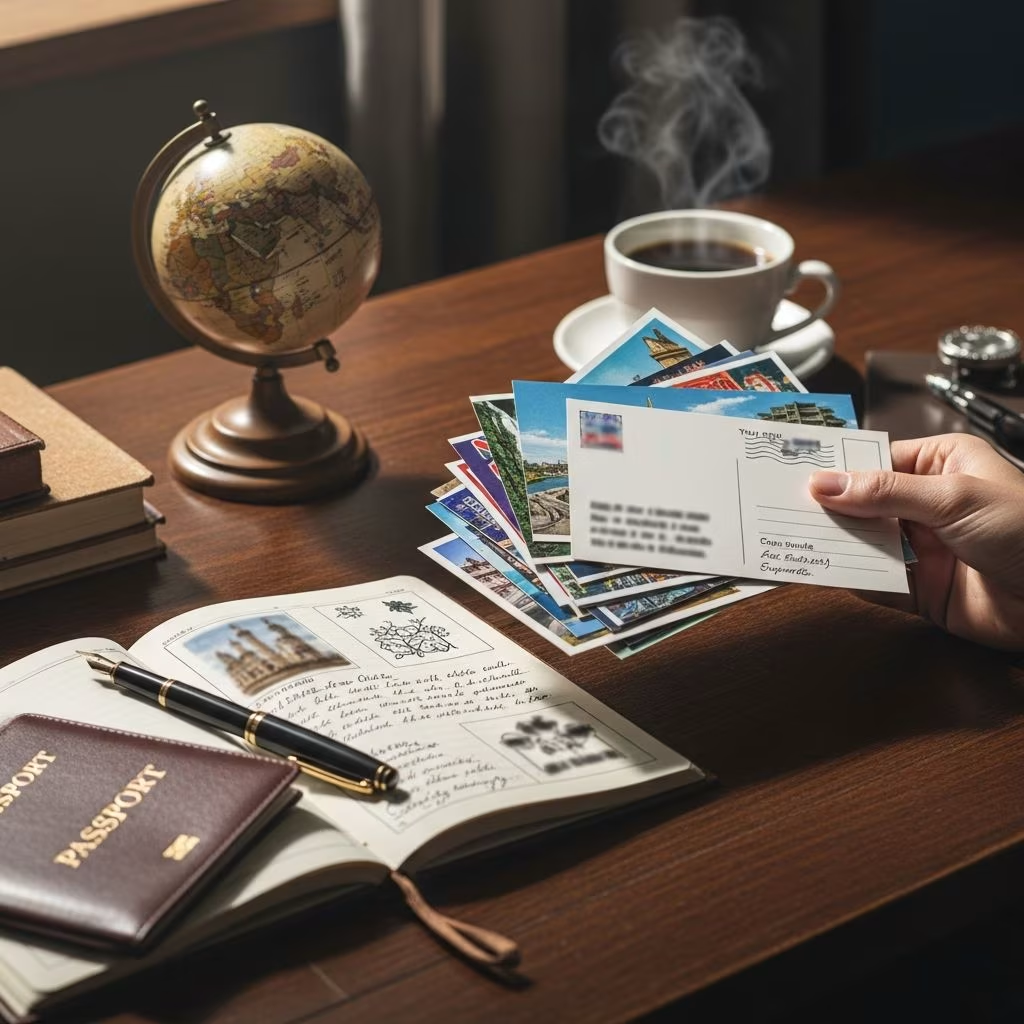
Sending postcards to yourself while traveling represents more than a quirky travel habit; it is a deliberate act of creating a bridge between your traveling self and your everyday self. When you mail a postcard from your destination, you are not simply sending a picture. You are encapsulating a moment in time, complete with your handwriting, the postmark of your location, and your reflections about that particular place. Unlike digital photographs stored in cloud storage or social media posts that disappear into algorithms, a physical postcard remains a tangible artifact of your journey.
This practice has roots in travel tradition dating back generations, when postcards were the primary means of communicating with loved ones from afar. Today, in an age of instant messaging and video calls, mailing postcards to yourself feels almost rebellious—a deliberate rejection of the ephemeral in favor of the permanent.
The most immediate benefit of sending postcards to yourself is that you return home with a collection of physical souvenirs that go beyond typical tourist merchandise. Rather than accumulating keychains or magnets that clutter drawers, postcards serve as legitimate mementos that capture the essence of places you visited. Each postcard features the artistic representation of your destination selected at that specific moment, frozen in time with your thoughts and observations written on the back. These cards become conversation starters and genuine reminders of your travels, far more meaningful than mass-produced souvenirs.
During travel, countless small details contribute to the richness of your experience: the name of a charming café you discovered, a hiking trail recommendation from a local, a restaurant dish that exceeded expectations, or a architectural detail that caught your eye. In the busy pace of traveling, these observations often fade from memory within days. By jotting down these details on the back of a postcard, you create a written record in your own handwriting from that exact moment. When the postcard arrives months later, it serves as a detailed reminder of specifics that photographs alone cannot capture.
Travel photographs often capture what places looked like, but postcards inscribed with your personal thoughts capture how you felt. By taking a moment to reflect on your emotional state—whether you were awestruck, peaceful, excited, or contemplative—and writing it on a postcard, you create a multidimensional memory that encompasses emotion alongside visual impressions. Receiving that postcard months later reconnects you not just to the place but to the person you were during that travel moment.
Beginning your postcard collection at the start of your trip provides the best opportunity to develop the habit. Rather than waiting until the final days when you are rushed or fatigued, purchasing postcards and stamps early ensures you have supplies available throughout your journey. Many travelers discover that designating specific moments—perhaps evening reflection time or a break during sightseeing—creates a consistent practice. This intentionality transforms postcard-writing from an afterthought into a meaningful component of your daily travel routine.
Unlike tourist shops where postcards depict only famous landmarks, many destinations offer cards featuring local artists’ perspectives, lesser-known neighborhoods, or contemporary cultural commentary. Taking time to browse different postcard options helps you select cards that genuinely represent your experience rather than what tourism boards believe should represent a destination. Local independent bookstores, community centers, and museum gift shops often carry postcards that reflect authentic local culture.
The limited space on a postcard’s back necessitates thoughtful composition. Rather than attempting to chronicle your entire day, focus on capturing one meaningful element: a discovery, an interaction, a revelation about yourself, or a detail you never want to forget. Some travelers adopt a postcard-per-day discipline, while others write one only when inspired by a particularly significant moment. Both approaches yield meaningful collections. The handwriting itself—the actual physical marks you make while sitting in a café or park in your destination—becomes part of the postcard’s charm and authenticity.
For travelers who prefer flexibility, digital postcard services have emerged that bridge traditional and contemporary travel documentation methods. These applications allow you to combine photographs taken throughout your day with brief written reflections, then automatically transform the compilation into a postcard that arrives in the mail. This approach offers the convenience of digital organization with the delayed gratification of receiving a physical postcard. Some services even permit you to design custom postcards with multiple photographs, creating a more comprehensive visual narrative of your travels.
Some travelers implement a hybrid approach by purchasing postcards but not mailing them until returning home, creating a travel journal while maintaining the cards for later mailing or physical collection. This eliminates concerns about postal reliability in certain destinations while preserving the writing-in-the-moment element. Others collect postcards throughout their trip without writing on them immediately, then inscribe thoughtful messages weeks later as a travel reflection project, combining memory work with the act of creating correspondence.
Over years of traveling and posting postcards to yourself, these cards accumulate into a substantial collection that documents your journey through life. Unlike digital photographs that exist in abstract cloud storage, physical postcards can be organized chronologically, by destination, by artistic style, or by theme. They become something tangible to hold, arrange, and revisit—a tactile history of your wanderlust. Display them in albums, frames, or organized boxes, creating a permanent archive that tells the story of your travels and growth.
Postcards collected across decades of travel become valuable items for future generations. These cards preserve not only the appearance of destinations during specific time periods but also capture personal reflections and handwriting from particular moments in your life. Children and grandchildren can examine these postcards to understand where their ancestors traveled, what captured their attention, and how they reflected on their experiences. This transforms individual travel mementos into family historical documents with genuine sentimental and archival value.
Postal reliability varies by country and destination. Major international postal systems generally maintain adequate services, though international postcards may take two to four weeks or longer to arrive. Addressing postcards clearly with complete postal codes and return addresses significantly improves delivery rates. Some travelers verify postal capabilities before traveling or use postal services at hotels that handle international mail professionally.
International postcard postage typically costs between one and two dollars per card, making even an extended trip’s collection relatively affordable compared to other travel expenses. Purchasing stamps in bulk at post offices rather than tourist shops often yields better rates. Many travelers find the minimal expense justified by the lasting value of the practice.
Postcards are available at airports, hotels, and tourist information centers up until your departure, making last-minute postcard selection and mailing feasible even if you forgot earlier. Many airports feature post offices or postcard kiosks designed specifically for travelers with this need. While writing reflective messages is simpler with daily practice, single postcards mailed during final travel moments still capture meaningful snapshots of your experience.
Many travelers use their home address knowing postcards will wait in mailboxes until they return. Alternatively, use a family member’s address or a trusted friend’s home for postcard delivery. Some hotels offer mail-holding services for guests, storing postcards until after you depart. Digital postcard services eliminate this concern by storing addresses in their systems and mailing automatically.
The true value of sending postcards to yourself extends beyond the individual cards themselves. The practice forces you to pause during travels and reflect consciously on your experiences. In actively selecting a postcard, composing a message, and investing effort in mailing it, you elevate that moment from something passively experienced to something deliberately documented. This mindfulness intensifies your engagement with destinations and creates stronger memories than would otherwise form.
Additionally, the delayed gratification of receiving postcards weeks after traveling creates a second wave of travel joy. Rather than exhausting your travel memories immediately through intensive photo sharing and storytelling, postcards provide a mechanism for gradually rediscovering your journey. Each arriving card triggers memories and reflections anew, extending the emotional benefits of travel far beyond your physical return home.
Whether you embrace traditional paper postcards, experiment with digital postcard services, or develop hybrid approaches combining both methods, the underlying principle remains consistent: intentionally creating tangible travel mementos that preserve both the specificity of place and the authenticity of your personal experience transforms momentary travel experiences into lasting sources of meaning and reflection.
