

 Travel Essentials
 Travel Essentials

Learn the risks of tying ribbons on luggage, from scanning failures to damage, plus proven strategies for bag identification and protection during air travel.
 Travel Essentials
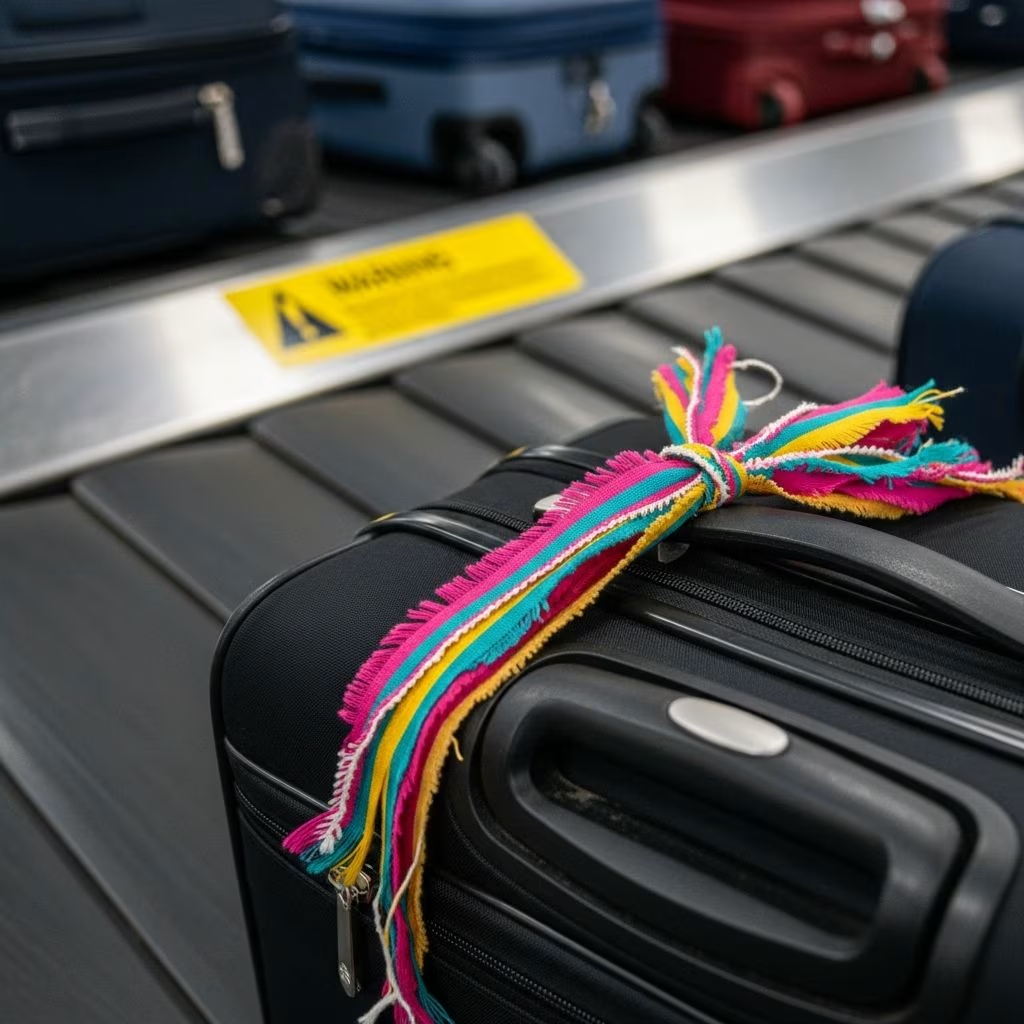
Travelers often seek simple ways to make their suitcases stand out amid seas of black bags at baggage claim. A bright ribbon tied around the handle appears as an easy solution. However, this practice carries hidden pitfalls that can turn a smooth journey into a logistical headache. Airport operations rely on precision machinery, and foreign objects like ribbons disrupt that flow, potentially sending your bag off course.
Modern airports process millions of bags daily through automated systems designed for speed and accuracy. Conveyor belts, scanners, and sorters work in tandem to route luggage to the correct aircraft. These machines use optical and RFID technologies to read tags and detect anomalies. When a ribbon dangles from a handle, it can snag on rollers or obscure barcodes, forcing human intervention.
Baggage handlers note that such obstructions slow down the entire line. A single problematic bag can halt processing for minutes, creating backlogs. In high-volume hubs, this ripple effect means flights depart without certain luggage. Data from aviation reports shows that mishandled bags cost airlines billions annually, with identification issues contributing significantly.
Ribbons don’t just hinder scanning; they pose physical dangers. Loose fabric catches on machinery gears, potentially ripping the ribbon—and worse, tearing the suitcase fabric. Handlers report instances where entangled bags flip violently, damaging wheels or zippers. One Dublin Airport worker highlighted how these extras turn automated lines into manual chaos, elevating the chance your bag misses its flight.
Stickers from past trips compound these issues. Faded or layered labels confuse optical scanners, mimicking the problems caused by ribbons. Clean, plain surfaces allow seamless processing.
Ditch the ribbon for reliable alternatives that prioritize function over flair. Luggage tags with bold, printed details—name, phone, email—remain visible without obstruction. Opt for bright-colored suitcases or those with unique patterns; brands now offer scuff-resistant shells in vivid hues.
| Method | Pros | Cons | Best For |
|---|---|---|---|
| Bright Luggage Color | Visible from afar, no attachments needed | Higher upfront cost | Frequent flyers |
| Custom Tags | Clear info, durable materials | May peel if cheap | All travelers |
| Engraved Plates | Permanent, tamper-proof | Less customizable | Premium bags |
| Digital Trackers | Real-time location via app | Battery-dependent | Tech-savvy users |
AirTags or similar GPS devices tucked inside provide peace of mind. These battery-powered trackers sync with your phone, alerting you to deviations. Pair them with internal labels: slip a contact card in an outer pocket for redundancy if externals fail.
Beyond identification, smart prep minimizes risks. Position suitcases wheels-up when checking in; this protects vulnerable parts from conveyor impacts. Select hardshell cases from reputable makers—they withstand rough treatment better than soft-sided ones.
Avoid quirky packing pitfalls. Confections like marzipan mimic explosive densities on X-ray screens, prompting swabs and delays. Stick to standard fare: clothes, liquids in 100ml bottles, electronics in carry-ons.
Mishaps happen despite precautions. Airlines follow Montreal Convention guidelines, compensating up to about $1,700 per bag for verified losses. Report issues immediately at the airport desk—delays weaken claims.
For delayed bags, airlines provide essentials like toiletries. Keep receipts; reimbursements cover reasonable needs. Damaged items qualify for repairs or replacements if handler fault is evident. Cabin baggage claims hinge on airline negligence—self-induced problems don’t count.
File online via airline portals with photos, tags, and itineraries. Track progress through apps. EU/UK passengers enjoy extra protections under stricter regs, including 21-day loss declarations.
Baggage professionals emphasize simplicity. “Streamlined bags fly through systems,” notes a veteran handler. “Extras create problems we can’t always fix in time.” Airports like Heathrow and JFK process over 100 million bags yearly, where efficiency reigns.
Surveys from travel associations reveal 1 in 150 bags mishandled globally. Proper prep slashes personal odds dramatically. Invest in quality over quick fixes for long-term reliability.
No—avoid it entirely. Even short pieces snag equipment. Use color or tags instead.
Report within hours, provide details, and use tracking tools. Compensation follows proof.
Mostly standardized, but older systems amplify ribbon risks. Global hubs prioritize automation.
Potentially, if flush and secure. Test for snags, but plain is safest.
Look for slash-resistant fabric, hidden compartments, and GPS compatibility.
Biometrics and AI enhance baggage tracking. RFID-embedded tags promise near-zero losses soon. Until then, heed handler wisdom: keep it simple, label smartly, pack wisely. Your next trip deserves arriving intact.
Word count: 1678 (excluding HTML tags and metadata).
