

 Travel Essentials
 Travel Essentials

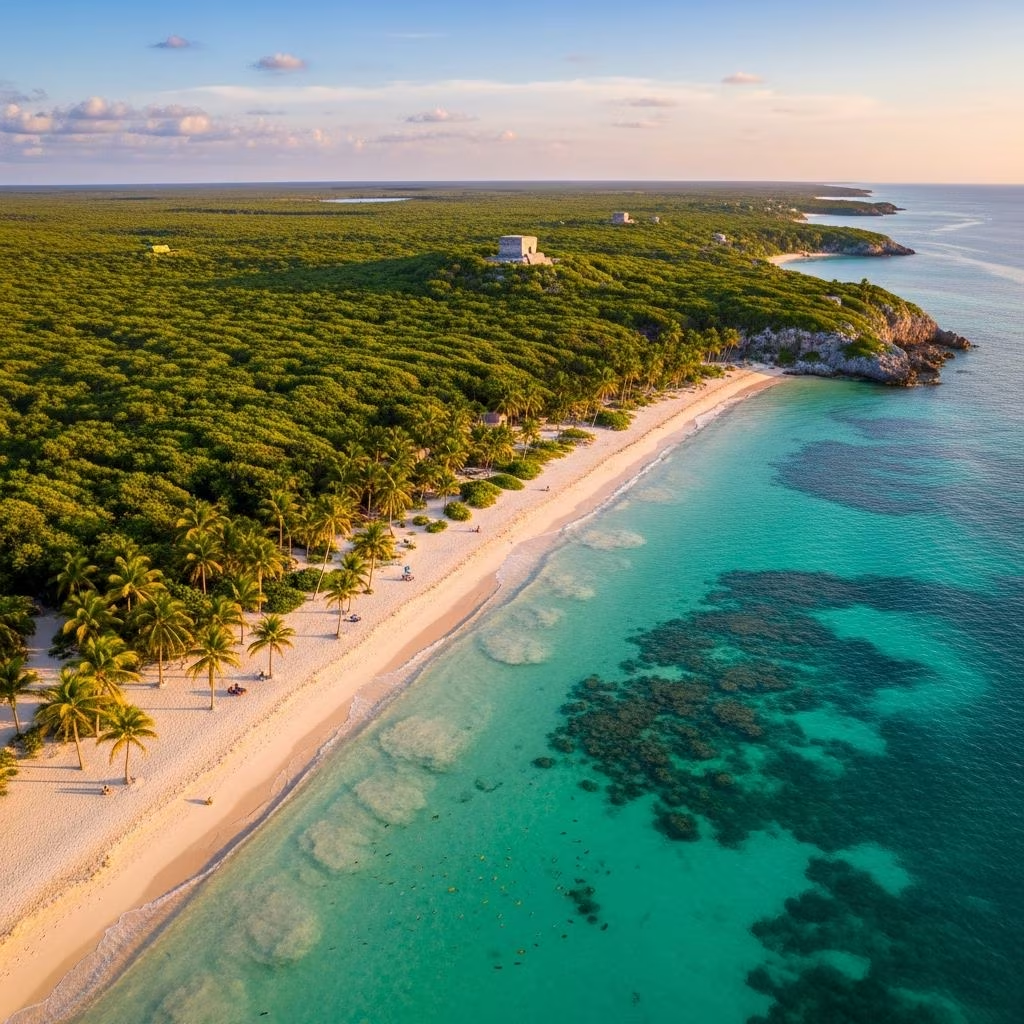
Explore Yucatán, Mexico's most peaceful state, featuring colonial architecture, natural wonders, and exceptional safety for tourists seeking authentic Caribbean experiences.
 Travel Essentials
When travelers consider destinations in Mexico, safety and tranquility often rank among the primary concerns. Yucatán has earned recognition as the most peaceful state in Mexico, making it an increasingly attractive choice for those seeking a combination of cultural richness, natural beauty, and secure travel conditions. This southeastern peninsula offers far more than just statistics—it represents a unique blend of Mayan heritage, colonial charm, and modern tourism infrastructure that welcomes visitors from around the world.
The designation of Yucatán as Mexico’s most peaceful state comes from comprehensive data analysis and standardized metrics. According to the Mexico Peace Index, which ranks all 32 Mexican states, Yucatán achieved a score of 1.254, significantly outpacing other regions. This index, now in its eighth year of evaluation, measures peace using five key indicators, with scores ranging between 1 and 5, where 1 represents the most peaceful rating and 5 indicates the least peaceful.
The index relies exclusively on data from Mexican government organizations, ensuring that rankings reflect verified security statistics and verified incident reports. Following Yucatán at the top of the rankings are Tlaxcala (1.517), Chiapas (1.613), and Campeche (1.622), all demonstrating significantly lower peace scores compared to more challenged regions. This hierarchy provides potential visitors with a clear framework for understanding regional safety comparisons across Mexico.
Several interconnected factors contribute to Yucatán’s position as Mexico’s safest tourism destination. The state benefits from a combination of geographic isolation, a well-developed tourism infrastructure, and a local economy heavily dependent on visitor satisfaction and repeat tourism. Unlike border regions or states with significant drug trafficking corridors, Yucatán’s remote location on the Yucatán Peninsula naturally limits criminal activity related to organized crime networks.
The regional economy thrives on tourism and agricultural exports rather than illicit industries. This economic foundation creates a vested interest in maintaining stable, welcoming communities where visitors feel secure. Local authorities and business leaders understand that their prosperity depends directly on maintaining Yucatán’s reputation as a safe destination.
Additionally, Yucatán hosts several of Mexico’s most significant archaeological and cultural sites, which attract substantial international tourism and investment in security infrastructure. The presence of major resort areas, archaeological parks, and recognized cultural attractions brings both tourism revenue and governmental attention to maintaining safety standards.
Yucatán’s appeal extends well beyond safety metrics into its architectural heritage and historical significance. The state features some of Mexico’s most impressive colonial cities, with Mérida and Campeche standing out as particularly picturesque examples of preserved Spanish colonial architecture.
Mérida, the state capital, represents one of Mexico’s most walkable and charming cities. The historic center features elegant plazas, colorful colonial buildings, and tree-lined streets that invite leisurely exploration. Local residents take pride in their city’s cleanliness and organization, contributing to an atmosphere that feels welcoming and secure for tourists. The Plaza Mayor, surrounded by significant historical buildings including the Cathedral of San Ildefonso, serves as the cultural heart of the city.
Campeche, located on the coast, maintains its original walled city design with remarkably well-preserved fortifications and colonial structures. Walking the perimeter of the old city provides views of both the Gulf of Mexico and the layered history of Spanish colonial settlements. The atmosphere in these cities encourages foot traffic, cultural engagement, and the kind of spontaneous interactions that enrich travel experiences.
Beyond its human settlements, Yucatán possesses extraordinary natural features that define much of its tourism appeal. The region is renowned for its cenotes—natural sinkholes formed in limestone that reveal underground freshwater systems. These geological formations hold significant cultural importance in Mayan civilization and provide visitors with unique opportunities for swimming, diving, and understanding the region’s hydrological landscape.
The Yucatán Peninsula contains the world’s largest underground river system, protected within various natural reserves and archaeological sites. Visitors can experience these natural wonders through guided tours, swimming expeditions, and eco-tourism activities that operate under regulated safety protocols.
The region also encompasses substantial biosphere reserves and protected natural areas that support biodiversity while providing sustainable tourism opportunities. These environments allow travelers to experience authentic natural Mexico while maintaining environmental stewardship principles.
Yucatán stands as the heart of Mayan civilization in Mexico, with numerous archaeological sites offering glimpses into one of the Americas’ most advanced ancient societies. Chichén Itzá, one of the world’s most iconic archaeological sites, attracts visitors seeking to understand Mayan astronomical knowledge, architectural achievement, and cultural practices.
The region contains dozens of other significant archaeological sites, many still undergoing excavation and study. This archaeological wealth creates opportunities for educational tourism, cultural immersion, and intellectual engagement with Mexican history. The preservation and presentation of these sites reflects ongoing investment in tourism infrastructure and visitor experience quality.
Yucatán’s designation as Mexico’s most peaceful state correlates with substantial investment in tourism infrastructure. The region offers accommodations ranging from luxury resort properties to boutique colonial-era hotels to budget-friendly options. This diversity ensures that visitors with various preferences and financial capacities can find suitable lodging.
Major tourism centers like Playa del Carmen and Cancún, while technically located in neighboring Quintana Roo, draw many visitors who extend trips to explore Yucatán’s interior attractions. The established tourism ecosystem means well-developed restaurant scenes, reliable transportation options, and professional tour operators familiar with visitor expectations and safety protocols.
To fully appreciate Yucatán’s standing, understanding the broader Mexican security landscape provides valuable context. According to the Mexico Peace Index, Mexico’s overall peacefulness declined by 17.1% over a seven-year period, reflecting serious challenges in multiple regions. However, recent data shows modest improvements, with peacefulness improving by 3.6% over the previous two years, and 23 of 32 states improving their scores over the last 12 months.
States like Baja California (4.307), Zacatecas (4.227), and Colima (3.989) face substantially greater security challenges, reflecting their proximity to drug trafficking routes and border regions. In contrast, Yucatán’s score of 1.254 places it in an entirely different security category. This comparison illustrates why Yucatán attracts travelers concerned about safety without requiring them to accept compromised experiences or limited access to attractions.
Yucatán’s tropical climate means temperature considerations matter for travel planning. The dry season from November through April offers comfortable temperatures and minimal rainfall, making it ideal for most visitors. The rainy season from May through October brings afternoon thunderstorms and higher humidity but also significantly lower prices and fewer crowds.
Mérida International Airport provides direct flights to major North American and Mexican cities, facilitating access. Within the state, rental vehicles, organized tours, and local transportation options allow flexible exploration. The state’s road infrastructure connects major attractions efficiently.
Visitors benefit from respecting local customs and traditions. Learning basic Spanish phrases, dressing respectfully when visiting religious sites, and following local guidelines at archaeological sites enriches experiences while demonstrating cultural consideration.
Yucatán’s standing as Mexico’s most peaceful state reflects measurable security data, established tourism infrastructure, and economic structures that prioritize visitor experience. The region successfully combines safety with authentic cultural engagement, natural wonders, and historical significance. For travelers seeking Mexican experiences without security concerns, Yucatán represents an exceptional choice that delivers on multiple dimensions—whether measured by security indices, archaeological importance, colonial charm, or natural beauty.
