

 Travel Essentials
 Travel Essentials

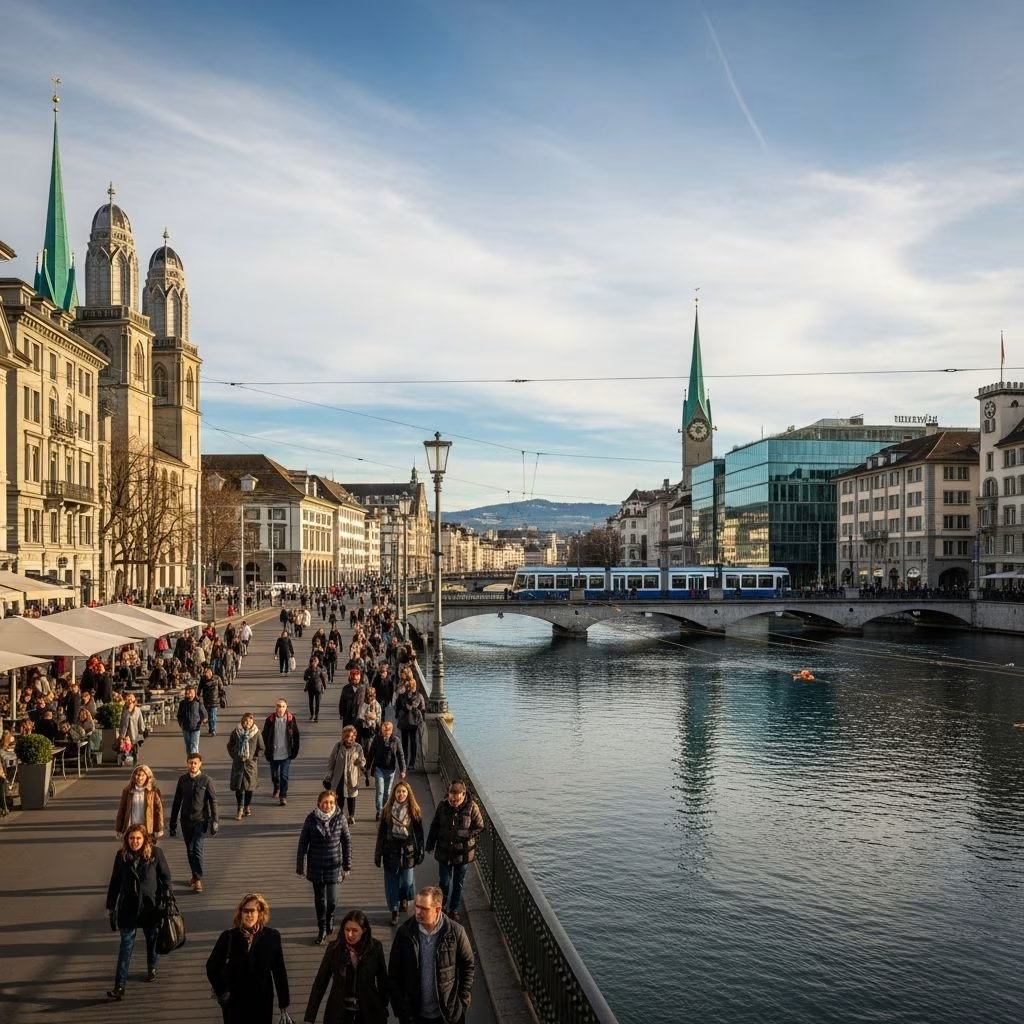
Explore Zurich's exceptional quality of life, safety infrastructure, career opportunities, and why it attracts expatriates globally despite premium living costs.
 Travel Essentials
When international professionals consider relocating to Europe, Zurich consistently emerges as a top contender. This Swiss metropolis has transcended its reputation as merely a financial hub to become recognized as one of the world’s most desirable cities for expatriates seeking comprehensive quality of life improvements. The city’s combination of structural stability, institutional excellence, and cultural sophistication creates an environment where newcomers can thrive professionally and personally.
Zurich’s prominence in international quality-of-life assessments reflects measurable commitment to civic wellbeing. In the 2025 Happy City Index, Zurich ranked second globally for overall wellbeing, trailing only Copenhagen. This distinction stems not from trendy wellness initiatives but from foundational urban systems that prioritize resident satisfaction consistently. The city’s happiness metrics emerge from robust governance structures, equitable healthcare distribution, meticulous urban planning, and deeply embedded cultural norms emphasizing mutual trust among residents.
The metrics supporting Zurich’s standing are comprehensive and compelling. According to the 2025 Happy City Index assessment:
Beyond this single index, Zurich has maintained consistent top-five positioning in the Mercer Quality of Living Survey for over a decade. The OECD Better Life Index provides particularly strong scores in income stability, educational opportunities, work-life balance achievement, and civic engagement—foundational elements that sustain long-term urban satisfaction.
For expatriates prioritizing secure living environments with dependable infrastructure, Zurich delivers measurably. The city combines low crime rates with exceptionally efficient public services, creating daily experiences marked by reliability and order. This isn’t merely aesthetic preference; expatriates consistently report that this combination reduces stress and facilitates rapid community integration.
The environmental dimension distinguishes Zurich further. When surveyed about Switzerland’s natural environment and air quality, expatriates rated these elements extraordinarily highly. Eighty-four percent of expatriates in Switzerland provide top ratings for environmental quality, compared to only 54% of expatriates globally. Zurich’s lakeside location, abundant green spaces within urban boundaries, and commitment to air quality standards create recreational opportunities unavailable in comparable metropolitan centers.
Public transportation infrastructure represents another competitive advantage. With eighth-place ranking globally for public transportation availability and quality, residents navigate the city efficiently without vehicle dependency. Spotless trams, reliable train connections, and pedestrian-friendly district designs enable residents to accomplish daily activities through sustainable methods.
Zurich’s economic foundation attracts professionals across multiple sectors. The city serves as Switzerland’s financial epicenter, hosting headquarters for major banking institutions, insurance companies, and investment firms. However, the employment landscape extends considerably beyond finance. Technology companies, pharmaceutical enterprises, biotech research facilities, and international corporations maintain significant operations throughout the metropolitan area.
For American expatriates specifically, Zurich offers the most international professional environment among Swiss cities, with diverse job opportunities and substantial English-language workplace prevalence. International organizations, NGOs, and multinational corporations facilitate career advancement pathways for qualified professionals regardless of national origin.
The professional community benefits from Switzerland’s political stability, ranked first globally for this characteristic. This stability translates into predictable business environments, consistent regulatory frameworks, and reduced uncertainty that often accompanies professional relocation to less-established nations.
Switzerland’s healthcare system ranks eleventh globally for quality and accessibility. Zurich, as the largest metropolitan center, provides access to specialized medical facilities, research hospitals, and preventive care services. The healthcare ranking reflects both infrastructure quality and affordability considerations relative to outcomes achieved.
Educational opportunities constitute another significant advantage for families considering relocation. International schools throughout Zurich and surrounding areas provide curriculum options for expatriate families, ensuring continuity with home-country educational standards. Additionally, proximity to respected Swiss universities creates pathways for advanced education without requiring additional relocation.
Zurich comprises diverse districts, each offering distinct residential environments suited to different lifestyle preferences and professional requirements. Understanding neighborhood characteristics facilitates strategic relocation decisions.
| Neighborhood | Primary Characteristics | Ideal For |
|---|---|---|
| Seefeld | Upscale residential area with lake vistas, premium dining establishments, abundant green spaces | Professionals seeking refined environments with waterfront access |
| Kreis 4 | Creative urban district with vibrant nightlife, cultural venues, diverse population | Younger professionals and creative industry workers |
| Enge | Serene residential area with green surroundings, proximity to major employment centers and international schools | Families prioritizing calm environments with school access |
| Hottingen | Elegant, quiet neighborhood with university proximity and hiking trail access | Academic professionals and outdoor enthusiasts |
| Wipkingen | Relaxed atmosphere with local authenticity, international resident mixture, reduced tourism | Those seeking community integration and authentic Swiss experiences |
Rental costs vary substantially by location and apartment specifications. In central districts (Kreis 1, 2, 4), monthly rent for one-bedroom apartments ranges from CHF 2,000 to CHF 3,500, with premium neighborhoods commanding higher rates. When evaluating relocation budgets, housing typically represents the largest monthly expense consideration.
Zurich ranks among Europe’s most expensive cities, a consideration requiring transparent acknowledgment in relocation planning. However, this cost reflects direct correlation with service quality, safety, and amenity availability rather than unnecessary luxury markup. Monthly expenses excluding housing average approximately $1,911 for single professionals, with variations based on lifestyle preferences and dining choices.
The expense structure requires context: residents receive corresponding returns through superior healthcare, education, public services, and infrastructure. Professionals negotiating Swiss compensation packages typically experience salary premiums that offset elevated living costs.
One challenge expatriates encounter relates to social integration and friendship development. Switzerland ranks 39th globally for ease of settling in, primarily reflecting difficulty in forming local friendships despite overall quality of life excellence. This dynamic reflects cultural differences and established social circles rather than inhospitality; successful expatriates report that persistent community engagement and participation in local organizations facilitate meaningful connections over time.
International professional networks, expat communities, and recreational clubs provide initial social infrastructure. Engagement with Swiss colleagues through workplace activities, sports clubs, and voluntary organizations gradually builds local relationships. Language acquisition, while not absolutely required given English prevalence, substantially facilitates deeper community integration.
Zurich’s geographical positioning provides extraordinary recreational access. The city’s lakefront offers swimming, sailing, and waterfront activities throughout warmer months. Alpine proximity enables weekend hiking, skiing, and mountain activities accessible via efficient public transportation. This combination of urban amenities and natural recreation opportunities contributes substantially to reported life satisfaction among residents.
Recreational sports opportunities rank tenth globally among expatriate considerations. Zurich’s sports clubs, fitness facilities, yoga studios, and outdoor activity groups provide structured participation options for those seeking community connection through physical activity.
Successful relocation requires systematic planning addressing visa requirements, housing acquisition, healthcare registration, and administrative procedures. Employment sponsorship constitutes the primary pathway for professional relocation, with employers typically facilitating visa processes and administrative transitions.
Visa procedures vary by nationality; however, many employers engage relocation specialists who streamline bureaucratic requirements. Housing searches benefit from advance planning, as desirable apartments frequently lease quickly. Viewings typically occur during brief preliminary visits, requiring decisive decision-making.
Administrative registration includes health insurance enrollment, tax identification number acquisition, and local resident registration. Switzerland’s systematic bureaucracy, while sometimes perceived as rigid, operates transparently with clear procedures and published documentation.
While Zurich dominates expatriate preferences, alternative Swiss cities offer distinct advantages. Geneva attracts professionals in diplomatic, humanitarian, and international organization sectors, offering comparable international community presence. Basel specializes in pharmaceutical and biotech employment, with marginally lower living costs. Bern provides government employment opportunities with quieter lifestyle characteristics. Lausanne combines active lifestyle opportunities with family-oriented communities and slightly reduced expense levels.
Zurich’s distinction emerges from comprehensive excellence across employment diversity, international community scale, cultural vitality, and infrastructure sophistication. The city offers breadth rather than specialization, accommodating professionals across sectors and families with varied requirements.
Zurich’s rankings reflect not temporary advantages but sustainable systems designed to maintain quality standards across generations. Political stability, ongoing infrastructure investment, and cultural commitment to civic responsibility create continuity often absent in comparable cities. Residents experience fewer disruptions from political instability, infrastructure failures, or social fragmentation that characterize some international metropolitan centers.
This long-term sustainability appeals particularly to expatriates planning extended residency rather than brief assignments. The confidence in system reliability enables focus on professional advancement and family development rather than constant vigilance regarding urban stability.
Zurich represents optimal choice for international professionals prioritizing stability, institutional excellence, safety, healthcare quality, and comprehensive urban services. The premium cost reflects direct correlation with services received rather than speculative pricing. Professional advancement opportunities across multiple sectors, combined with exceptional quality of life metrics and recreational access, create compelling value propositions despite elevated expenses.
Prospective expatriates should evaluate personal priorities systematically: Does salary negotiation accommodate Swiss cost levels? Do professional opportunities align with employment market strength? Does family situation benefit from educational resources and recreational infrastructure? Does personality compatibility exist with Swiss cultural norms emphasizing order, punctuality, and structured systems?
Those answering affirmatively across these dimensions discover that Zurich delivers measurably on its quality of life promise. The city functions at exceptionally high levels, offering residents reliable systems, minimal friction in daily operations, and access to cultural, recreational, and professional opportunities rarely consolidated in single metropolitan centers.
Zurich’s distinction in expatriate destination rankings reflects earned achievement rather than marketing positioning. The city combines professional opportunity with lifestyle quality, safety with cultural richness, efficiency with livability. For international professionals seeking comprehensive urban excellence without compromise, Zurich remains Europe’s premier expatriate destination, justifying premium costs through consistent delivery of systems, services, and opportunities that enhance both career trajectories and personal quality of life.
