

 Travel Essentials
 Travel Essentials

Explore Wild Horse Island, Montana's largest freshwater lake island, featuring hiking trails, rare ecosystems, and abundant wildlife accessible only by boat.
 Travel Essentials
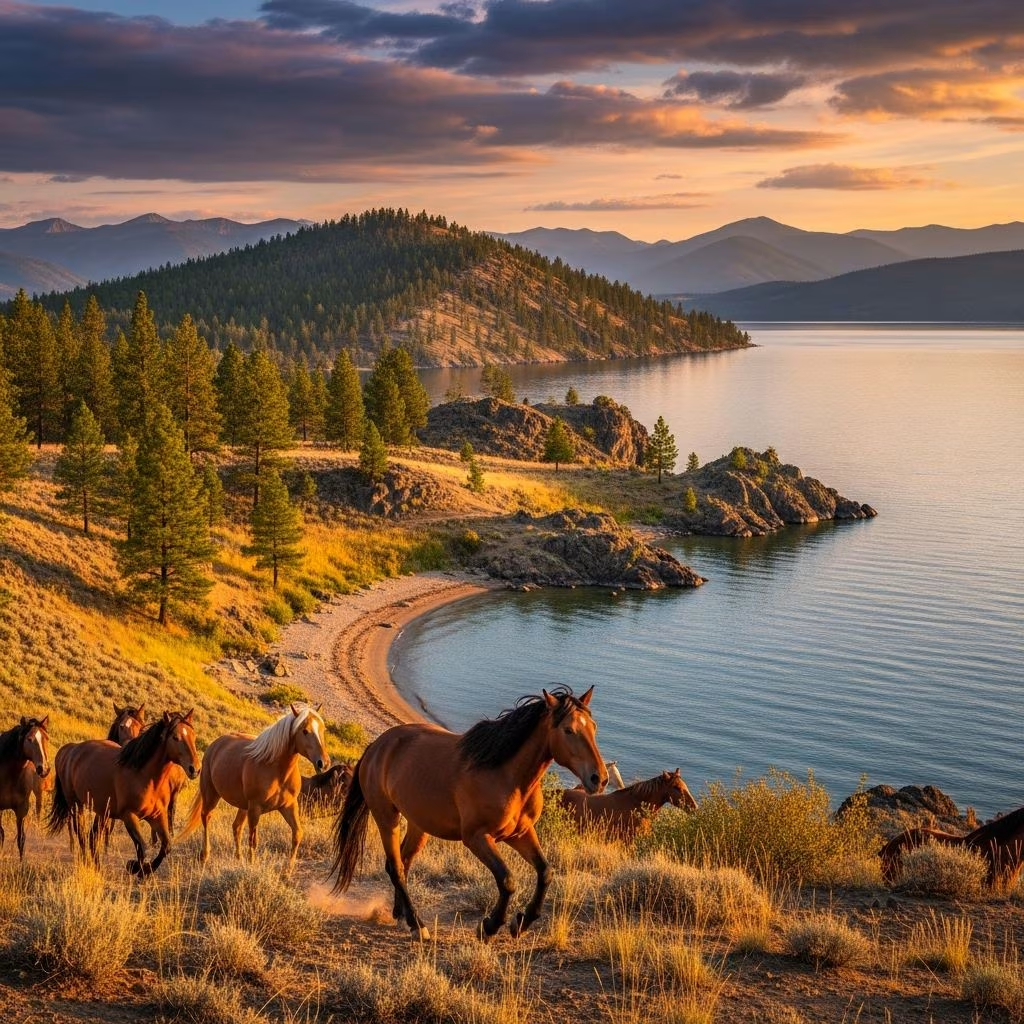
Nestled in the crystal-clear waters of Flathead Lake, Wild Horse Island stands as a beacon of untouched wilderness in Montana. As the largest island in any freshwater lake west of Minnesota, this 2,164-acre haven offers visitors a rare chance to immerse themselves in pristine nature, far from the conveniences of the mainland. Accessible solely by boat, the island promises solitude, adventure, and encounters with iconic wildlife that have roamed its rugged terrain for generations.
Wild Horse Island’s dramatic landscape owes its existence to ancient geological forces. Formed by the Cordilleran Glacier during the last Ice Age, the island features a varied topography with shores sitting at 2,900 feet above sea level. Its six central summits rise between 3,277 and 3,745 feet, sculpted into distinctive rôche moutonnée shapes—smooth northern slopes and sheer southern cliffs that create a striking visual contrast against the lake’s horizon.
Spanning approximately 2,164 acres, the island is a microcosm of Montana’s diverse ecosystems. Old-growth Ponderosa pine forests cloak its hills, while pockets of Palouse Prairie—one of only three such biomes in the state—support rare and endangered plant species. These grasslands, reminiscent of eastern Washington’s landscapes, add a unique botanical dimension to the park’s appeal.
The island’s story is deeply intertwined with the region’s Native American history. Known historically as “Čt’išeʔém” in Montana Salish and “kwiⱡq̓anqmi” in Kutenai, it served as a vital refuge for the Salish-Kootenai tribes. They pastured horses here to shield them from raids by neighboring groups, a practice that inspired the island’s modern name. Explorer John Mullan later noted bands of feral horses during his visits, cementing the moniker “Wild Horse Island.”
European settlement brought further transformations. In the early 20th century, families like the Johnsons built homesteads, including a remarkably durable home constructed in just 11 days in 1910, still visible along the Skeeko Trail. The island supported farming, with apple and pear orchards that persist today, offering wild fruit to intrepid explorers. By the 1930s, a lodge operated here, but as preservation efforts grew, the MacDonald family facilitated its transfer to the state in the 1970s, establishing it as a protected park in 1977. Today, only 50 acres remain in private hands.
Wild Horse Island is a sanctuary for an impressive array of animals, making it a top destination for wildlife enthusiasts. Five wild horses, descendants of those pastured by indigenous peoples, roam freely, though sightings require patience and luck. Bighorn sheep navigate the steep cliffs with agility, while mule deer graze the meadows. The skies teem with bald eagles, falcons, osprey, and songbirds, and the shores host waterfowl.
This biodiversity thrives due to strict management by Montana Fish, Wildlife & Parks (FWP), which prohibits pets to minimize disturbances. Bears also frequent the area, underscoring the need for proper food storage during day trips.
With about four miles of interconnected hiking trails, Wild Horse Island invites exploration on foot. Trails like the one from Skeeko Bay wind along the lakeshore through old-growth pines, offering panoramic vistas of Flathead Lake and the Mission Mountains. Off-trail bushwhacking is permitted, allowing adventurers to forge their own paths across the primitive terrain.
Other pursuits include:
The park operates as day-use only—no camping allowed—to preserve its wild character. Groups larger than 15 need permits for educational or interpretive activities.
Reaching Wild Horse Island demands preparation, as no park-provided transport exists. Private boats, charters, or rentals from nearby marinas in Big Arm or Polson are essential. Six public beach landing spots welcome vessels, but avoid private docks along the shoreline.
| Access Point | Features | Best For |
|---|---|---|
| Skeeko Bay | Trailhead, shoreline access | Hiking starters |
| Other Beaches | Scenic pull-ins | Swimming, picnics |
| North Shore | Private-adjacent | Experienced boaters |
Montana residents with the $9 state parks fee on their vehicle registration enter free; non-residents pay a day-use fee. Pack essentials: water, snacks, sturdy shoes, bear spray, and waste bags—leave no trace principles are paramount.
Beyond its animals, the island harbors botanical treasures. Rare and endangered plants flourish in the Palouse Prairie remnants, a fragile ecosystem safeguarded through careful management. This commitment to conservation ensures future generations can experience the island’s ecological richness.
Managed jointly by Montana FWP within the Flathead Indian Reservation and Lake County boundaries, the park balances recreation with protection. Initiatives like wildlife introductions and trail maintenance sustain its status as a pristine natural laboratory.
Summer brings ideal weather for hiking and swimming, with wildflowers blooming across the prairies. Fall offers golden foliage and fewer crowds, while spring awakens with migratory birds. Winter limits access due to weather, but hardy souls may snowshoe via guided tours.
“The island feels like stepping back 100 years—pure, wild Montana.” – Visitor testimonial inspired by common reviews.
Recent aerial tours highlight the island’s untouched allure, showcasing cliffs, forests, and wildlife from above.
No, it’s strictly day-use only to protect the environment and wildlife.
Pets are prohibited to safeguard wildlife viewing opportunities.
Boat access only; use one of six designated landings. No park shuttle service.
Montana residents with park fee registration enter free; others pay non-resident day-use fees.
Expect bighorn sheep, mule deer, bald eagles, falcons, songbirds, waterfowl, and possibly the five wild horses.
Yes, with valid tribal and state licenses.
In a state famed for Glacier National Park, Wild Horse Island carves its niche as an intimate, boat-bound adventure. Its blend of history, ecology, and raw beauty draws hikers, photographers, and nature lovers seeking respite from crowded trails. Whether spotting a wild horse silhouetted against the sunset or foraging historic orchards, every visit leaves an indelible mark.
