

 Travel Essentials
 Travel Essentials

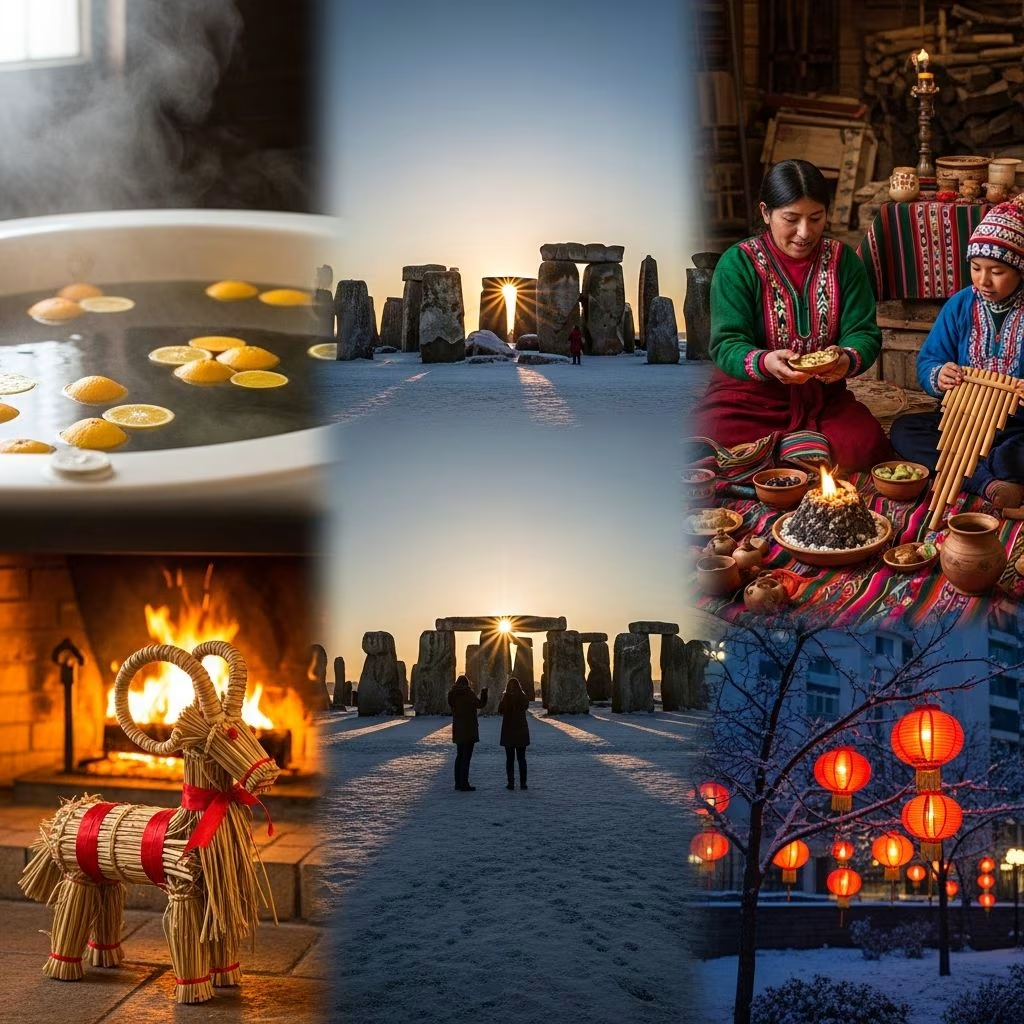
Explore captivating winter solstice festivals from ancient stone circles to lantern-lit streets, blending history, culture, and celestial wonder across continents.
 Travel Essentials
The winter solstice marks the Earth’s annual tilt when the Northern Hemisphere experiences its shortest day and longest night, typically around December 21. This astronomical event has inspired countless cultures to gather in rituals symbolizing hope, renewal, and the triumph of light over darkness. From prehistoric monuments to vibrant modern festivals, these celebrations reflect humanity’s enduring connection to the cosmos.
Occurring when the sun reaches its southernmost point from Earth’s equator, the winter solstice signals the gradual return of daylight. In the Southern Hemisphere, this flips to June, creating a mirror image of summer solstice in the north. Ancient societies tracked this through megalithic sites, using alignments to predict seasons vital for agriculture and survival.
Today, these events draw pilgrims, tourists, and locals alike, blending pagan roots with contemporary expressions. Communities light fires, share feasts, and perform dances to coax the sun’s rebirth, fostering unity amid winter’s chill.
Europe boasts some of the most iconic solstice sites, where history and mysticism converge.
Every winter solstice, thousands brave the Wiltshire dawn at Stonehenge, a 5,000-year-old monument. The heel stone frames the rising sun, a phenomenon drawing Druids, pagans, and curious visitors. This gathering honors the site’s Neolithic builders who likely revered the solstice for its life-affirming promise.
In Ireland’s Boyne Valley, the 5,200-year-old passage tomb at Newgrange captures the solstice sunbeam piercing its chamber for 17 minutes. Only 50 visitors witness this annually via lottery, underscoring the site’s sacred engineering from 3200 BCE, predating Stonehenge and the pyramids.
On December 13, Sweden, Finland, Norway, and Denmark celebrate St. Lucia’s Day, rooted in Norse fire rituals to banish winter spirits. Processions feature white-gowned girls crowned with candles, serving saffron buns and glögg. This festival of light bridges pagan solstice customs with Christian martyrdom lore.
East Asian traditions emphasize harmony and nourishment during the solstice.
China’s Dongzhi, meaning ‘extreme of winter,’ aligns with yin-yang philosophy, celebrating the pivot from darkness to light. Families reunite for tangyuan—glutinous rice balls symbolizing unity—and hearty soups. Observed between December 21-23, it traces to the Han Dynasty (206 BCE-220 CE).
Iran’s Yalda, or ‘birth,’ falls on the last night of autumn, welcoming the sun god Mithra. Families stay awake reciting poetry, eating pomegranates and watermelons for vitality, and nuts for prosperity. This Zoroastrian-rooted event underscores light’s victory over night’s malice.
Japan’s Toji involves soaking in yuzu-scented baths to ward off colds, paired with kabocha squash dishes. This quiet ritual reflects Shinto reverence for nature’s cycles during the solstice.
Diverse solstice expressions span indigenous revivals and urban spectacles.
In Cusco, Peru’s June solstice (Southern Hemisphere winter) reenacts Inca sun god Inti worship. Costumed performers parade from the Qorikancha temple to Sacsayhuamán fortress for sacrifices and dances, drawing 500,000 spectators. Revived in 1944, it preserves Quechua heritage.
The Hopi tribe’s Soyal ceremony in Oraibi, Arizona, features kachina dances and prayers for harmony. Underground kivas host rituals purifying the world for the sun’s return, a tradition over 1,000 years old.
Granville Island glows with handmade lanterns, fire dancers, and music on December 21. Organized by the Secret Lantern Society for nearly 30 years, it transforms urban spaces into a luminous wonderland.
At the South Pole, ‘Midwinter’ on June 21 sees researchers celebrate with feasts and sunless barbecues, mimicking Northern solstice joy despite eternal dark.
| Festival | Location | Date | Key Rituals | Visitor Notes |
|---|---|---|---|---|
| Stonehenge Gathering | UK | Dec 21 | Sunrise vigil, drumming | Free access, cold weather prep |
| Newgrange | Ireland | Dec 21 | Chamber illumination | Lottery entry, book early |
| St. Lucia’s Day | Scandinavia | Dec 13 | Candle processions, buns | Public events in capitals |
| Dongzhi | China | Dec 21-23 | Rice balls, family meals | Local markets, home visits |
| Yalda | Iran | Dec 21 | Fruits, poetry readings | Family-oriented, cultural tours |
| Inti Raymi | Peru | June 24 | Processions, sacrifices | Ticketed, high altitude |
| Lantern Festival | Canada | Dec 21 | Lantern walks, music | Family-friendly, workshops |
Attending requires foresight: Book accommodations early for popular sites like Stonehenge or Cusco. Check weather—layered clothing is essential. Respect cultural protocols, especially at indigenous events like Soyal. Sustainable travel means minimizing impact on fragile sites.
Neo-pagan groups like Druids amplify ancient practices, while climate awareness adds eco-themes to festivals. These events preserve intangible heritage, promoting seasonal mindfulness in a digital age.
The shortest day in the Northern Hemisphere, around December 21, when the sun’s daily path is lowest.
To symbolize light’s return, ensure harvests, and combat winter despair through communal rites.
Yes, most are public; some like Newgrange require lotteries.
Inti Raymi in Peru exemplifies June celebrations mirroring northern events.
Variable weather challenges outdoor gatherings, prompting adaptive planning.
