


 Food & Culture
Food & Culture
World’s Best Fine Dining Restaurants and Global Culinary Trends
Discover the finest dining establishments worldwide, from innovative molecular gastronomy to traditional regional cuisines, spanning multiple continents and culinary philosophies.
 Food & Culture
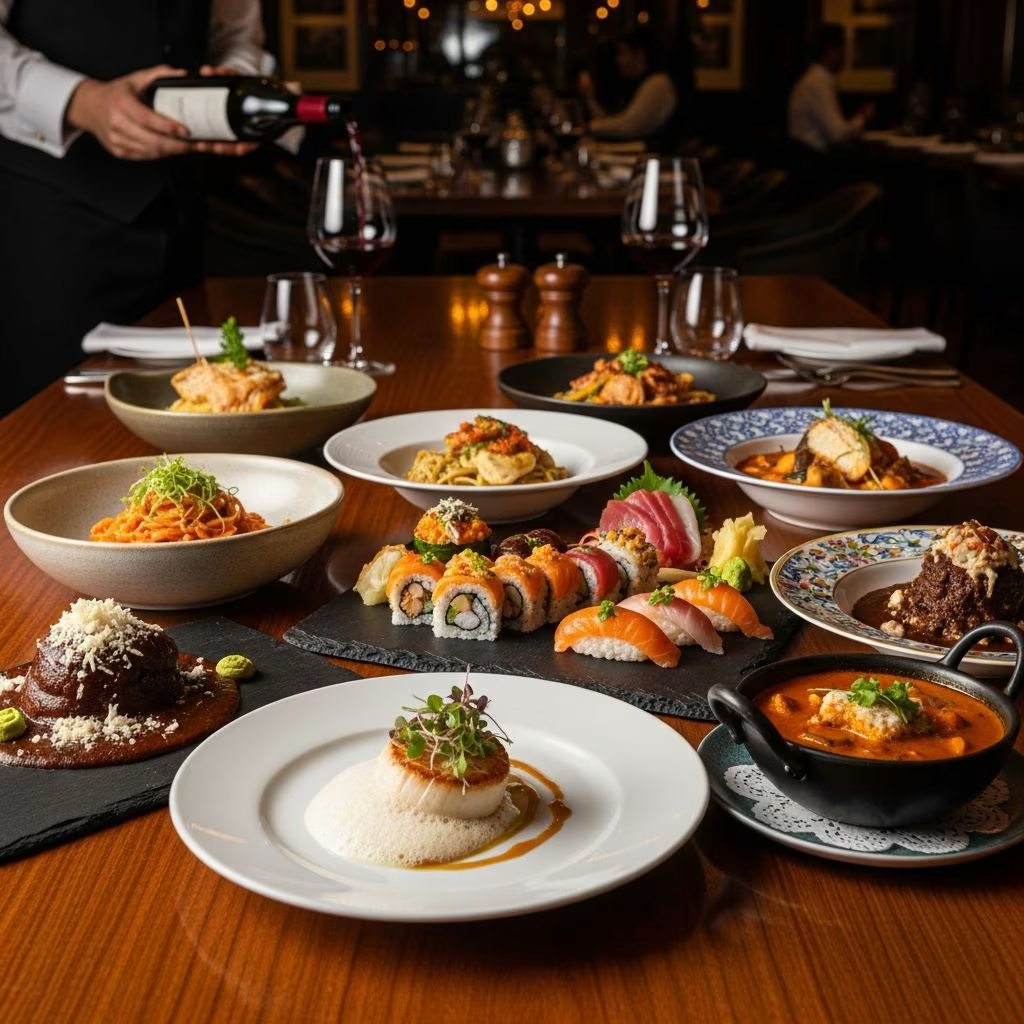
The pursuit of exceptional dining has transformed into a genuine pilgrimage for food enthusiasts worldwide. Beyond simply satisfying hunger, contemporary fine dining represents an intersection of artistry, cultural heritage, technique, and innovation. Whether you seek avant-garde molecular gastronomy or meticulously preserved traditional recipes, the world’s most celebrated restaurants offer transformative culinary journeys that expand both palate and perspective.
Understanding What Makes a Restaurant Truly Exceptional
Recognition in prestigious culinary rankings reflects more than just quality ingredients or technical skill. Truly outstanding restaurants demonstrate a distinctive vision that permeates every aspect of the dining experience. This includes thoughtful service protocols, carefully curated beverage pairings, artistic plating presentations, and most importantly, a coherent culinary philosophy that guides menu development and kitchen operations.
The methodology behind international restaurant rankings emphasizes consistency, innovation, and the ability to surprise guests while maintaining high standards. Establishments that achieve top-tier recognition typically invest heavily in staff training, ingredient sourcing, and maintaining kitchen protocols that ensure every guest receives an identical caliber of experience.
Continental Culinary Hubs and Their Distinctive Approaches
The restaurant landscape varies dramatically across geographical regions, shaped by local ingredients, cultural traditions, and culinary innovation patterns.
Latin American Culinary Renaissance
The South American continent has emerged as a powerhouse of culinary innovation, particularly in Peru, where restaurants combine indigenous ingredients with contemporary techniques. This region’s chefs have gained international recognition for reimagining traditional dishes through modern preparation methods while maintaining cultural authenticity. Mexican establishments similarly blend pre-Hispanic ingredients with contemporary culinary thinking, creating distinctive flavor profiles that challenge conventional fine dining expectations.
Southeast Asian Culinary Innovation
Thailand has established itself as a dominant force in contemporary fine dining, with Bangkok hosting multiple internationally recognized establishments. The region’s culinary scene balances respect for traditional flavor combinations with experimental approaches to texture and presentation. Southeast Asian restaurants often emphasize the interplay between heat, acidity, umami, and aromatic elements, creating complex dishes that reveal new dimensions with each successive course.
European Gastronomic Traditions
Europe continues to maintain its position as a culinary center, with Spain, France, and Nordic countries producing restaurants that define fine dining standards. The continent’s establishments range from restaurants preserving regional specialties with meticulous attention to traditional methods, to avant-garde laboratories where chefs challenge fundamental assumptions about food preparation and presentation.
Asian Culinary Excellence
Japan and Hong Kong represent sophisticated culinary centers where precision, aesthetics, and ingredient quality receive paramount importance. These regions’ dining establishments often emphasize restraint, seasonal awareness, and the concept of “less is more,” contrasting with more maximalist approaches found in other culinary traditions.
The Evolution of Fine Dining Experiences
Modern fine dining has transformed considerably from its historical focus on elaborate presentations and extensive courses. Contemporary restaurants increasingly prioritize narrative coherence, with each course contributing to an overarching culinary story rather than existing as independent demonstrations of technical prowess.
- Ingredient-Focused Dining: Many acclaimed establishments center their menus around specific ingredients or seasonal availability, allowing the natural qualities of raw materials to guide preparation methods
- Interactive Service Models: Progressive restaurants incorporate open kitchens, chef interactions, and courses prepared tableside to enhance engagement and transparency
- Cultural Integration: Contemporary fine dining increasingly celebrates the cultural contexts from which dishes emerge, rather than presenting decontextualized technical achievements
- Sustainability Practices: Leading establishments demonstrate commitment to environmental responsibility through local sourcing, waste reduction, and seasonal menu development
- Beverage Programing: Modern wine and spirit pairings have evolved to include fermented beverages, non-alcoholic options, and unconventional accompaniments
Geographic Distribution of Acclaimed Establishments
Fine dining concentrations reveal interesting patterns about culinary investment and cultural food values across different nations.
| Region | Notable Cities | Culinary Philosophy |
|---|---|---|
| South America | Lima, Mexico City, Buenos Aires, Santiago | Indigenous ingredient integration, modern technique application |
| Southeast Asia | Bangkok, Singapore, Seoul, Hong Kong | Balance of tradition and innovation, flavor complexity |
| Europe | Madrid, Paris, Barcelona, Copenhagen, Vienna | Regional preservation, avant-garde experimentation |
| East Asia | Tokyo, Osaka | Precision, aesthetics, seasonal awareness |
| North America | New York, Miami | Fusion approaches, diverse culinary influences |
Key Characteristics of World-Class Dining Establishments
Restaurants earning sustained international recognition typically demonstrate several defining characteristics that extend beyond exceptional food quality.
Mastery of Fundamental Techniques
Regardless of culinary style or philosophy, exceptional restaurants demonstrate absolute technical proficiency. This includes precise temperature control, knife skills, understanding of chemical reactions during cooking, and knowledge of ingredient behavior under various preparation methods. Technical excellence provides the foundation upon which creative expression becomes possible.
Distinctive Culinary Vision
Exceptional establishments possess clearly articulated culinary perspectives that distinguish them from competitors. This vision might emphasize sustainability, cultural heritage preservation, ingredient transformation, scientific exploration, or emotional resonance through food. Restaurants lacking distinctive viewpoints, regardless of technical skill, struggle to achieve lasting recognition.
Commitment to Consistency
Maintaining identical quality across every service, for every guest, represents an underestimated challenge. World-class establishments implement rigorous systems ensuring consistency without sacrificing the personal touches that create memorable experiences. This balance requires skilled management and well-trained teams unified by shared standards.
Thoughtful Service Integration
Exceptional dining experiences require service that enhances rather than intrudes upon the culinary presentation. Staff members should possess genuine knowledge about dishes, preparation methods, and ingredient sources, allowing them to contribute meaningfully to guests’ understanding and appreciation.
Planning Your Fine Dining Journey
Selecting Appropriate Establishments
Different restaurants serve different purposes and appeal to varied preferences. Consider whether you prioritize ingredient authenticity, technical innovation, cultural immersion, tasting menu experiences, or à la carte flexibility. Research establishments thoroughly, reading contemporary reviews and understanding their specific focus areas rather than assuming all acclaimed restaurants suit all preferences.
Timing and Reservation Strategies
Many world-class establishments operate with reservation-only service, often booking months in advance. Consider booking during shoulder seasons rather than peak tourist periods for potentially better availability and more relaxed atmospheres. Flexibility regarding dates increases chances of securing reservations at highly sought establishments.
Budget Considerations
Fine dining experiences span an enormous price spectrum, from moderately priced local favorites to ultra-luxury tasting menu experiences. Establish realistic budgets accounting for food, beverages, gratuity, and transportation to your selected establishment.
Dietary Accommodations
Most acclaimed restaurants willingly accommodate dietary restrictions and preferences, though advance notification typically yields better results than same-day requests. Contact establishments well before reservation dates to discuss specific needs.
Emerging Trends Shaping Fine Dining’s Future
The restaurant landscape continues evolving in response to changing consumer preferences, technological capabilities, and environmental awareness. Several notable trends are reshaping how fine dining establishments operate and present their culinary offerings.
Hyper-Local Sourcing: Restaurants increasingly emphasize intimate relationships with nearby producers, sometimes cultivating their own ingredients through rooftop gardens or nearby farms. This approach reduces environmental impact while ensuring ingredient freshness and supporting local economies.
Multi-Sensory Experiences: Contemporary establishments recognize dining’s potential to engage senses beyond taste and smell. Thoughtful ambiance design, musical selections, and visual presentations create immersive environments that enhance culinary appreciation.
Accessibility and Democratization: Some acclaimed chefs operate multiple concepts at varied price points, making their culinary vision accessible to broader audiences. Casual chef-driven restaurants and limited-seating pop-up experiences are expanding fine dining’s reach.
Cultural Preservation Through Cuisine: Restaurants increasingly serve as cultural ambassadors, preserving endangered cooking traditions and elevated regional specialties that might otherwise disappear. This represents dining with meaningful social impact beyond entertainment.
Frequently Asked Questions
How far in advance should I book at top restaurants?
Reservation windows vary significantly, with some establishments accepting bookings three to six months ahead, while others maintain shorter windows. Popular restaurants and specific dates often require advance planning, though flexibility can yield last-minute opportunities through cancellation systems or walk-in queues.
What should I wear to fine dining establishments?
Dress codes vary considerably across different restaurants and regions. Research your specific destination thoroughly, as expectations range from smart casual to formal attire. When uncertain, contacting the restaurant directly clarifies appropriate dress standards.
Are tasting menus mandatory at world-class restaurants?
While many acclaimed establishments feature tasting menu formats, many others offer à la carte selection. Verify whether your chosen restaurant provides menu flexibility before booking if you have strong preferences regarding dining format.
How important is wine pairing to the dining experience?
Wine pairings enhance many fine dining experiences, though they remain entirely optional. Non-alcoholic pairing options have become increasingly sophisticated at quality establishments. Dining without pairings allows greater independence in beverage selection according to personal preferences.
Can I photograph my food at fine dining restaurants?
Policies vary considerably. Some establishments embrace photography as part of contemporary dining culture, while others prefer minimal disruption. Discreetly asking your server about photography policies respects establishment preferences while allowing you to document memorable dishes if permitted.
References
- The World’s 50 Best Restaurants — William Reed Business Media. 2026. https://www.theworlds50best.com/list/1-50
- The World’s 50 Best Restaurants – About — William Reed Business Media. 2026. https://www.theworlds50best.com
- La Liste – Top 1000 Restaurants 2026 — La Liste. 2026. https://www.laliste.com/lists/top-1000-restaurants
On This Page
Understanding What Makes a Restaurant Truly Exceptional Continental Culinary Hubs and Their Distinctive Approaches The Evolution of Fine Dining Experiences Geographic Distribution of Acclaimed Establishments Key Characteristics of World-Class Dining Establishments Planning Your Fine Dining Journey Emerging Trends Shaping Fine Dining's Future Frequently Asked Questions← Previous
Free Things to Do in Krakow: Top No-Cost Attractions
Next →
Serifos Travel Guide: Beaches, Hikes, Villages & Ferry Tips
Related Reading
More in Food & Culture
Food & Culture Food & Culture
 Food & Culture
Best Places to Eat in Rome: Neighborhood Dining Guide
 Food & Culture
 Food & Culture