

 Travel Essentials
 Travel Essentials

Explore iconic urban parks from New York to Bangkok, highlighting their unique features, history, and activities for travelers seeking green escapes.
 Travel Essentials
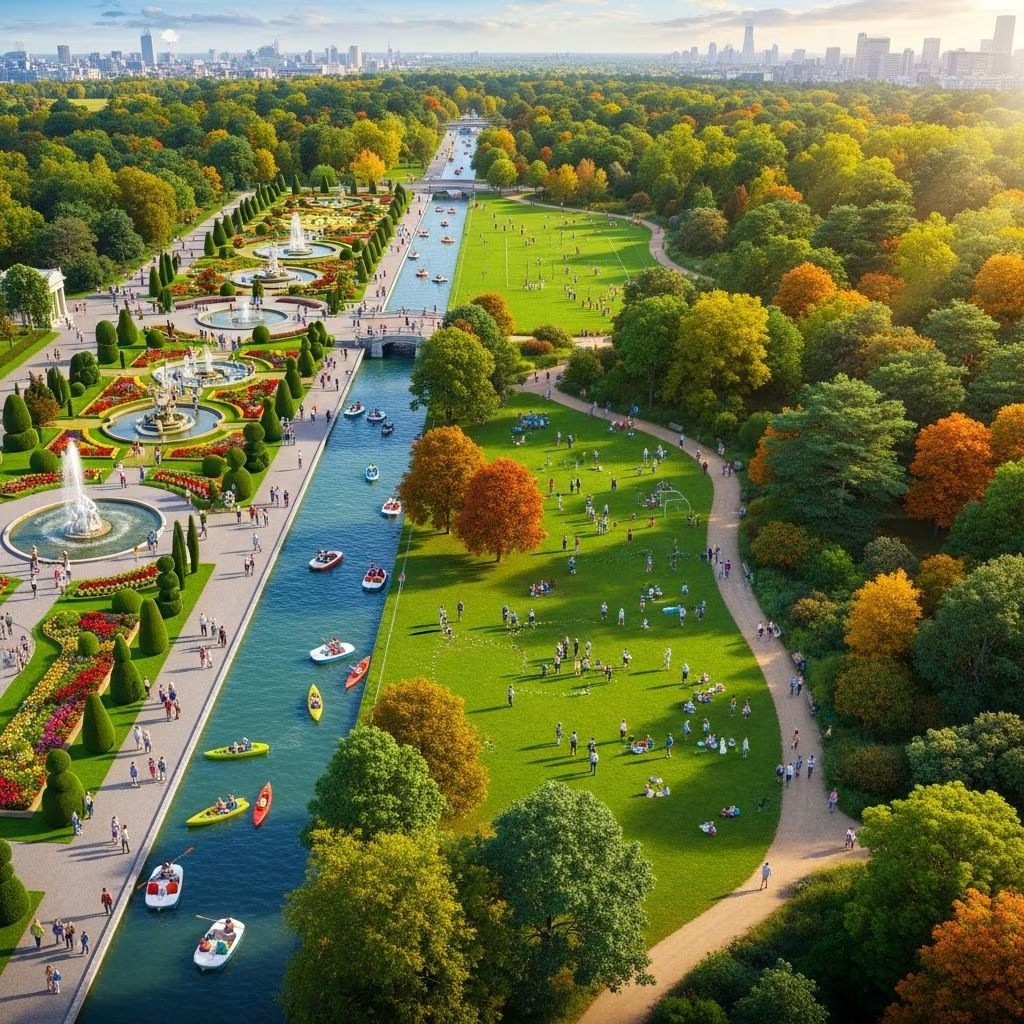
Urban landscapes often pulse with skyscrapers, traffic, and crowds, but scattered throughout these concrete jungles are magnificent parks that serve as vital lungs for cities worldwide. These green havens not only provide fresh air and natural beauty but also foster community gatherings, cultural events, and recreational pursuits. This article delves into some of the planet’s most renowned city parks, showcasing their histories, standout features, and why they draw millions annually.
North American cities boast expansive parks designed to counterbalance urban density with accessible nature. These spaces, often crafted by visionary landscapers, integrate trails, lakes, and gardens into daily life.
New York City’s Central Park stands as the archetype of urban park design, spanning 843 acres across Manhattan. Conceived in the mid-19th century by Frederick Law Olmsted and Calvert Vaux, it transformed marshland into a pastoral escape featuring undulating meadows, serene ponds, and wooded groves. Visitors can rowboat on the lake, stroll Bethesda Terrace, or catch a summer Shakespeare performance. Beyond recreation, it hosts marathons, concerts, and ice skating at Wollman Rink, embodying the city’s vibrant spirit.
Encircling Vancouver’s downtown peninsula, Stanley Park covers over 1,000 acres of old-growth forest, beaches, and gardens. Established in 1888, it offers a 5.5-mile Seawall path for cycling and walking, lined with totem poles carved by Indigenous artists. Totem Pole Park educates on First Nations heritage, while the Vancouver Aquarium showcases Pacific marine life. Seasonal blooms in the Rose Garden and VanDusen Botanical Display draw photographers year-round.
San Francisco’s Golden Gate Park, larger than Central Park at 1,017 acres, was engineered from sandy dunes in the 1870s by William Hammond Hall and John McLaren. Home to the Conservatory of Flowers—America’s oldest surviving wooden glasshouse—it features exotic orchids and ferns. Highlights include bison paddocks, Japanese Tea Garden with koi ponds, and the California Academy of Sciences. Windy bluffs provide skyline views, making it ideal for kite-flying and picnics.
| Park | Location | Size (Acres) | Key Attractions |
|---|---|---|---|
| Central Park | New York | 843 | Lakes, terraces, skating rink |
| Stanley Park | Vancouver | 1,001 | Seawall, totem poles, aquarium |
| Golden Gate Park | San Francisco | 1,017 | Conservatory, Japanese Garden |
European parks often intertwine with royal histories and architectural grandeur, offering layered experiences from manicured lawns to wild woodlands.
At 350 acres, London’s Hyde Park dates to the 16th century as a royal hunting ground, now a democratic space for Speakers’ Corner debates. Serpentine Lake hosts boating and winter skating, while Kensington Gardens adjoins with the Diana Memorial Playground. Summer brings concerts at the Royal Albert Hall edge, blending leisure with cultural immersion.
Boston’s Public Garden, America’s first public botanical garden (1837), pairs with the adjacent Boston Common (1634), the nation’s oldest park. Swan boats glide on the lagoon, Frog Pond offers splash pads, and Make Way for Ducklings statues delight families. These parks anchor the Freedom Trail, linking history with horticultural splendor.
In densely populated Asian metropolises, parks provide rare respites amid tropical heat and towering developments.
Bangkok’s 142-acre Lumphini Park, founded by King Rama VI in the 1920s, mimics New York’s Central Park in layout. Dawn tai chi sessions give way to evening jogs around its 1.5-mile loop path. Paddleboats traverse the lake amid monitor lizards, and a fitness zone caters to all ages. It’s a social equalizer where locals exercise and vendors sell fresh coconuts.
Tokyo’s Ueno Park sprawls 133 acres with over 1,000 cherry trees exploding in sakura each spring, drawing hanami picnickers. Museums like the Tokyo National Museum cluster here, alongside a zoo featuring giant pandas. Shinobazu Pond’s lotus fields and Ameya-Yokocho market add vibrancy to this cultural epicenter.
South American parks fuse biodiversity with urban innovation, often preserving rainforests within city limits.
Brazil’s Ibirapuera Park, designed by Oscar Niemeyer in 1954, covers 400 acres with undulating walkways and lakes. The Latin America Memorial and Afro Brazil Museum highlight cultural narratives, while cycling paths and planetarium shows engage diverse crowds. Velodrome tracks host events, underscoring its role in city wellness.
Madrid’s 350-acre Retiro Park originated as a 17th-century royal retreat, now public with the Crystal Palace housing art exhibits amid tropical plants. Rowboats dot the Grand Pond, rose gardens perfume the air, and the Velázquez Palace offers history lessons. Evening paseos make it a romantic staple.
From Sydney’s harborside to arid innovation, these parks adapt to unique geographies.
Overlooking Sydney Opera House, this 74-acre garden (1816) features ancient figs, war memorial sculptures, and endangered species conservatories. Guided tours reveal Aboriginal plant uses, while picnics frame iconic skyline vistas.
In arid Phoenix, Papago Park’s 1,200 acres boast red buttes, saguaro cacti, and Hole-in-the-Rock formations. Hiking trails lead to panoramic views, and the Desert Botanical Garden educates on Sonoran flora adaptations.
Beyond headliners, cities hide lesser-known parks amplifying urban nature access.
Urban parks enhance mental health, reduce pollution, and boost economies. A 2023 Trust for Public Land report notes Americans visit parks 4 billion times yearly, with proximity linked to longer lifespans. They host biodiversity—Central Park alone shelters 200 bird species.
| Park | Visitors | Notable Impact |
|---|---|---|
| Central Park | 42 million | Boosts NYC tourism $1B+ |
| Golden Gate Park | 13 million | 5th most visited U.S. park |
| Stanley Park | 8 million | Key for local wellness |
To maximize visits:
Nearly 2,000-acre South China Garden in Dongguan, China, though urban icons like Mexico City’s Chapultepec (1,600+ acres) compete.
Most are, but attractions like museums or aquariums charge fees. Entry remains gratis for green spaces.
Spring for blooms, fall for foliage; avoid peak summer heat in tropics.
They absorb CO2, manage stormwater, and promote biodiversity amid urbanization.
Volunteer cleanups and memberships sustain parks. Climate change threats like droughts spur resilient planting—e.g., Golden Gate’s native species push. Travelers: Leave no trace for future generations.
