

 Travel Essentials
 Travel Essentials

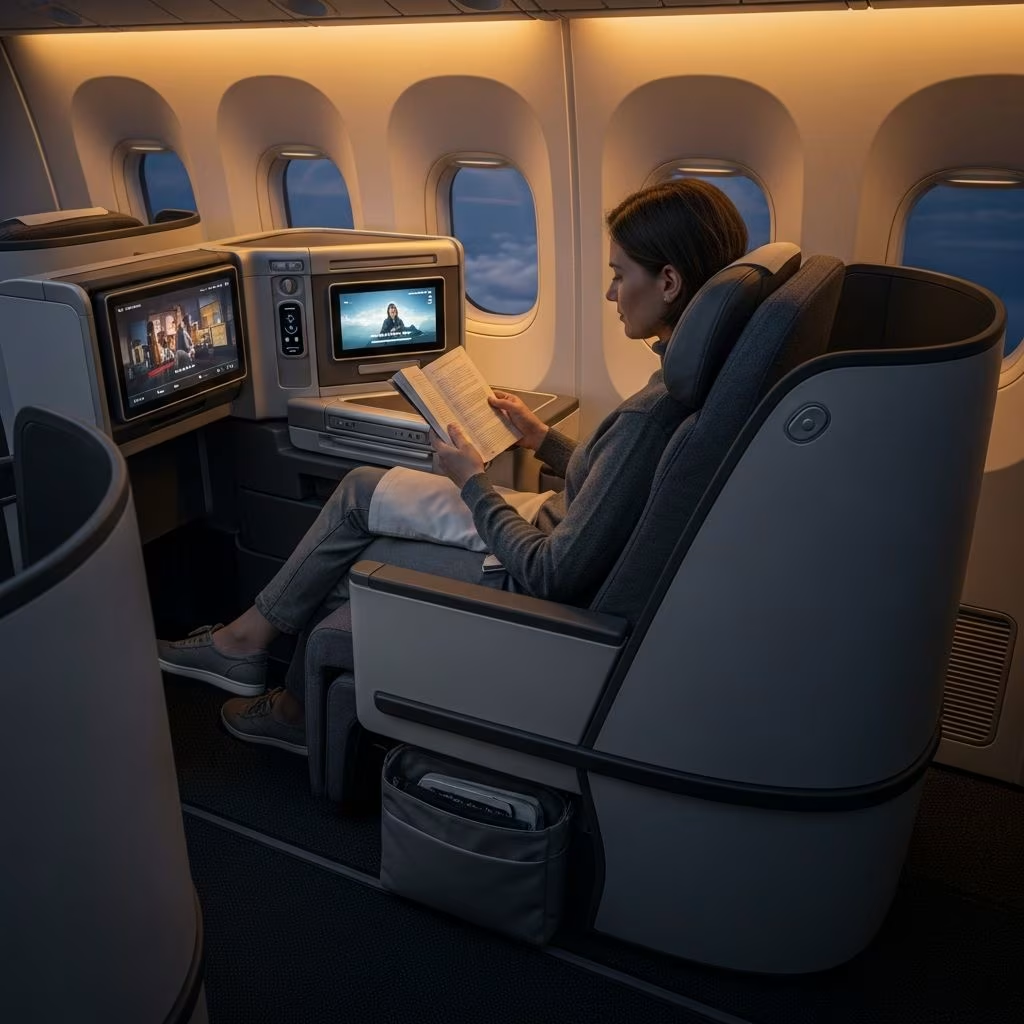
Learn which airplane seats to avoid and why, from cramped rear rows to misleading window seats, so you can choose a more comfortable flight.
 Travel Essentials
Booking airline tickets requires more strategic thinking than simply choosing a departure time and destination. Your seat selection fundamentally shapes how comfortable your entire flight experience will be. While many passengers focus on ticket price or frequent flyer benefits, the actual position where you’ll spend hours can dramatically impact your journey. Understanding which seats present challenges allows you to make informed decisions and avoid common discomfort traps.
Positioning yourself in the final rows of an aircraft creates a cascade of problems that affect nearly every aspect of your flight experience. Aircraft designers intentionally configure these seats with limited or completely restricted recline functionality. This limitation exists not due to budget constraints but rather because of the aircraft’s structural design—a wall or the fuselage curve physically prevents the seat back from moving backward.
Beyond the recline restriction, rear-positioned seating places you directly adjacent to critical aircraft facilities. The proximity to lavatories creates constant exposure to odors, noise from flushing mechanisms, and the steady stream of passenger traffic throughout your flight. Similarly, galley areas immediately forward of the final rows generate ongoing disturbances as flight crew members access storage compartments, prepare beverages and meals, and conduct conversations necessary for their work.
Structural characteristics of rear fuselage sections amplify another significant concern: turbulence impact. As aircraft move through atmosphere disturbances, the rear section experiences more pronounced movements than forward or mid-cabin sections. For nervous travelers or those seeking rest, this increased motion can create genuine discomfort and anxiety.
Additionally, window availability in final rows often presents an unpleasant surprise. Many aircraft designs feature missing windows in specific rear-row positions. Passengers who intentionally selected these seats expecting to lean against a window discover their selection offers no such luxury, transforming a premium seat choice into a disappointment.
The final inconvenience associated with rear seating involves deplaning logistics. When aircraft doors open, passengers in front cabins exit first, leaving you among the last to leave the aircraft. For travelers with tight connection times, this delay can create stressful situations or missed subsequent flights.
Between window and aisle positions sits the universally unpopular middle seat. This position eliminates several advantages that both neighboring seats provide while combining multiple disadvantages. Middle-seated passengers experience constant armrest negotiations with adjacent travelers, compromised personal space, and unavoidable physical contact during normal flight duration.
On long-haul flights spanning many hours, middle seating becomes genuinely torturous. The lack of escape options—unable to lean against a window for sleep and unable to stretch into the aisle without disrupting traffic flow—makes this position particularly challenging. Airlines recognize this unpopularity, which explains why middle seats typically remain among the last available options during online seat selection.
Modern aircraft design creates unexpected complications for passengers selecting window seats based on assumptions about structural layouts. Certain aircraft configurations feature positions labeled as window seats that actually lack corresponding windows.
Specific airline-aircraft combinations present this problem consistently:
Long-haul aircraft also present window complications. British Airways’ A380 Economy Class seats 70A, 70K, 80A, and 80K feature windows that sit misaligned with seat positions, making viewing difficult. Their Business Class Club World cabin has similar issues affecting seats 12A, 12K, 50A, and 50K.
These design quirks reflect aircraft engineering choices where windows don’t align perfectly with seat rows, creating frustration for passengers who specifically chose window seats for views or to sleep while leaning against the window.
Emergency exit row seating presents a paradoxical situation that appeals to some travelers while frustrating others. These positions offer significantly more legroom than standard economy seats, attracting tall passengers and those seeking additional stretching room.
However, federal safety regulations impose specific restrictions on exit row seats. These seats cannot recline due to evacuation requirements, eliminating one of the few ways passengers achieve comfort during extended flights. Additionally, these rows are consistently among the coldest areas of the aircraft, as exit door proximity creates temperature variations. For passengers seeking warmth or expecting to recline during sleep, exit row positioning represents a poor choice despite the legroom advantage.
A related issue affects the row immediately preceding emergency exit rows. Federal aviation safety regulations mandate that these seats also have limited or completely restricted recline functionality. Designers implement this restriction because, during emergency evacuation scenarios, reclined seatbacks would obstruct exit row access and slow passenger movement.
Travelers unfamiliar with this regulation often select these seats expecting normal recline capability. Upon attempting to recline during a long flight, they discover the seat won’t move, creating unexpected frustration and preventing the rest they anticipated.
Any seating positioned immediately adjacent to or directly behind lavatory facilities creates ongoing disturbances. Throughout a typical flight, dozens of passengers use these facilities, and proximity to them means constant exposure to flushing sounds, water noise, and occasional odors. For light sleepers or those seeking peaceful flight experiences, lavatory-adjacent seating represents a significant compromise.
Aircraft galleys, where flight crews prepare beverages, snacks, and meals, generate continuous activity throughout flight duration. Seats positioned near these work areas experience repeated disturbances as crew members access equipment, open and close storage compartments, and conduct work-related conversations. These activities become particularly disruptive during night flights when most passengers attempt to sleep.
While window seats appeal to many passengers, they present specific challenges that deserve consideration. Windows sit near the aircraft wing, which generates substantial engine noise. Passengers in window seats experience louder noise levels compared to those in forward or rear cabin positions. Additionally, the wing structure itself can block external views, transforming the window seat advantage into a blocked-window situation.
Turbulence often feels more pronounced near the window area as well. For nervous flyers, this combination of noise, blocked views, and increased turbulence sensation makes window seats less desirable than they initially appear.
Certain aircraft types, including the Boeing 777, feature progressively narrower fuselage sections toward the rear. While this design enables two-seat-per-row configurations in some rear sections, it creates a peculiar problem: the space between window and seat back becomes larger than in standard configurations. Passengers attempting to lean against windows for sleep find themselves unable to reach the window due to this expanded gap.
However, this configuration may appeal to couples traveling together, as the two-seat rows provide complete privacy without a middle seat between them.
Bulkhead seats occupy the front row of cabin sections, positioned directly behind barriers that separate different cabin classes or areas. While some passengers assume these positions offer enhanced comfort, bulkhead seating often provides less comfort than standard seating. The wall directly in front prevents placing carryon luggage under the seat, forcing passengers to store items in overhead compartments. Additionally, reduced width in these rows can create cramped conditions despite their forward position.
Understanding problematic seat positions allows strategic selection of preferable alternatives. Rather than automatically selecting the first available seat, passengers should consider multiple factors: proximity to facilities, recline capability, noise exposure, and turbulence likelihood. Consulting aircraft-specific seat maps before booking provides valuable information about window alignment, seat width variations, and structural quirks specific to your chosen flight.
Airlines’ own seat selection tools and third-party aviation websites provide detailed information about seat configurations, enabling informed choices before purchase commitment.
Comfortable air travel begins before boarding. By understanding which seats present challenges and why specific positions create discomfort, passengers make strategic selections aligned with their preferences and needs. Whether prioritizing sleep, window views, extra legroom, or peaceful quiet, informed seat selection transforms flights from ordeals into tolerable or even enjoyable experiences.
